Sri Lanka will keep its 5% inflation target for the next three years, a decision that preserves policy continuity as Colombo pushes to complete its latest IMF review and secure fresh funding before year-end.
Sri Lanka keeps 5% inflation target for three years
The central bank’s recommendation, now accepted by the government, keeps the target band at plus or minus 2 percentage points and avoids a shift to a lower goal that some officials and economists had argued for. For investors, that matters because the inflation anchor sits at the center of Sri Lanka’s post-crisis stabilization program: it shapes interest-rate expectations, bond pricing and the government’s room to refinance debt without reigniting price pressures.
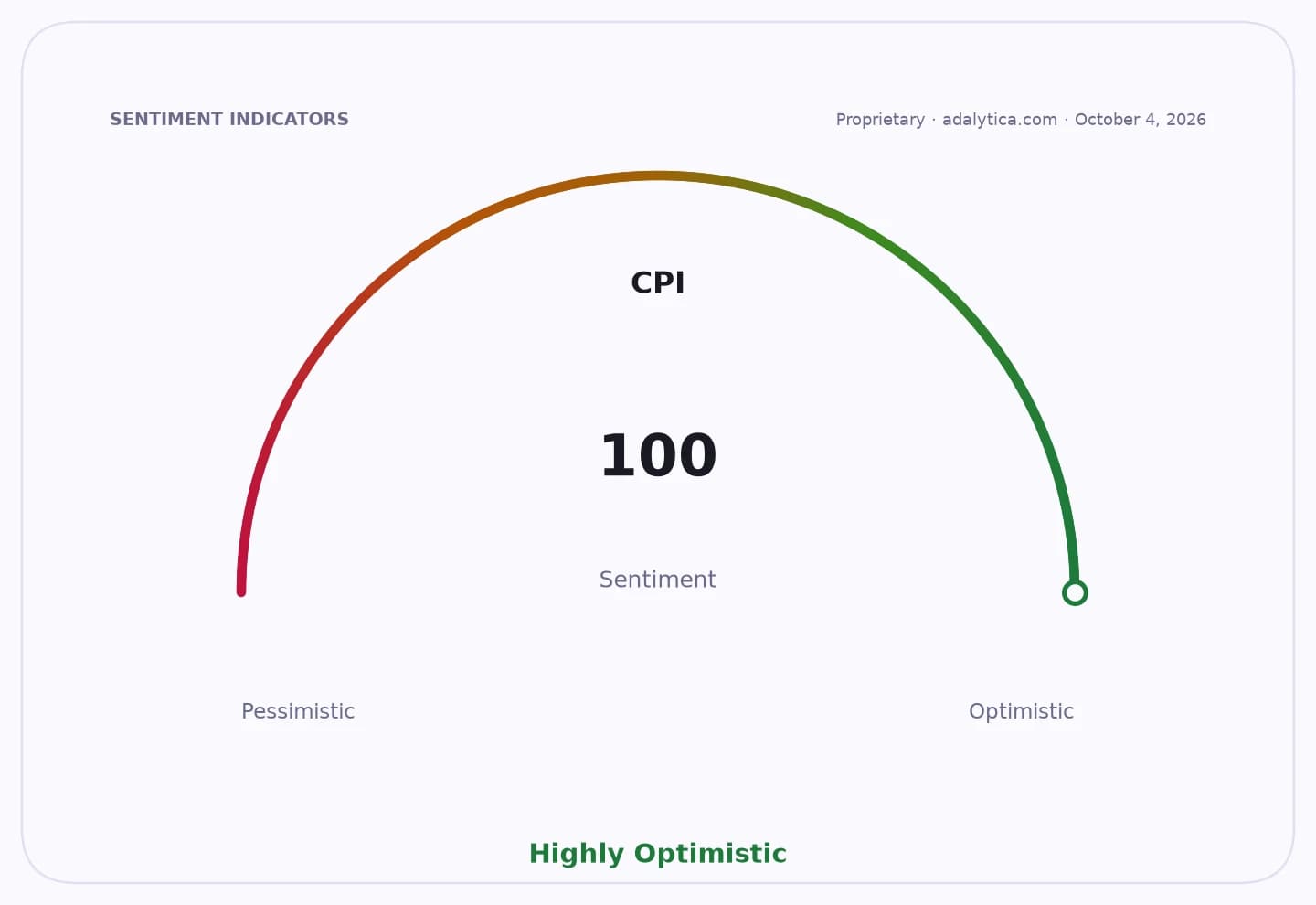
Sentiment IndicatorsⓘProprietary · adalytica.com · October 4, 2026
This is a snapshot — live sentiment, awareness and momentum for 130+ markets update continuously in the dashboard.Open AlphaPulse
Central bank Governor Nandalal Weerasinghe said the decision was based on “pure technical and empirical analysis” and will soon be formalized in a gazette notification. The choice also aligns with the IMF, which last week backed keeping the 5% target unchanged at the first statutory review under the 2023 monetary policy framework. The fund said Sri Lanka still needs the flexibility to absorb volatile food and energy prices before considering a lower target in the next review cycle.
The policy outcome is economically important because Sri Lanka is still trying to lock in disinflation after one of the most severe inflation and balance-of-payments crises in its history. A lower target might have signaled stronger anti-inflation credibility, but it also would have raised the risk of tighter monetary conditions at a time when growth remains fragile and the recovery is still dependent on external financing. By retaining the current target, policymakers are prioritizing stability over ambition.
That same stability is central to the IMF program. Weerasinghe said a staff-level agreement on the seventh review of the Extended Fund Facility is expected “very soon,” with the associated disbursement due by the end of the year. For Sri Lanka, that cash flow is critical: it supports reserves, helps anchor confidence in the rupee and reduces the risk that fiscal stress forces the authorities to reverse course on reform.
The decision also speaks to the government’s broader trade-off. A lower inflation target would have appealed to hawkish policymakers and some local economists who want a faster normalization toward advanced-economy inflation norms. But with food and energy costs still vulnerable to shocks, and with the economy still rebuilding after default and restructuring, the IMF and the central bank appear to prefer a target that is credible but not so tight that it becomes politically or economically hard to meet.
For investors, the near-term focus is now on the IMF review and the timing of the disbursement, rather than the target itself. If the staff-level deal lands soon as expected, it should help keep Sri Lankan sovereign risk contained and support local assets. The bigger question is what happens beyond the next three years: a lower target remains possible, but only if inflation stays subdued long enough for policymakers to argue that credibility has been earned rather than borrowed.
| Entity | Gains | Losses |
|---|---|---|
| Sri Lankan government | ▲Policy continuity | ▼Pressure to prove disinflation |
| CBSL / IMF | ▲Credibility for current framework | ▼Calls for a 2% target |
| Bondholders / lenders | ▲Near-term stability | ▼Less aggressive anti-inflation stance |
| Consumers / businesses | ▲Reduced policy shock risk | ▼Ongoing exposure to food and energy inflation |