Pakistan’s prime minister used the UN General Assembly to escalate pressure on India over Kashmir and the Indus Waters Treaty, sharpening a bilateral confrontation that now spans water security, terrorism claims and the risk of renewed military escalation.
Pakistan Raises Kashmir, Indus Waters Tensions at UNGA
Shehbaz Sharif told the UNGA that any Indian attempt to stop, divert or obstruct Pakistan’s share of Indus river waters would be treated as an act of war. He said the treaty has no legal basis for unilateral suspension by India, and argued that water must never be turned into a weapon.
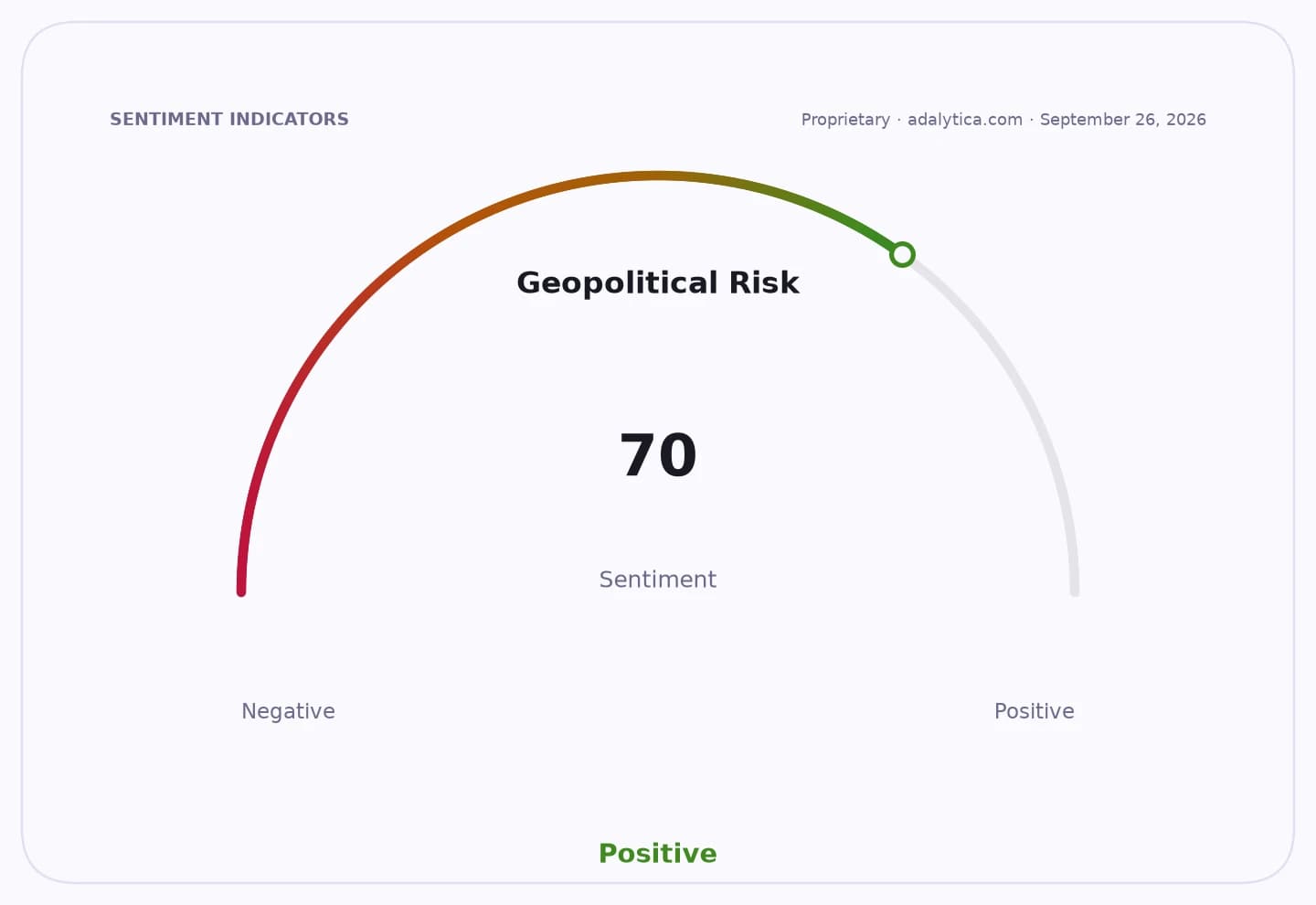
Sentiment IndicatorsⓘProprietary · adalytica.com · October 1, 2026
This is a snapshot — live sentiment, awareness and momentum for 130+ markets update continuously in the dashboard.Open AlphaPulse
The warning matters because the Indus system is central to Pakistan’s agriculture, power generation and food inflation. Any serious threat to river flows, even if largely rhetorical for now, would raise the cost of capital for a country already under strain from external financing needs, weak growth and recurring climate shocks. It also keeps water at the centre of a strategic dispute that can move faster than diplomacy.
Sharif paired the water threat with a broader attack on India’s conduct after a four-day military confrontation in May 2025, which he said followed India’s Operation Vermilion after the Pahalgam attack. He cast Pakistan’s response as self-defence under Article 51 of the UN Charter and praised Field Marshal Asim Munir’s leadership, signalling that Islamabad wants the confrontation framed not as escalation, but as deterrence.
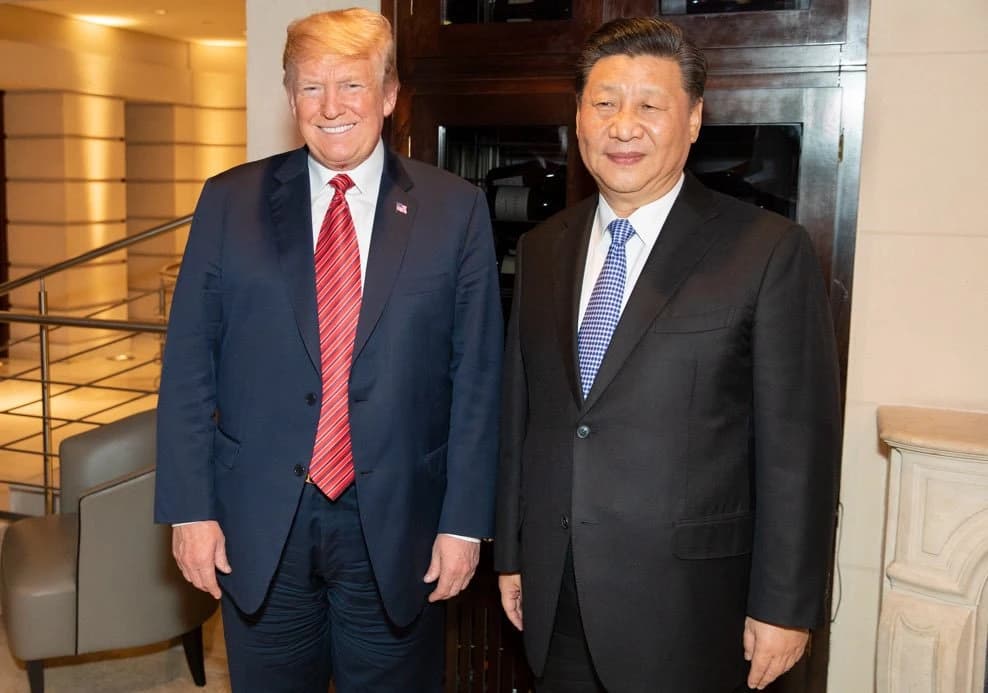
The political message was aimed as much at international audiences as at New Delhi. Sharif again credited US President Donald Trump with helping stop the fighting, a line designed to keep Washington engaged and to suggest that outside mediation may be the only reliable brake on a future crisis. For investors, that matters because any renewed clash between two nuclear-armed states would quickly hit South Asian risk assets, currency stability and regional trade assumptions.
Kashmir remained the emotional core of the speech. Sharif said lasting peace in South Asia depends on resolving the dispute, repeated Pakistan’s call for a UN-supervised plebiscite and accused India of illegal occupation, detentions, extrajudicial killings and disappearances. India, as before, rejects those claims and says Jammu and Kashmir is an integral part of the country, leaving the two sides locked in a diplomatic loop that has produced little movement for years.
The exchange at the UNGA underscores how the India-Pakistan relationship is still driven by security narratives rather than economic integration. That keeps a ceiling on cross-border commerce and limits the scope for regional investment, even as both countries confront domestic growth and external financing pressures. It also helps explain why markets typically view headline risk between the two as a geopolitical shock rather than a tradable macro theme.
For investors, the immediate implication is less about a near-term supply shock than about a persistent premium on regional risk. Any hardening of rhetoric around the Indus treaty would be watched closely for signs of policy follow-through, while the Kashmir dispute and military posturing remain the bigger tail risks. Unless the diplomatic channel reopens, the pattern of UN speeches followed by bilateral escalation is likely to continue.
| Entity | Gains | Losses |
|---|---|---|
| Pakistan government | ▲Domestic nationalist support | ▼Diplomatic credibility |
| India government | ▲Firm deterrence posture | ▼Higher regional risk premium |
| Pakistani farmers and power users | ▲None immediately | ▼Water-security uncertainty |
| South Asia investors | ▲Clarity on tensions | ▼Higher volatility and tail risk |