Pakistan’s stock market kept its bullish run alive on Wednesday, with the KSE-100 closing above 172,000 as easing geopolitical risk and softer crude prices drew buyers back into equities.
Pakistan KSE-100 Closes Above 172,000
The benchmark rose 830.43 points, or about 0.5%, to 172,232.51, after briefly climbing as high as 172,762.41. Trading volume reached 770 million shares, the strongest since Sept. 4, with turnover of 26 billion rupees, while market capitalization increased by 84 billion rupees to 19.178 trillion rupees. That is the kind of breadth and liquidity investors want to see in a rally: not just an index grind higher, but real cash rotating into the market.
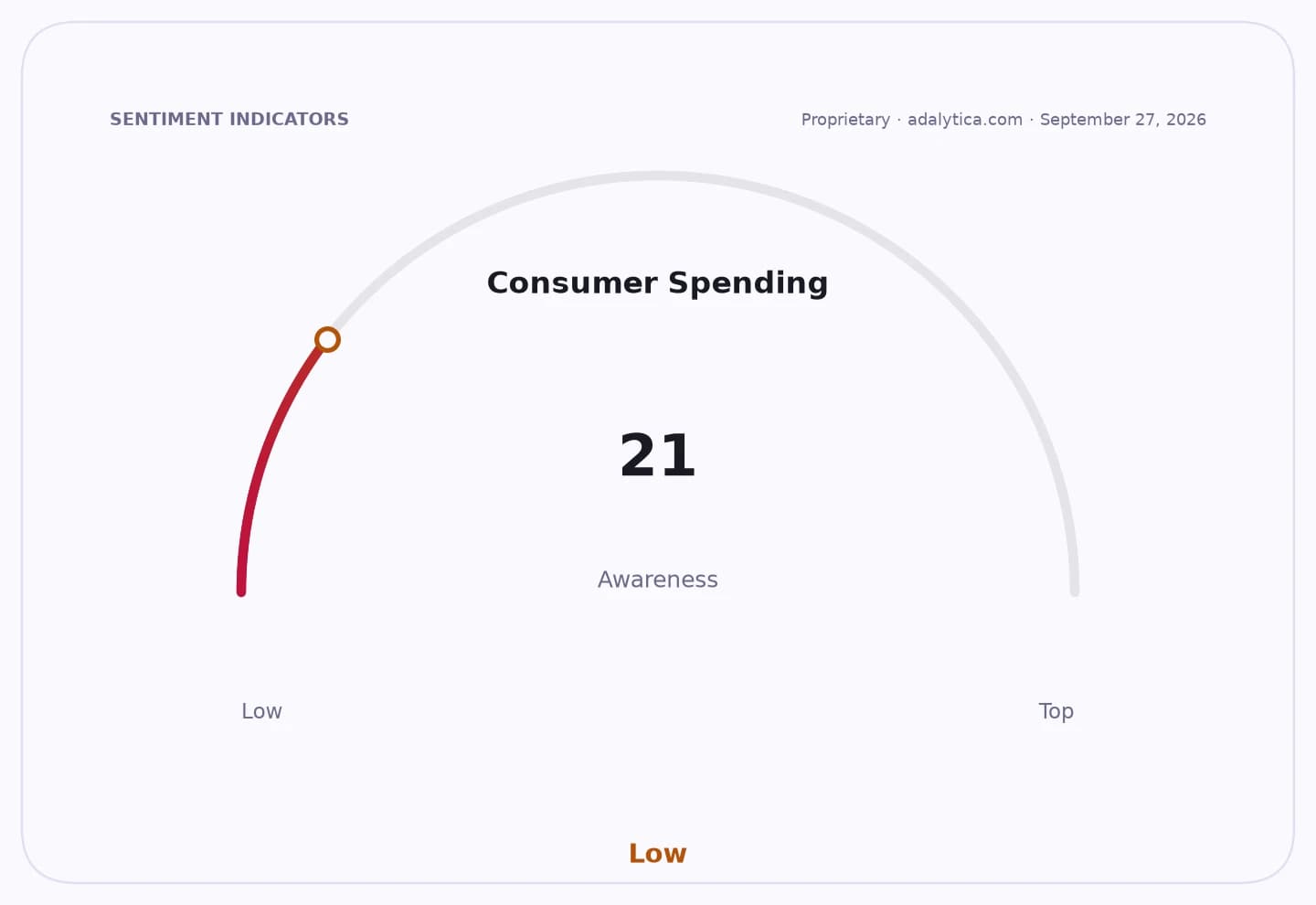
Sentiment IndicatorsⓘProprietary · adalytica.com · September 28, 2026
This is a snapshot — live sentiment, awareness and momentum for 130+ markets update continuously in the dashboard.Open AlphaPulse
The immediate catalyst was a shift in sentiment around the Iran-US standoff, which helped calm fears of a wider disruption in the Middle East. At the same time, a decline in global oil prices eased pressure on Pakistan’s external accounts and inflation outlook. For an energy-importing economy, cheaper crude is more than a headline — it improves the trade balance, helps stabilize the currency and lowers the risk that the central bank has to stay tighter for longer.
That matters because Pakistani equities are still highly sensitive to oil, the rupee and policy expectations. When crude falls, domestic sectors from banks and industrials to consumer names tend to benefit from better macro visibility and lower imported cost pressure. The market’s ability to absorb early-session selling and still finish near the day’s highs suggests local investors are increasingly willing to look past short-term volatility and position for a softer inflation path.
Topline Securities said the local market saw a strong recovery on the day, underscoring the degree to which macro relief rather than company-specific news is driving the tape. In emerging markets, that often creates the best trading opportunities: once the fear trade unwinds, capital can move quickly into lagging assets that still trade at a discount to regional peers.
The next question is whether the rally can turn into a durable re-rating. If oil stays contained and geopolitical tension remains in check, Pakistan’s market could keep attracting domestic liquidity and selective foreign interest. If not, the index’s record territory may prove vulnerable. For now, the setup favors the bulls — and investors looking for asymmetric upside in a market that is still being repriced by macro relief should keep Pakistan on the radar.
| Entity | Gains | Losses |
|---|---|---|
| Pakistan stock market | ▲Higher valuations, stronger turnover | ▼Short sellers, cautious buyers |
| Oil importers / domestic sectors | ▲Lower cost pressure | ▼Energy-linked inflation hedge trades |
| Local investors | ▲Improved sentiment, rising market cap | ▼Cash holders missing the rally |
| Iran-US risk trade | ▲De-escalation premium | ▼Geopolitical risk assets |