Pakistan’s prime minister has renewed his pitch to overseas investors, saying the government is creating a more conducive environment for business at a time when the economy is trying to sustain a fragile recovery and attract much-needed capital.
Pakistan PM pitches investment to overseas investors
Shehbaz Sharif made the case in New York during meetings with US-based Pakistani business leaders and professionals from technology, artificial intelligence, automobiles, energy, construction and other sectors, inviting them to invest in Pakistan. The message matters because Pakistan’s growth model remains constrained by weak domestic savings, repeated balance-of-payments stress and a narrow tax base, leaving foreign and diaspora capital central to any longer-term investment rebound.
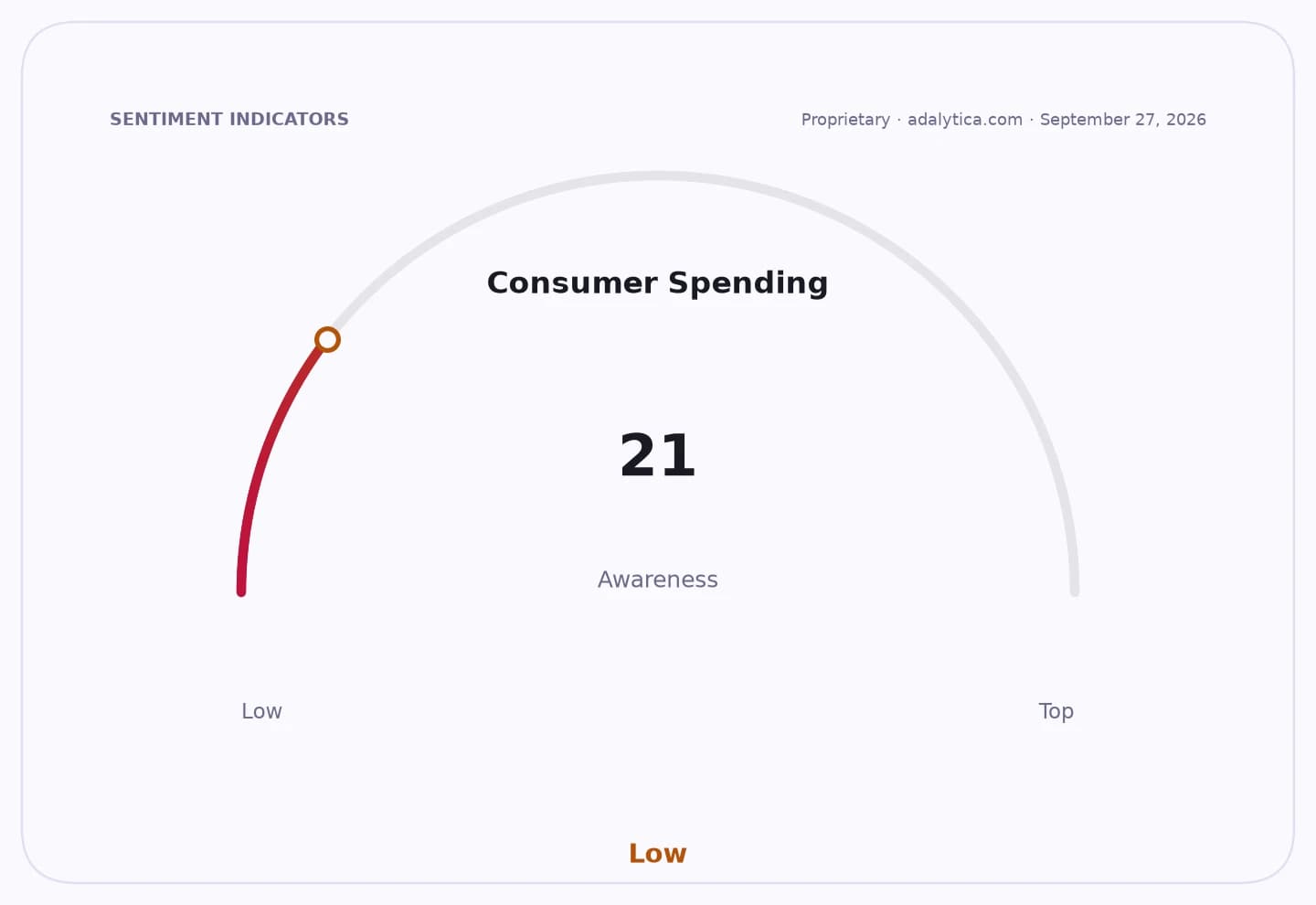
Sentiment IndicatorsⓘProprietary · adalytica.com · September 29, 2026
This is a snapshot — live sentiment, awareness and momentum for 130+ markets update continuously in the dashboard.Open AlphaPulse
The government is leaning on reform as much as on rhetoric. Shehbaz said changes at the Federal Board of Revenue have eased some of the business community’s complaints, a notable point in a country where tax administration has long been viewed as a barrier to formal investment. A smoother tax regime would matter for corporate planning, cash flow and compliance costs, particularly for firms weighing whether Pakistan can offer returns comparable with regional peers.
The pitch also reflects Islamabad’s need to broaden the sources of growth beyond consumption and imports. By highlighting agriculture, industry and exports, the prime minister is signaling that policymakers want investment to feed into productive sectors rather than speculative activity. That is economically important because Pakistan’s recovery will depend on lifting productivity and export capacity, not just on short-term inflows or external borrowing.
The sector mix in the meetings was telling. Technology and artificial intelligence point to higher-value service exports and skills transfer, while energy and construction speak to infrastructure and capacity bottlenecks that have held back industrial expansion. If the government can convert diaspora engagement into actual projects, it could help deepen formal investment and create jobs, but investors will want evidence that policy continuity, regulatory clarity and profit repatriation rules will hold.
Markets have yet to treat Pakistan as a clean turnaround story. Domestic equities still trade with a heavy risk discount, and foreign capital tends to arrive only when macro stabilization is paired with credible reform. For global investors, the opportunity is clear but conditional: Pakistan offers a large market and underpenetrated sectors, yet the country must prove that tax reform, governance improvements and business-friendly policy can outlast any single meeting or visit.
For now, the narrative is one of aspiration meeting necessity. Islamabad needs investment to support growth, while business leaders want assurances that reforms will translate into lower friction and better returns. The next test is whether the government can turn diaspora goodwill into announced capital commitments, especially in export-oriented and productivity-raising sectors that can make Pakistan’s recovery more durable.
| Entity | Gains | Losses |
|---|---|---|
| Pakistani government | ▲Investment pitch gains credibility | ▼Pressure to deliver reforms |
| US-based Pakistani investors | ▲Better access to opportunities | ▼Policy and execution risk |
| FBR reform agenda | ▲Lower compliance friction | ▼Entrenched tax bureaucracy |
| Pakistan economy | ▲Potential capital inflows | ▼Firms waiting on clarity |