The Pakistani rupee strengthened to a record level against the US dollar in the interbank market, a small but symbolically important move that underscores a steadier foreign-exchange setting in a currency long prone to sharp swings.
Pakistani Rupee Hits Record Interbank High
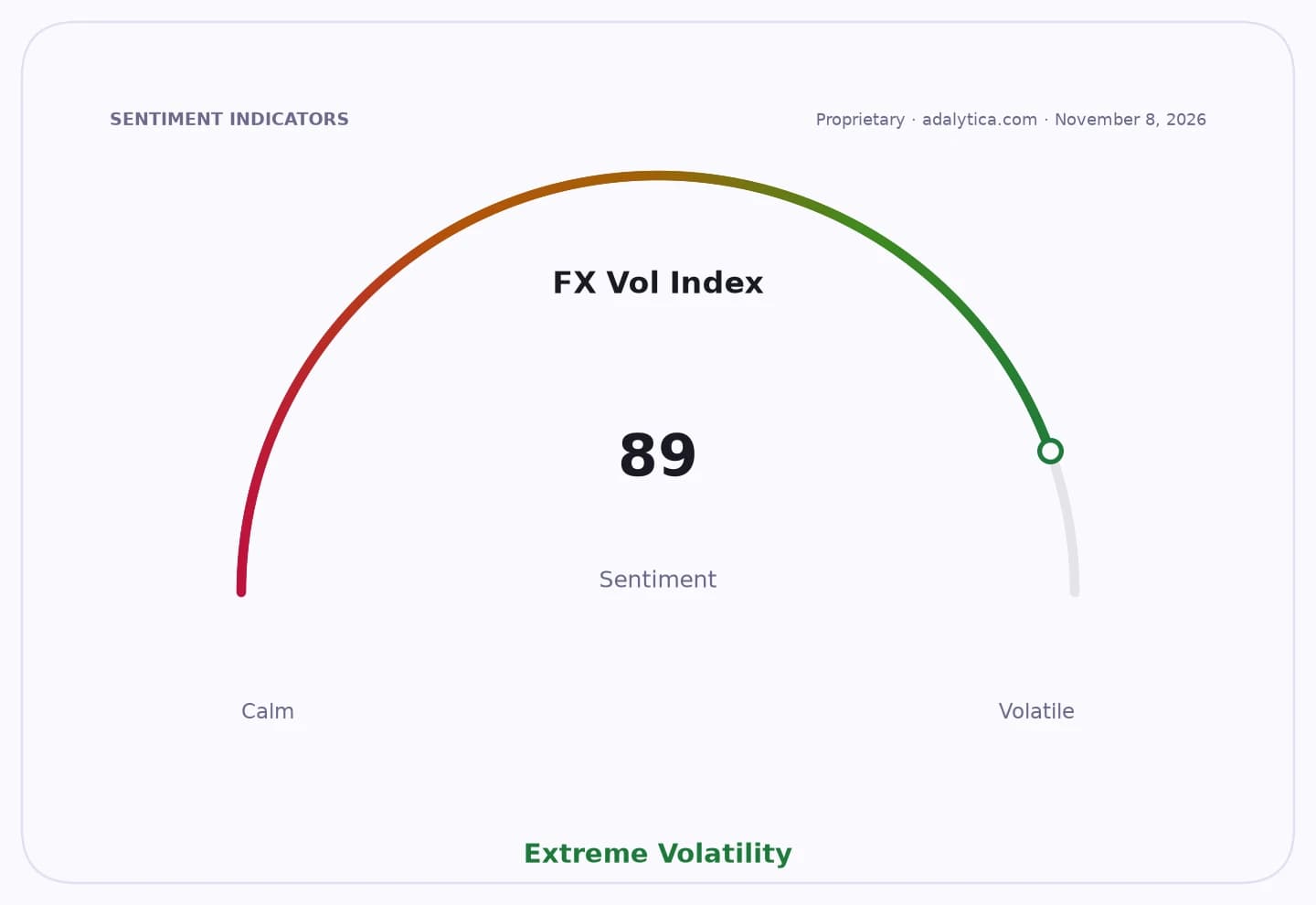
FX Vol Index
State Bank of Pakistan data showed the rupee rose 3 paisa on Thursday to 276.67 per dollar, its strongest reading on record in the interbank market. In the open market, the dollar was quoted at 277.30 for buying and 279.55 for selling, indicating the gap between official and retail pricing remains contained but still present.
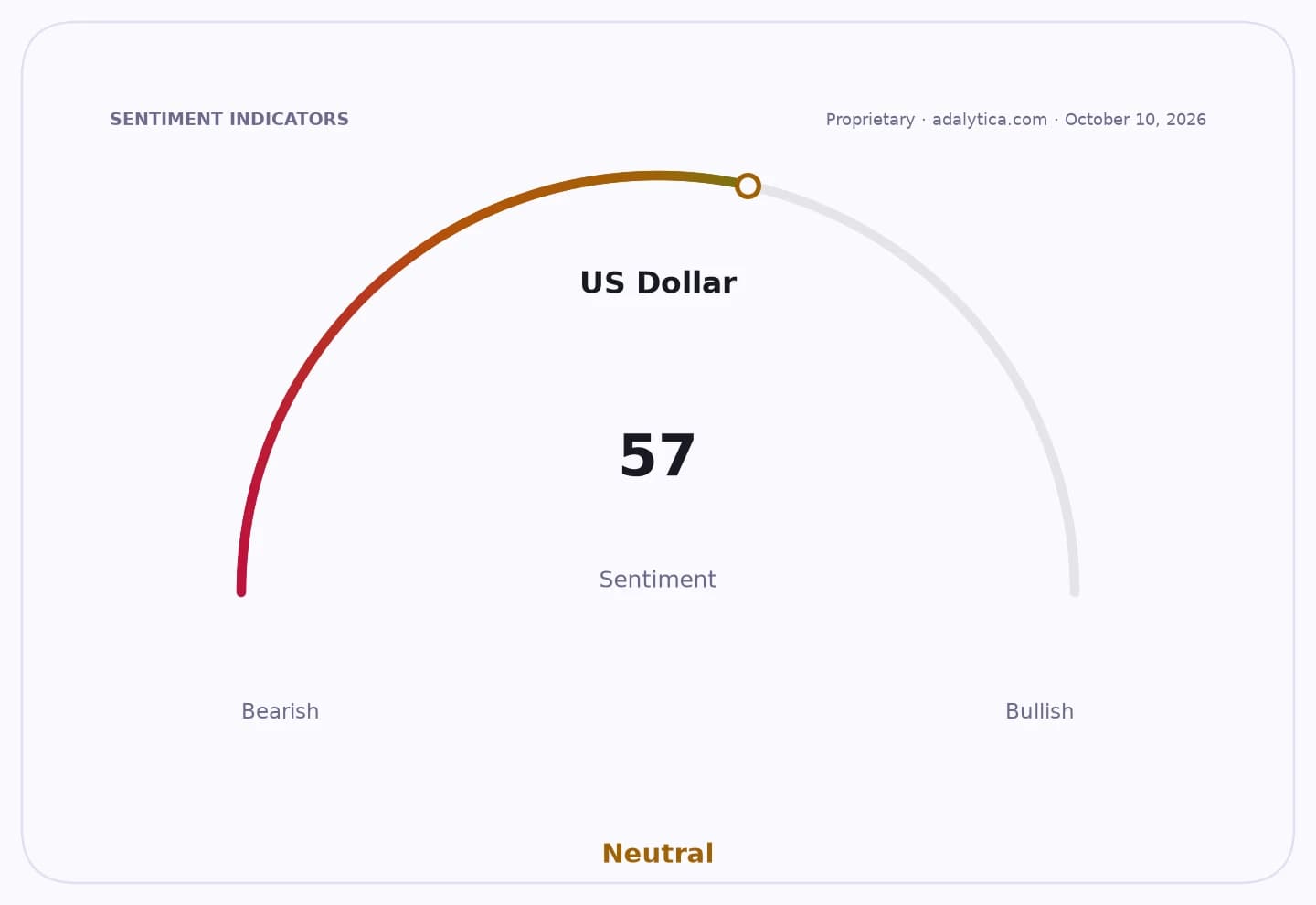
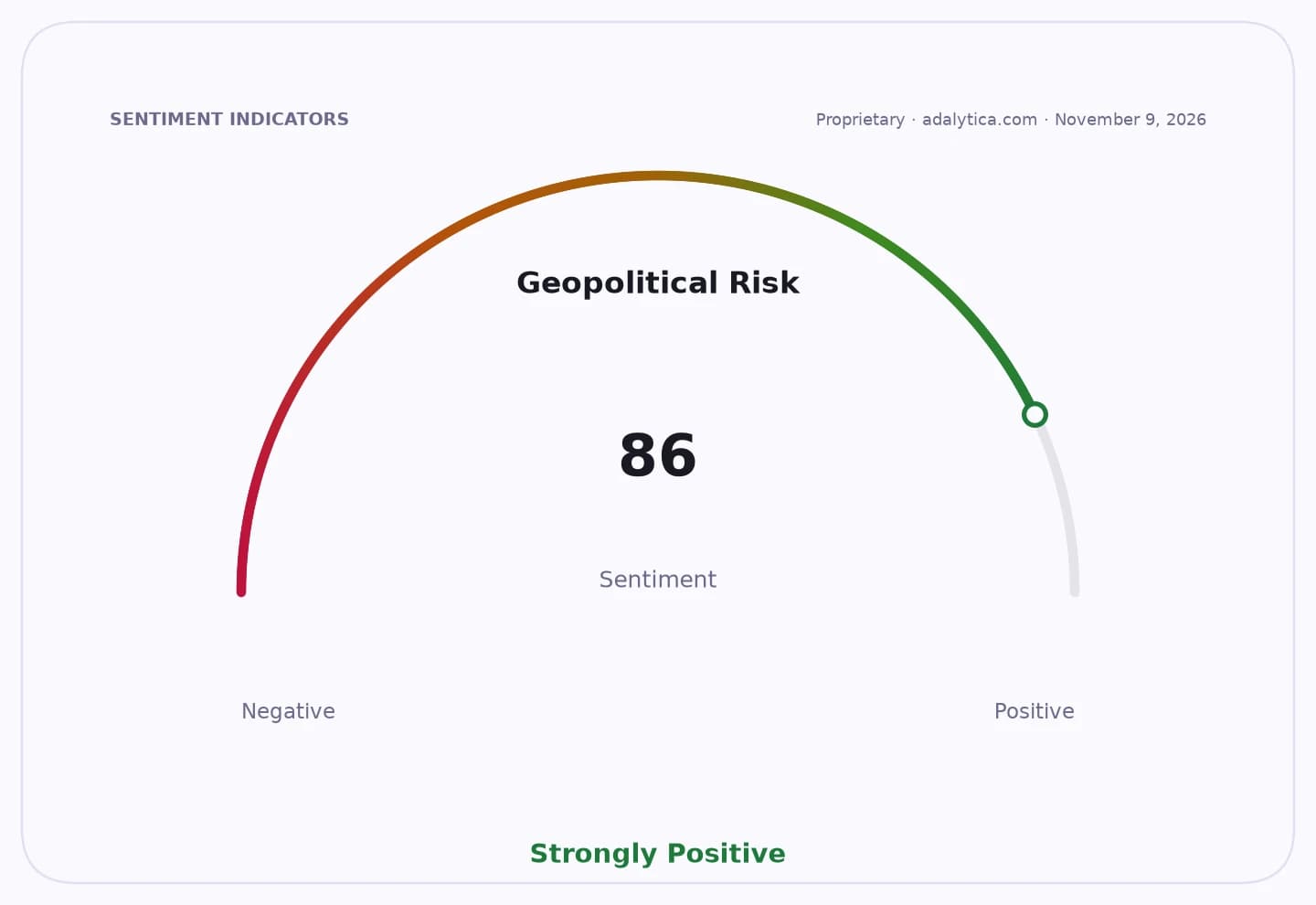
Sentiment Indicators
For Pakistan, even marginal appreciation matters because it eases pressure on imported fuel, food and industrial inputs, which are central to inflation and business costs in an economy heavily dependent on external supplies. A firmer rupee can also help anchor expectations in a market that has spent much of the past few years dealing with depreciation, reserve stress and recurring balance-of-payments concerns.
The move suggests dollar demand is being met without the kind of disorderly pressure that has often forced abrupt adjustments in the exchange rate. That is relevant for policymakers, who have been trying to preserve currency stability while supporting growth and meeting external financing needs. It also matters for investors because exchange-rate calm tends to reduce near-term inflation risks, improve visibility on earnings for importers and exporters, and lower the odds of another shock to sovereign risk sentiment.
There was no single catalyst in the official data, but the record interbank level fits a broader pattern of improved market functioning after repeated episodes of volatility. A stable rupee can also support confidence in Pakistan’s financial system at a time when investors continue to watch for signs that the country can maintain external discipline without heavier administrative controls.
For now, the significance is less about the size of Thursday’s move than the fact that the rupee reached a new high while remaining close to parity with the open market. If that alignment holds, it would point to a more orderly FX market and give authorities more room to manage inflation and external financing risks.
| Entity | Gains | Losses |
|---|---|---|
| Pakistani importers | ▲Lower input costs | ▼Less pricing power for exporters |
| Pakistani consumers | ▲Softer import-led inflation | ▼None immediate |
| State Bank of Pakistan | ▲Greater FX stability | ▼Less room to absorb shocks |
| Dollar holders/savers | ▲None | ▼Slight valuation loss |