Paraguay’s labor market has strengthened enough to push unemployment to a historic low and lift formal employment to its highest level on record, a development that supports household incomes, broadens the tax base and gives the economy more room to keep expanding.
Paraguay Jobless Rate Falls to Record Low
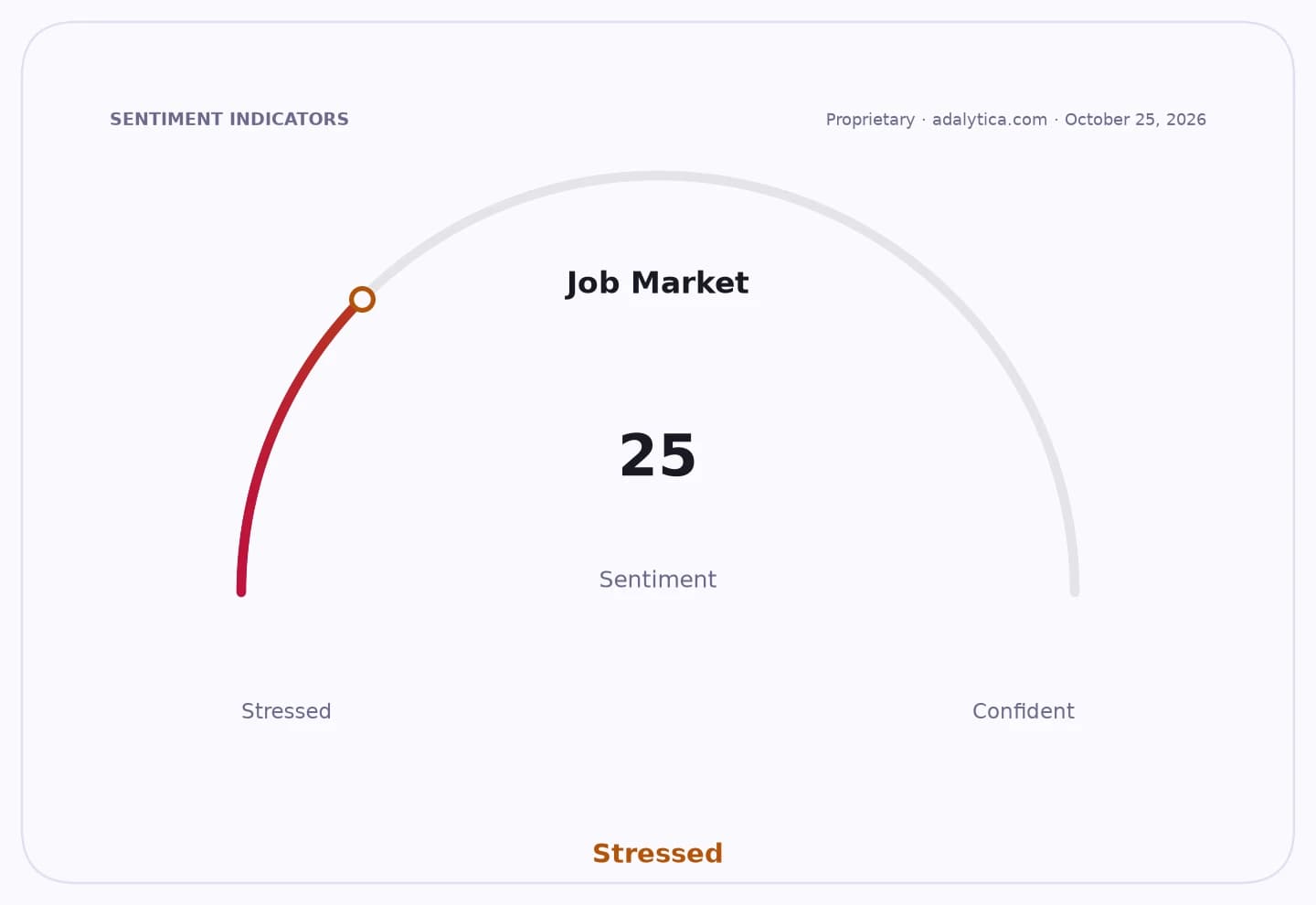
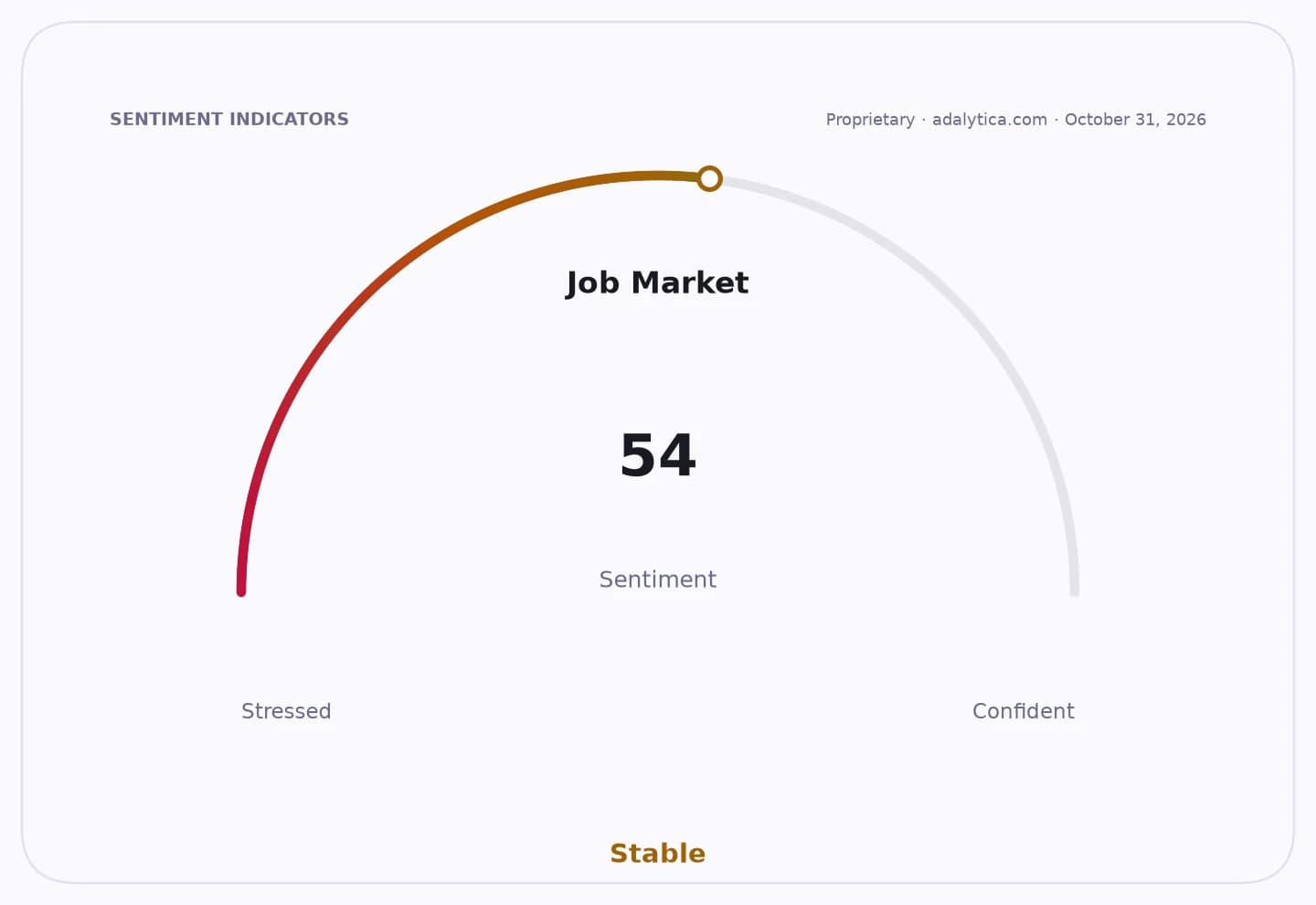
Job Market
The third-quarter household survey from the national statistics office showed the number of employed people rising to 3,290,206, up 66,149 from a year earlier, while the jobless total fell to 141,250, or 24,176 fewer people without work. The unemployment rate declined to 4.1% from 4.9% a year earlier, underscoring a tightening labor market that is unusual for a small emerging economy still navigating uneven global growth.
Sentiment Indicators
Consumer Confidence
What makes the report economically important is not just the headline drop in joblessness, but the quality of the gains. Formal non-agricultural employment increased by 92,166 in the past year and by 227,081 during the current administration, according to the data cited by the government. That matters because formal jobs typically bring higher and more stable incomes, legal protections and social security contributions, while also improving public revenue over time.
The gains were concentrated in services, especially commerce, restaurants and hotels, signaling that domestic demand and consumer activity are still carrying much of the labor market’s momentum. The occupation rate climbed to 70.0% from 69.4%, another sign that more of the working-age population is being absorbed into the economy. For policymakers, the numbers suggest that recent growth is not only showing up in output statistics, but is also translating into employment and a broader social payoff.
Still, the report is not a clean victory lap. Underemployment remained at 4.2%, affecting 143,181 workers, and women accounted for 63.2% of that group. That points to a persistent mismatch between the kind of work being created and the need for longer-hours, better-quality jobs, especially for women who often face greater care burdens and lower labor-force flexibility. The next policy challenge is less about creating any job and more about widening access to full-time formal work.
For investors, the implications are straightforward. A stronger labor market should support consumption, especially in retail, food services and hospitality, and should help underpin credit demand. It also strengthens the case for Paraguay as a relatively stable domestic-growth story in a region where labor markets remain uneven. The risk is that if wage pressures build too quickly or if job creation slows in services, the improvement in unemployment could prove harder to sustain.
| Entity | Gains | Losses |
|---|---|---|
| Paraguayan workers | ▲More formal jobs, lower unemployment | ▼Remaining underemployed workers |
| Consumers and retailers | ▲Stronger household spending power | ▼Firms facing higher labor costs |
| Government | ▲Bigger tax base, political boost | ▼Pressure to fix job quality gaps |
| Informal or marginal workers | ▲Potential path into formal sector | ▼Risk of being left behind |