Angola’s labour market remains deeply distorted despite a string of government programmes, with official data showing youth unemployment at 40.5% and informal work accounting for nearly four-fifths of jobs.
Angola unemployment stays high despite job programs
That gap between policy effort and labour-market reality is the key economic story in the country’s latest employment update. President João Lourenço said in his state-of-the-nation address that two flagship schemes, the Plan for the Promotion of Employability and the JOBE youth programme, had reached more than 140,000 young Angolans. Authorities also say roughly 600,000 people have received vocational training since 2022 and that more than 920,000 net job links were created over the same period.
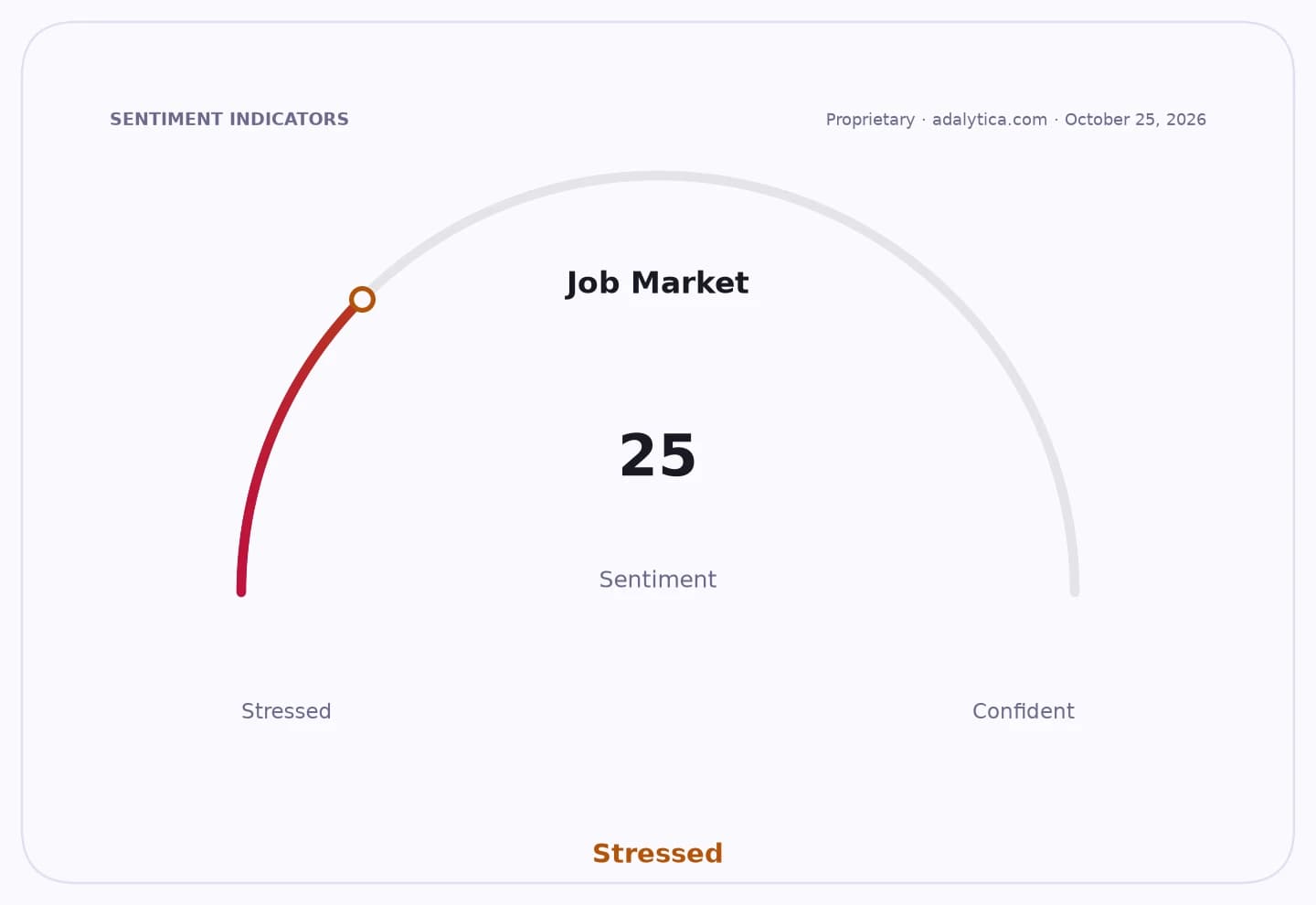
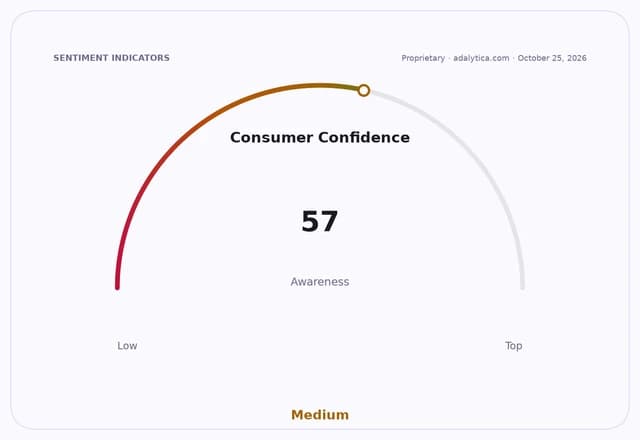
Sentiment IndicatorsⓘProprietary · adalytica.com · October 25, 2026
This is a snapshot — live sentiment, awareness and momentum for 130+ markets update continuously in the dashboard.Open AlphaPulse
But the numbers still point to a labour market that is failing to absorb new entrants at a pace that would materially reduce underemployment. The National Statistics Institute said unemployment for 15- to 24-year-olds stood at 40.5% in the second quarter of 2026, compared with 21.1% for those aged 25 to 34. Overall unemployment was 21.5%, with women more exposed than men at 23.3% versus 19.8%.
For investors and policymakers, the most important issue is not just headline unemployment but the dominance of informal work. At 78.6% of total employment in the fourth quarter of 2025, the informal sector continues to dominate incomes, tax collection and social protection coverage. That limits the state’s ability to turn job creation into durable consumption growth, formal credit demand and a broader tax base.
The government’s response has been to lean on training, apprenticeships, microcredit and local entrepreneurship. New vocational centres and employment offices have been opened across several provinces, and a new programme, JOVEM+, is slated to run through 2030 with a target of supporting more than 500,000 people aged 16 to 35, including quotas for women and people with disabilities.
The challenge is that training alone does not guarantee formal employment in an economy where much of the labour force remains outside regulated work. Angola’s job-market problem is structural: many young people are still being channelled into low-productivity activities rather than stable private-sector jobs. That helps explain why the state can report large beneficiary numbers while unemployment and informality stay elevated.
For markets, the implication is that Angola’s consumer story will likely remain uneven, with household purchasing power constrained outside the small formal sector. It also means sustained improvement in employment will depend on broader investment-led growth, not just labour-market programmes. With unemployment still high and the informal economy dominant, the next test is whether the state’s new training and placement push can translate into formal job creation at scale before the 2030 target window.
| Entity | Gains | Losses |
|---|---|---|
| Angola government | ▲Political credit for job initiatives | ▼Pressure to show formal-job results |
| Young jobseekers | ▲More training and placement access | ▼Persistent unemployment |
| Informal workers | ▲Continued income opportunities | ▼Weak social protection |
| Private-sector investors | ▲Potential larger future labour pool | ▼Weak consumer demand near term |