Women captured 55.4% of new formal jobs in five cities in Brazil’s northwestern Paraná state this year, a sign the local labor market is favoring a younger, more educated workforce and that female participation is increasingly driving regional hiring.
Brazil Paraná women take larger share of new formal jobs
The shift matters because labor absorption is one of the cleanest gauges of underlying economic health: when employers are still adding payrolls and women are taking a larger share of those roles, it usually points to a service-heavy economy that is expanding at the entry and mid-skill level rather than contracting. In the Apucarana, Arapongas, Ivaiporã, Jandaia do Sul and Mauá da Serra area, women filled 1,301 jobs between January and August, compared with 1,044 for men, according to Brazil’s Caged employment registry cited by TNOnline.
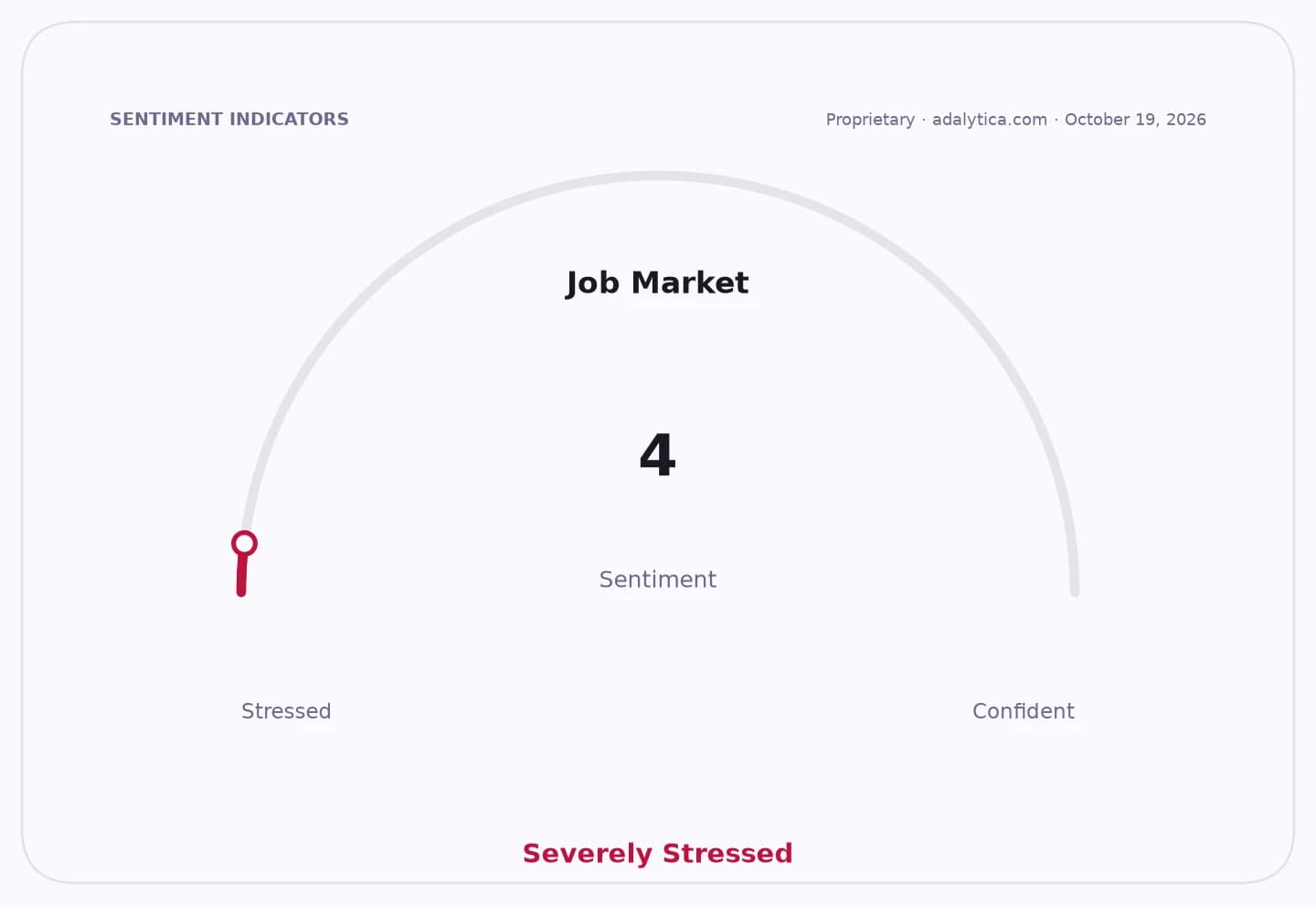
Sentiment IndicatorsⓘProprietary · adalytica.com · October 22, 2026
This is a snapshot — live sentiment, awareness and momentum for 130+ markets update continuously in the dashboard.Open AlphaPulse
Arapongas accounted for the largest female hiring balance, with 822 jobs filled by women versus 768 by men. Apucarana followed with 266 new positions for women, well ahead of 100 for men. That tells investors something important about the composition of demand: hiring is being concentrated in occupations tied to administration, sales and services, not in capital-intensive sectors that rely on a slower investment cycle.
The profile of the workforce reinforces that read. Employers in the region are leaning hardest into workers aged 18 to 24, who posted a net gain of 1,336 jobs, while those up to 17 years old added another 925. By education, the clear winner was workers with completed secondary school, who filled 1,774 positions. For businesses, that means a labor pool that is still relatively affordable and flexible. For the economy, it suggests formalization is widening, but from a low-to-mid skill base rather than a deep surge in productivity-heavy hiring.
The sector mix also points to a consumer and services-led expansion. Administrative services generated a net 396 jobs, arts and science occupations added 257, and sales roles in shops and markets created 204 more. Those are the kinds of jobs that support local consumption, household income and retail turnover. They also tend to benefit women more directly, which helps explain why female hiring is outpacing male hiring in this data set.
For investors, the story is less about one Brazilian region than about a broader labor-market pattern that can support domestic demand plays. Employers are still hiring, women are gaining share, and the jobs being created are in the parts of the economy that feed spending. That is constructive for retailers, service providers and local consumer franchises, even if it does not yet signal a high-wage boom.
The market takeaway is that the labor cycle here looks resilient, but not overheated. That is good news for consumption and formal employment, and it keeps the case alive for businesses exposed to lower-income and younger workers. If this pattern holds, the next winners are likely to be the companies and sectors that monetize household formation, retail traffic and service demand rather than heavy industry.
| Entity | Gains | Losses |
|---|---|---|
| Women workers | ▲Larger share of new jobs | ▼Men’s hiring share |
| Local retailers/services | ▲More payroll-driven demand | ▼Capital-intensive sectors |
| Employers | ▲Younger, educated labor pool | ▼Scarce higher-skill talent |
| Consumer-linked businesses | ▲Higher spending base | ▼Weak formal job growth elsewhere |