Senegal’s new state-employer convention is emerging as the clearest near-term instrument in President Bassirou Diomaye Faye’s push to tackle youth unemployment, linking 211 companies with 4,132 beneficiaries in a bid to make training more directly convertible into jobs.
Senegal employment pact links 211 companies, 4,132 people
The agreement, signed on April 23, 2026 and known as Andu Yomba Lëkkalë, matters because it shifts the employment debate from broad policy pledges to an operating model that involves firms, apprentices and trainees. Of the people covered, 3,140 are stagiaires and apprentices, giving the program immediate scale in a labor market where formal job creation remains the central economic constraint. For investors and policymakers, that makes the pact more than a social program: it is a test of whether Senegal can align education, private-sector hiring and workforce development quickly enough to support growth and reduce social pressure.
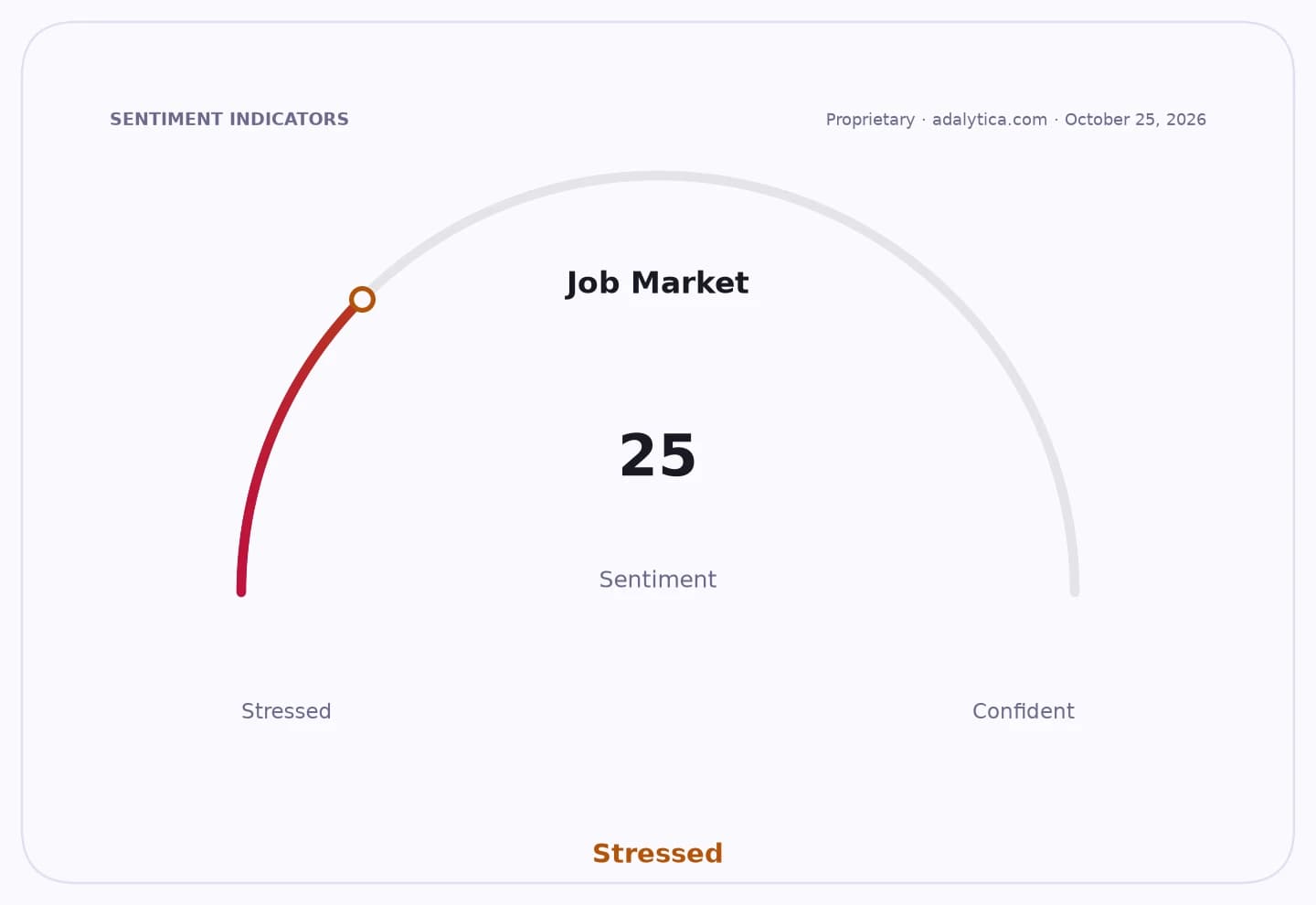
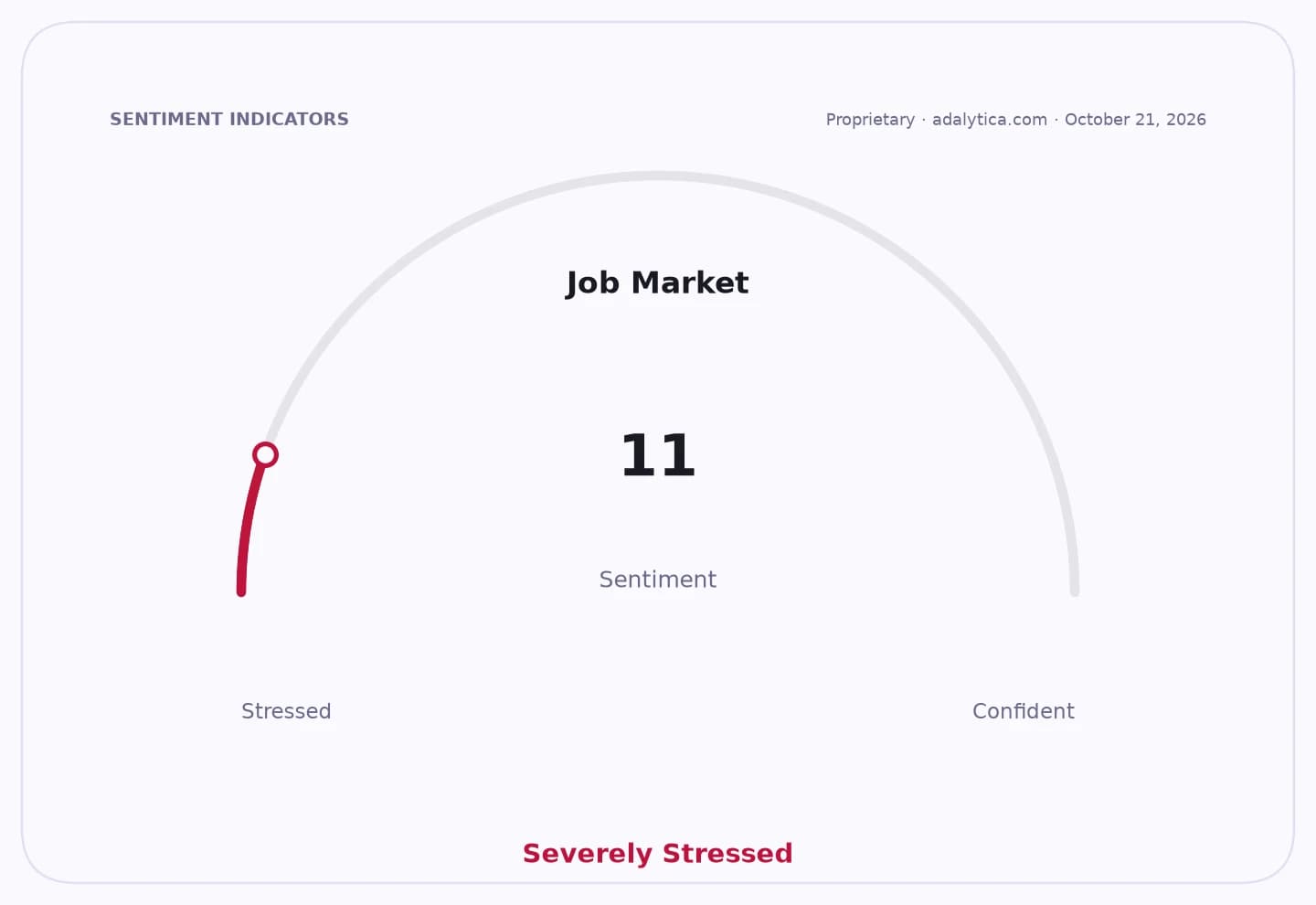
Sentiment IndicatorsⓘProprietary · adalytica.com · October 25, 2026
This is a snapshot — live sentiment, awareness and momentum for 130+ markets update continuously in the dashboard.Open AlphaPulse
Employment remains a macroeconomic issue even as headline conditions have improved. The unemployment rate in the context data is forecast at 4.09% for October 2026, after edging up to 4.2% in September from 4.1% in July and August. That is low by international standards, but it does not capture the larger challenge in many emerging markets: underemployment, skills mismatch and the weak absorption of young workers into productive, formal roles. The government’s new national employment policy for 2026-2034 is meant to correct what the labor minister described as fragmented, redundant and poorly coordinated past initiatives.
That is why the structure of the pact matters. The six-pronged design includes support for micro, small and medium-sized enterprises, entrepreneurship and first-time job access, all areas where private hiring can create faster labor-market traction than public employment programs alone. The government is also trying to make companies co-architects of training rather than passive recipients of graduates, an approach that could improve employability if firms remain engaged beyond the initial rollout.
There are also clear political stakes. Faye has ordered ministers to accelerate the national employment policy and produce an urgent multisector action plan, underscoring that jobs are now a priority of state. That elevates execution risk: a strategy paper is easier to announce than to implement, especially when multiple ministries, training institutions and employers must coordinate. The minister’s handling of the 32 agents from the PF2E program shows the government is still working through the legal and labor-contract details of legacy schemes.
For investors, the key implication is that labor-market reform could become a longer-term support for domestic demand, corporate staffing pipelines and social stability, all of which influence the investment climate. A more skilled workforce can help manufacturers, service providers and small firms expand, but only if the state can sustain private-sector participation and keep programs from becoming bureaucratic overlays. The near-term question is whether the 211-company membership expands materially and whether the 4,132 beneficiaries translate into measurable hiring, not just certification.
The broad story is not that Senegal has solved unemployment. It is that the government is building a more market-linked labor policy and putting private employers at the center of it. The economic payoff will depend on whether that coordination produces durable jobs at scale, or remains a useful but limited pilot in a labor market that still needs deeper structural reform.
| Entity | Gains | Losses |
|---|---|---|
| Government | ▲Policy credibility | ▼Execution burden |
| 211 member companies | ▲Workforce pipeline | ▼Compliance costs |
| Trainees and apprentices | ▲Access to first jobs | ▼Uncertain placement |
| Legacy fragmented programs | ▲— | ▼Reduced relevance |