Trump’s public defense of Pete Hegseth may calm the immediate leadership chatter at the Pentagon, but it does little to resolve the bigger market issue: a defense secretary under mounting political fire is now central to U.S. weapons policy, a $1.5 trillion defense-spending fight and the next phase of support for Ukraine.
Pentagon Hegseth Fight Hits Defense Spending and Ukraine

That matters because the Pentagon is not just a policy shop right now — it is a capital allocator with direct consequences for defense contractors, allied militaries and Washington’s budget trajectory. If Hegseth stays, Trump keeps a loyal lieutenant in place while Democrats prepare a sweeping oversight push over the Iran war, military purges and U.S. strikes in Latin America. If he goes, the administration risks another disruptive transition inside the department at the very moment it needs Congress to move fast on spending and weapons transfers.
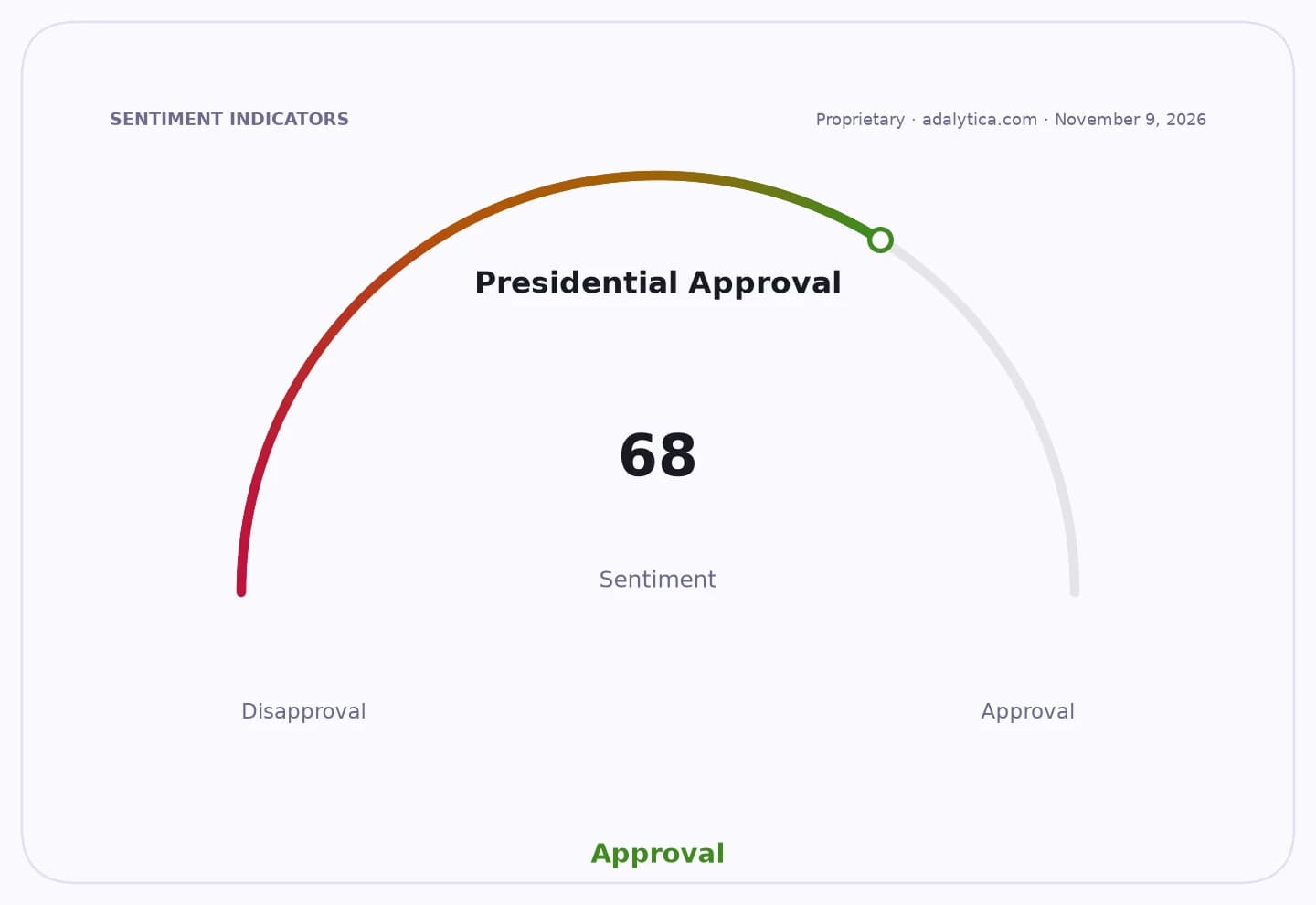
Sentiment Indicators
The immediate flashpoint is Ukraine. President Volodymyr Zelensky has publicly criticized a nearly month-long delay in approving Patriot and NASAMS missile deliveries, and that kind of bottleneck is exactly what investors should watch. Delayed approvals can push out revenue recognition for missile makers and support systems, while also forcing allies to accelerate their own procurement plans if they lose confidence in U.S. delivery timelines. In a market that already prizes defense as a secular growth trade, execution risk at the Pentagon matters as much as budget rhetoric.
Hegseth’s position is also politically fragile. Republican Senator Thom Tillis said the secretary has “a reckoning” coming, while Representative Adam Smith is promising aggressive oversight and Massie has already filed impeachment articles. That kind of bipartisan hostility increases the odds that every major Pentagon decision becomes a political event. For investors, that means greater headline volatility around defense names tied to U.S. replenishment cycles, munitions, air defense and allied stockpiles.
The market underestimates how much this story is really about power inside the defense budget. Trump’s endorsement suggests Hegseth is still protected for now, but the White House is clearly weighing whether a different face would help sell the president’s agenda on Capitol Hill. That is a reminder that personnel risk at the Pentagon can move spending flows almost as much as policy itself.
The investable takeaway is straightforward: stay long the defense and missile-defense beneficiaries, but expect more volatility in Washington-dependent names until the Ukraine approvals, congressional oversight and Hegseth’s own future are settled. The asymmetry still favors contractors with exposure to air defense, munitions and replenishment demand — because regardless of who sits in the Pentagon chair, the need to rebuild stocks is not going away.
| Entity | Gains | Losses |
|---|---|---|
| Defense contractors | ▲Replenishment demand | ▼Approval delays |
| Ukraine | ▲Faster aid if approved | ▼Air-defense shortfall |
| Trump White House | ▲Loyal Pentagon leadership | ▼Political distraction |
| Congressional critics | ▲Oversight leverage | ▼Slower defense package progress |