Peru’s central bank raised its benchmark interest rate to 4.50% on Friday, its first increase since January 2023, after annual inflation accelerated to 5.3% in October and expectations for the next 12 months moved above the top of the target range.
Peru central bank raises rate to 4.50%

The Banco Central de Reserva del Perú is responding to a deterioration in price stability that is increasingly broad-based and harder to dismiss as transitory. October inflation climbed from 4.5% in September, driven mainly by higher food and energy costs, while monthly prices rose 0.57%. That leaves consumer inflation well above the central bank’s target band and raises the risk that wage and pricing behavior begin to adjust to a higher inflation environment.
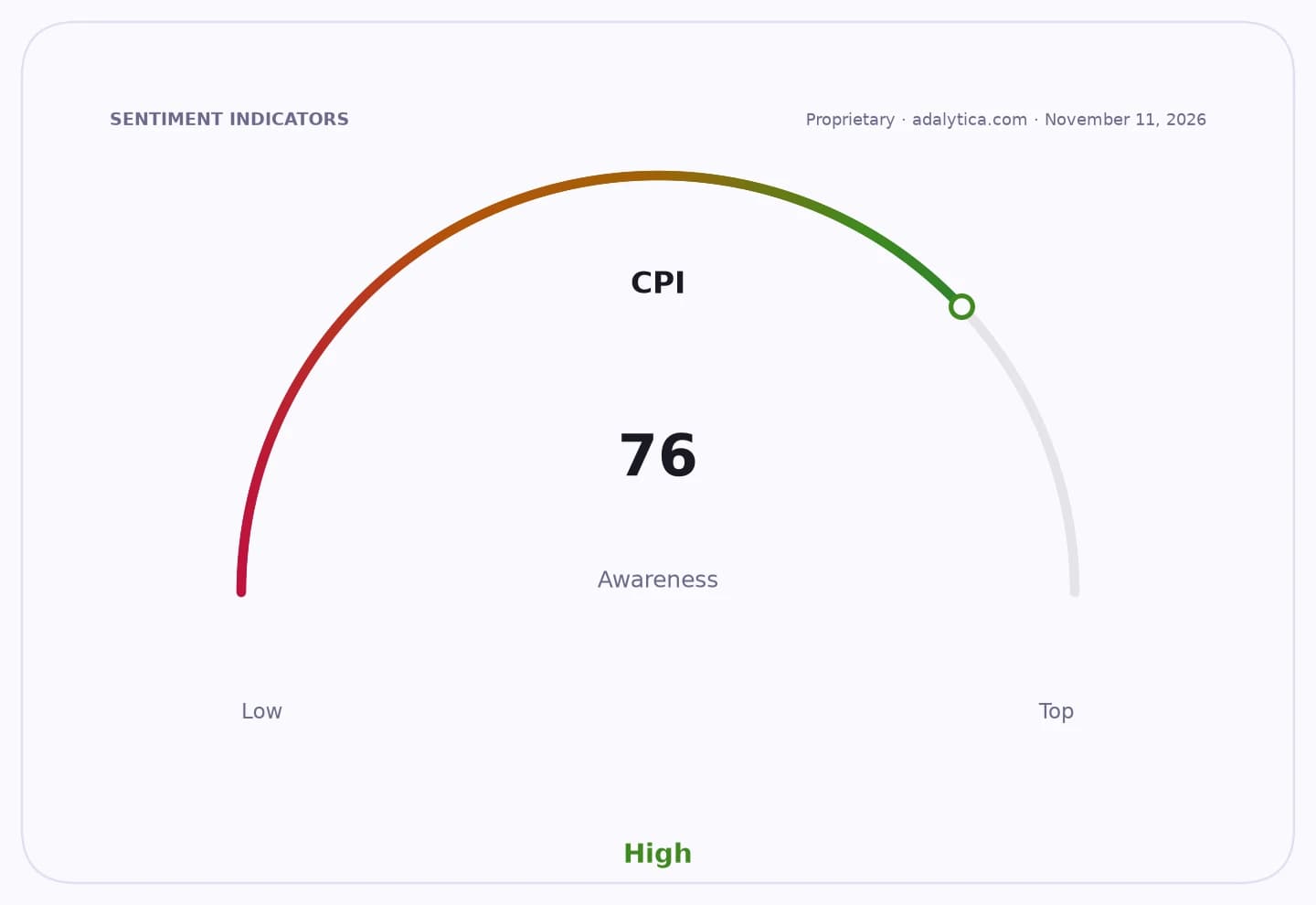
Sentiment Indicators
The move matters economically because Peru is trying to cool demand without choking off activity, at a time when supply shocks remain an important driver of prices. The central bank said core inflation excluding food, energy and transport was 2% in October, still inside target, which gives policymakers some room to argue that underlying pressures remain contained. But inflation excluding food and energy was still running at 4.6% year on year, suggesting the recent pickup is not confined to a narrow slice of the basket.
For investors, the rate hike is a reminder that the easing cycle in emerging markets is not linear and can reverse quickly when inflation reaccelerates. Higher policy rates typically support the currency and help anchor local bond yields, but they also raise funding costs for borrowers and can squeeze credit growth. The central bank’s signal that this is not necessarily the start of a tightening cycle should limit the market’s expectation for a rapid series of hikes, yet the direction of travel now depends on whether price pressures fade as the authority expects.
That balance is delicate. The BCR said it expects headline and core inflation to return gradually toward 2%, but it also flagged El Niño and geopolitical tensions in the Middle East as risks that could keep food and energy prices elevated. Those external shocks matter for Peru because they can filter through quickly to transport, commodities and household spending, forcing policymakers to keep rates restrictive for longer.
The broader message for markets is that Peru’s monetary policy is shifting back toward defense of the inflation target rather than support for growth. If price pressures ease, the bank can hold the line. If they do not, the current 4.50% rate may prove only a stop on a longer path toward tighter conditions.
| Entity | Gains | Losses |
|---|---|---|
| Banco Central de Reserva del Perú | ▲Credibility on inflation | ▼Short-term growth support |
| Peruvian savers and sol bonds | ▲Higher yields, firmer currency | ▼ |
| Peruvian borrowers and businesses | ▲ | ▼Higher financing costs |
| Food and energy importers | ▲ | ▼Costlier inputs, margin pressure |