The Philippines and China have moved to keep diplomatic channels open even as their South China Sea dispute deepens, a sign both sides still see value in managing a confrontation that could unsettle trade, investment and regional security.
Philippines, China Keep Diplomatic Channel Open

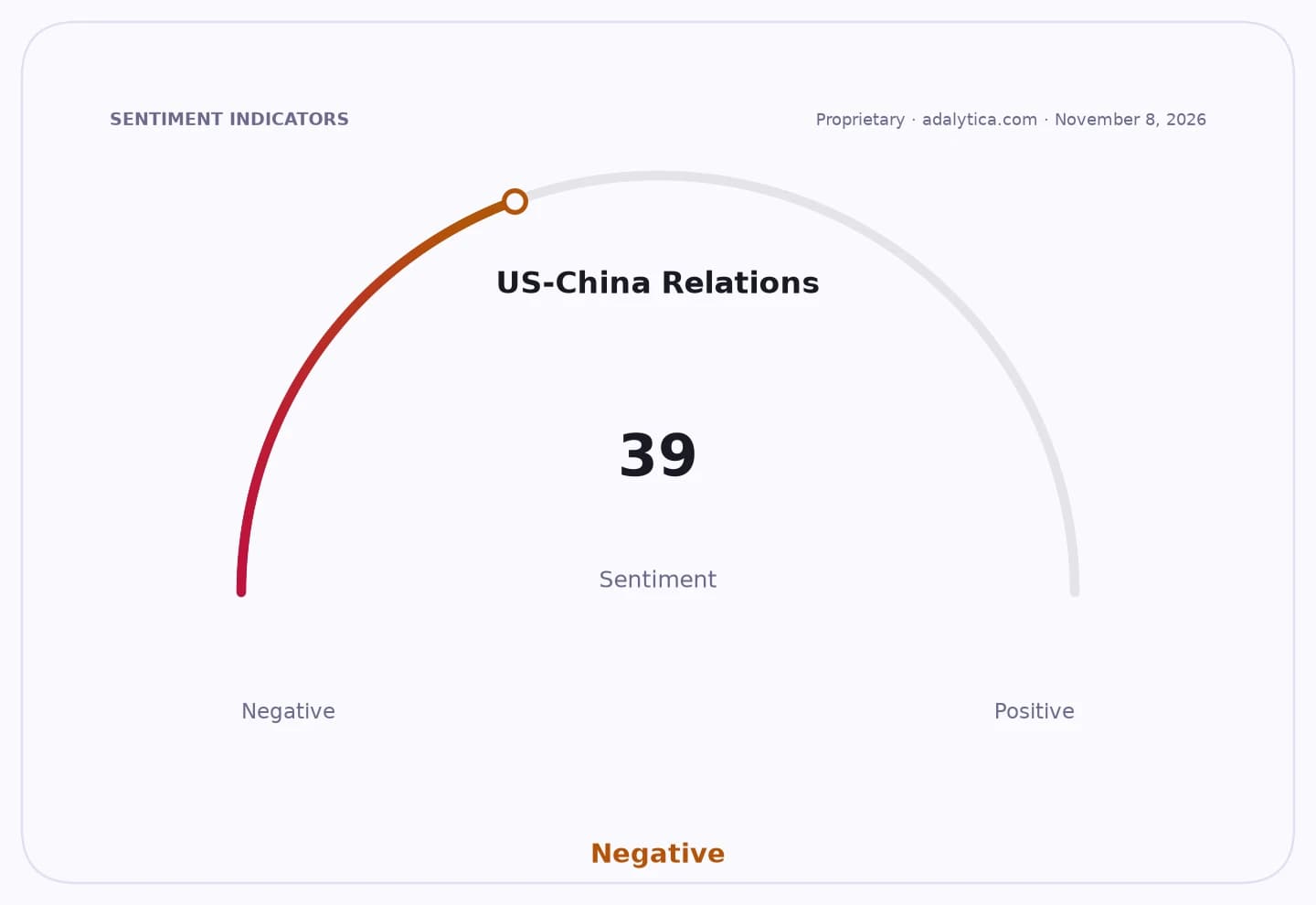
Manila said Foreign Minister Ma. Theresa Lazaro and China’s Wang Yi held a “frank, pragmatic and constructive” phone call on Tuesday, underscoring that both governments want to avoid a breakdown in communication ahead of a crowded stretch of regional diplomacy. The call came after Beijing sharply criticized Philippine politicians and accused them of crossing China’s “red lines,” highlighting how quickly bilateral friction can escalate even when both sides publicly reaffirm restraint.
Sentiment Indicators
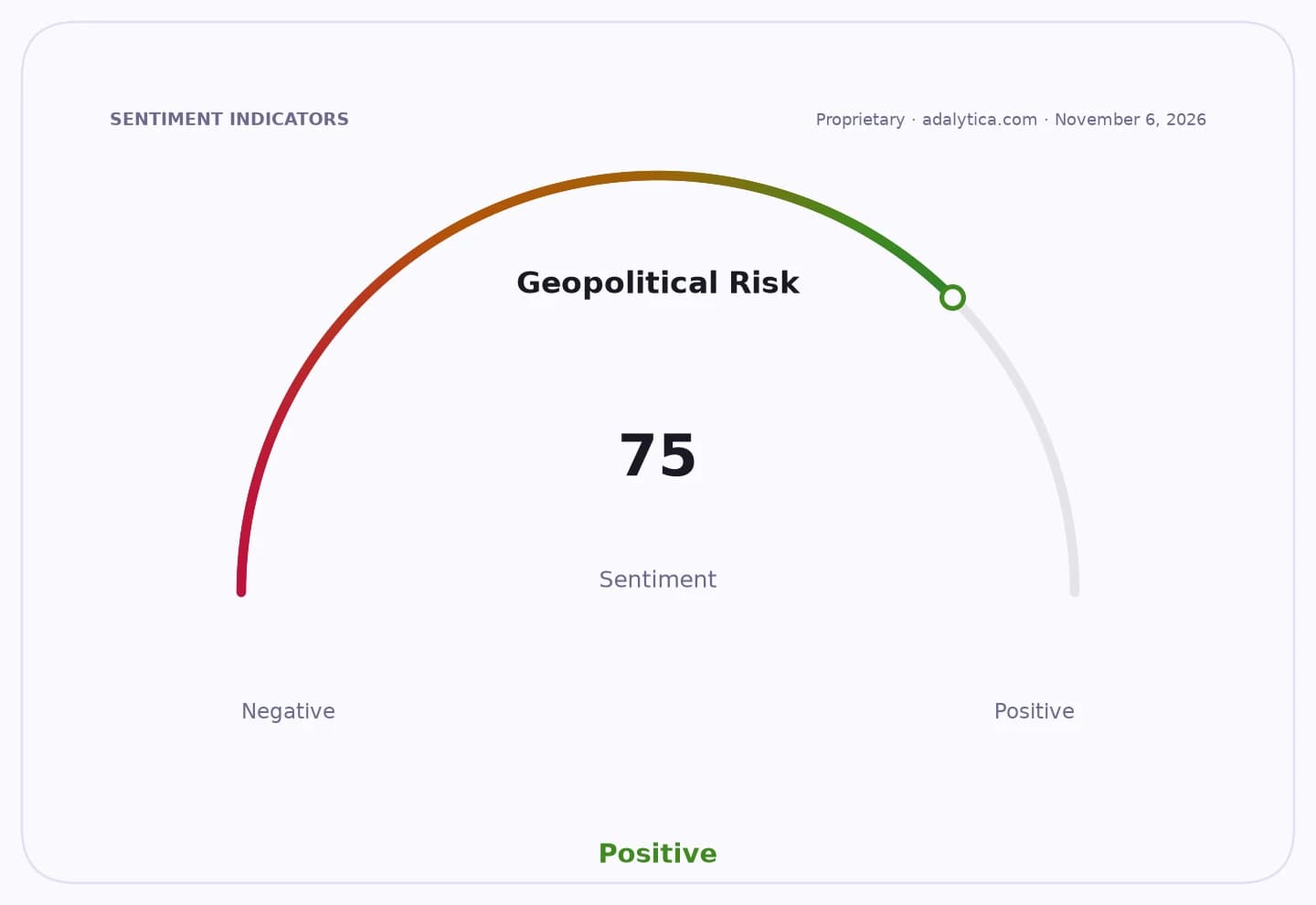
Geopolitical Risk
That matters because the Philippines is this year’s ASEAN chair and is preparing to host leaders in Manila, while Chinese Premier Li Qiang is expected to attend. Both governments also said their leaders would be accorded proper courtesies at the ASEAN summit and later at APEC meetings in Shenzhen, a reminder that the two countries are trying to preserve protocol and access even as strategic mistrust rises.
For investors, the immediate issue is not just diplomacy but the risk of spillover into regional markets, shipping routes and supply chains tied to China and Southeast Asia. The South China Sea remains a flashpoint for a broader contest over military posture, energy access and maritime law, and any deterioration could complicate sentiment across Asian risk assets, especially for companies exposed to cross-border trade and Chinese demand.
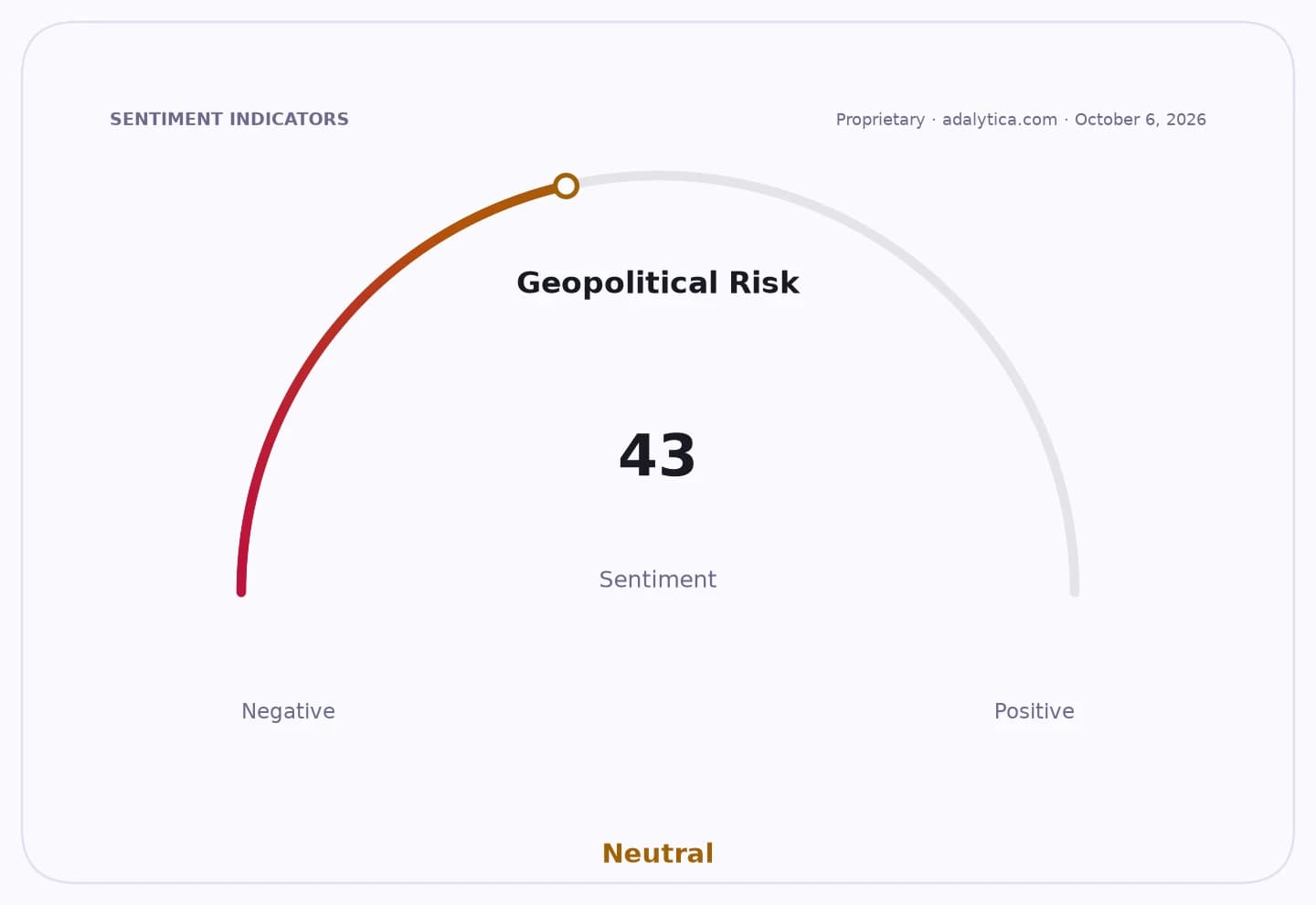
Geopolitical Risk
The stakes are heightened by the Philippines’ increasing tilt toward security cooperation with the United States and India, including discussions around defense procurement, which Beijing views with suspicion. At the same time, neither side appears ready to sacrifice the economic and diplomatic cost of a rupture. That leaves dialogue as the narrow buffer between routine friction and a more damaging escalation.
The message from this exchange is that both governments still want a managed rivalry rather than a crisis. Investors will be watching whether the upcoming ASEAN and APEC gatherings produce further contact, or whether the sharp language from Beijing signals a harder phase in the relationship that could test regional stability and keep a geopolitical premium embedded in Southeast Asian assets.
| Entity | Gains | Losses |
|---|---|---|
| Philippines | ▲Keeps diplomatic channel open | ▼Faces continued Chinese pressure |
| China | ▲Preserves regional access | ▼Risks reputational costs |
| ASEAN | ▲Summit diplomacy remains intact | ▼Summit overshadowed by tensions |
| Investors in Asia risk assets | ▲Some near-term stability | ▼Tail risk from escalation |