The Philippines’ decision to summon China’s envoy after a water cannon attack on resupply vessels at Second Thomas Shoal underscores how quickly maritime brinkmanship in the South China Sea can turn into a wider geopolitical risk — one that matters not just for diplomacy, but for defense spending, regional trade security and investor appetite for Philippine assets.
Philippines Summons China Envoy After Shoal Attack
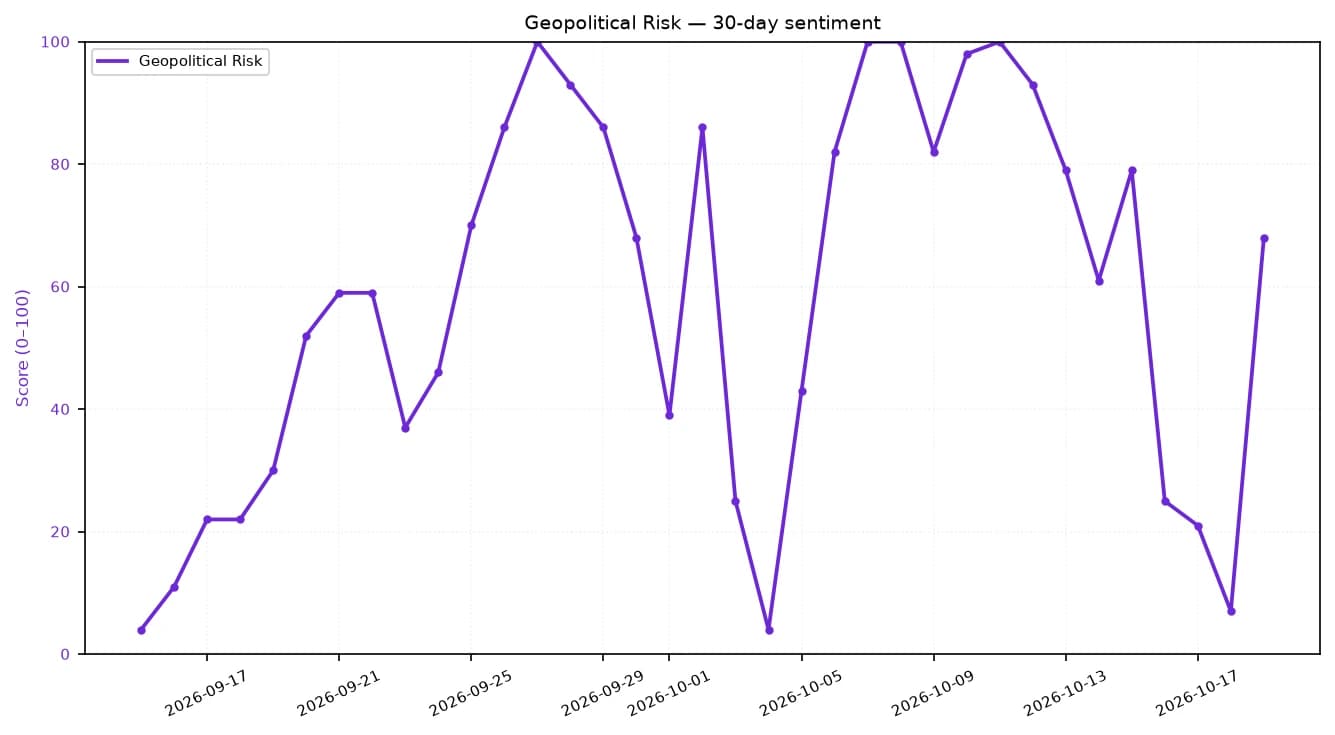
Manila said Chinese coast guard ships blocked and blasted water at Philippine boats carrying food, fuel and other supplies to troops stationed on the BRP Sierra Madre, a grounded naval vessel that has become a symbol of the dispute. President Ferdinand Marcos Jr. said the foreign ministry handed Ambassador Huang a note verbale with photos and video, a sign the government is moving to document and internationalize the incident rather than treat it as a one-off confrontation.
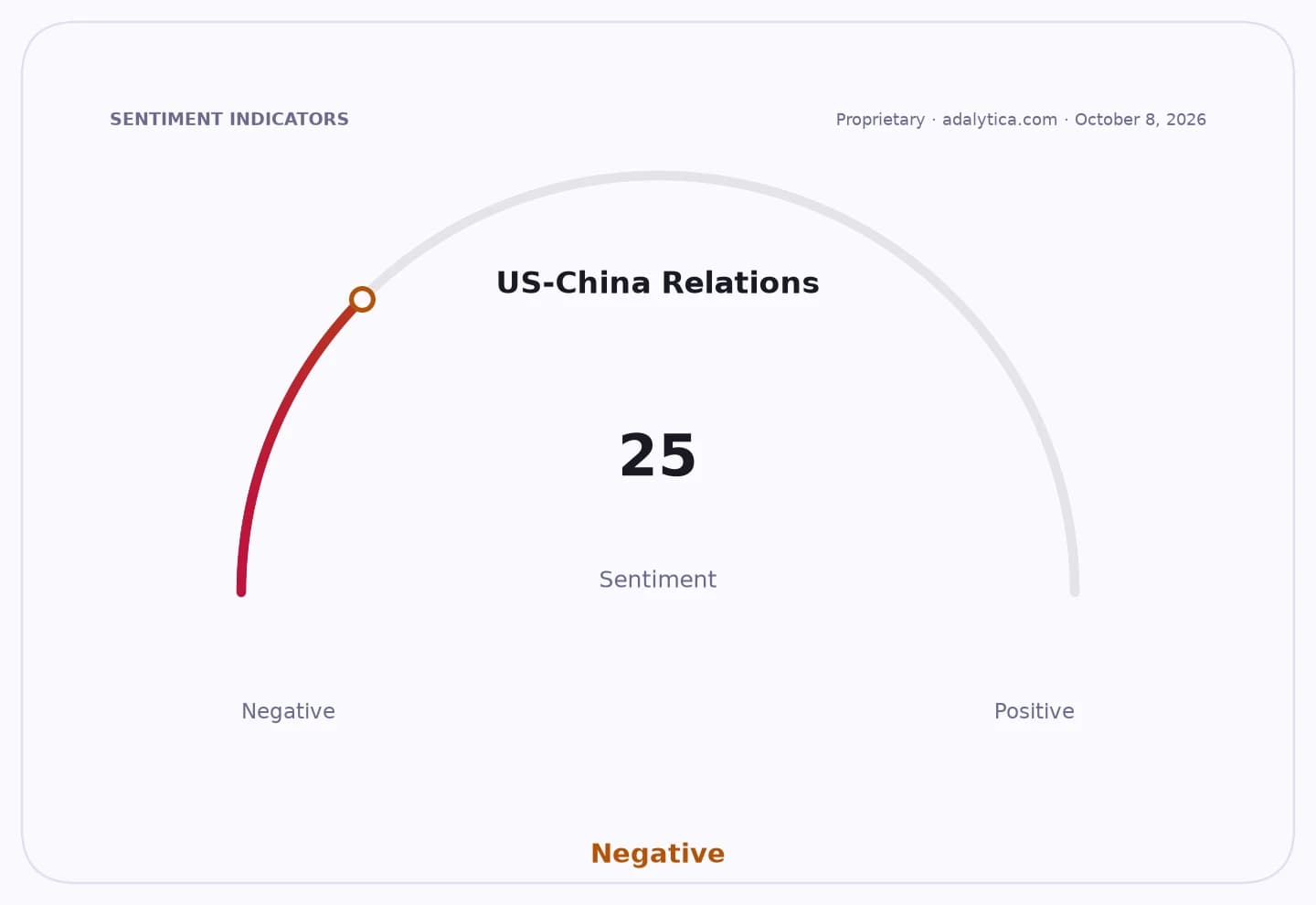
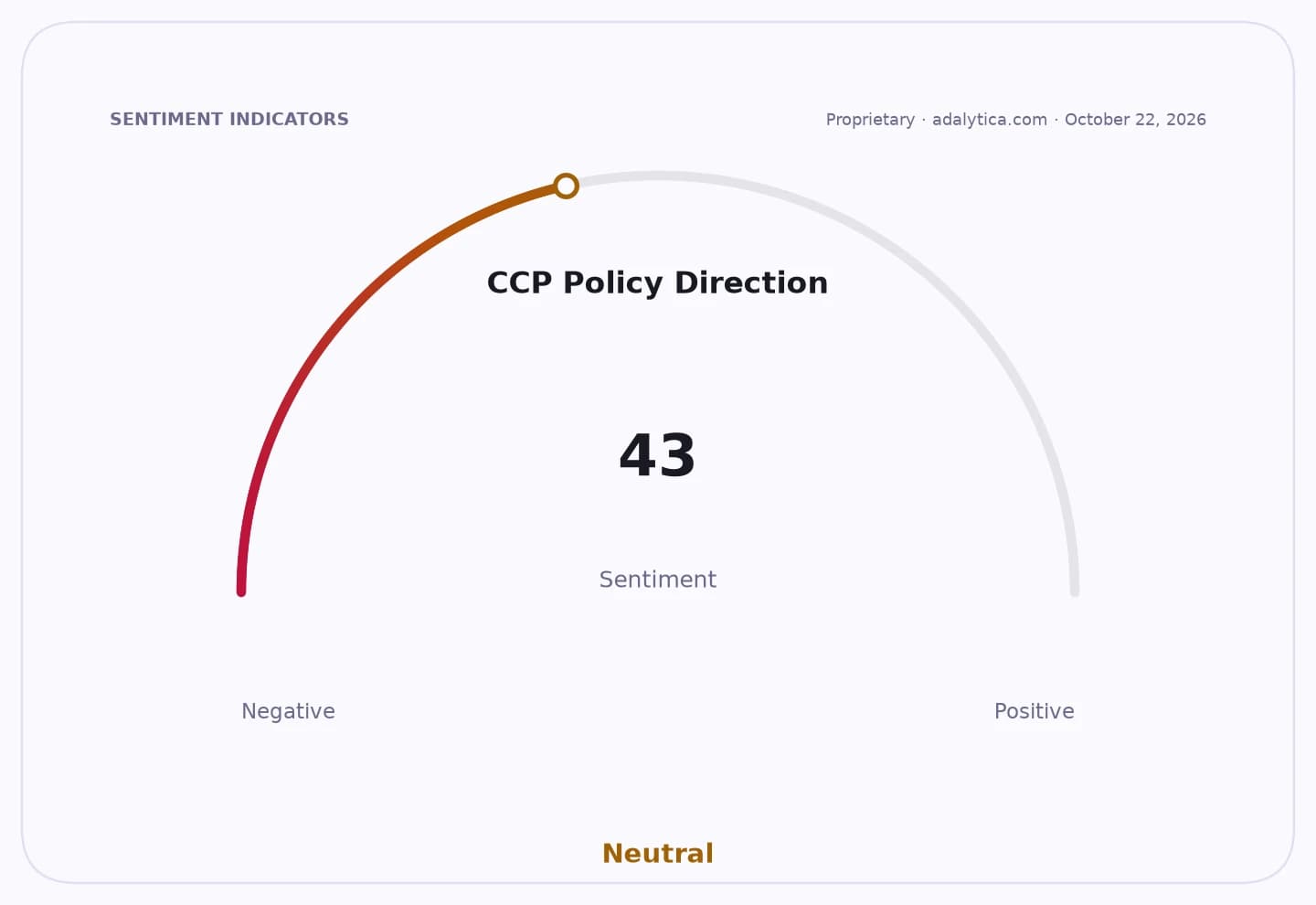
Sentiment IndicatorsⓘProprietary · adalytica.com · October 20, 2026
This is a snapshot — live sentiment, awareness and momentum for 130+ markets update continuously in the dashboard.Open AlphaPulse
That matters economically because the South China Sea is not a remote border quarrel. Beijing claims nearly the entire waterway despite a 2016 international tribunal ruling rejecting that claim, and the sea carries trillions of dollars in annual trade. Any escalation raises the risk premium on shipping routes, maritime insurance, energy exploration and cross-border supply chains. For a country like the Philippines, whose military outpost sits just about 200 kilometers from Palawan and more than 1,000 kilometers from China’s nearest major landmass, the question is increasingly about deterrence costs and the long-term burden of defending offshore claims.
For investors, the immediate read is that the Marcos administration is hardening its line toward China and leaning more heavily on the United States and other allies. That raises the odds of continued foreign military cooperation, more coast guard and navy procurement, and higher spending on maritime surveillance and logistics. It also reinforces the case for defense exposure across the region, while keeping a lid on sentiment for assets that depend on a stable U.S.-China relationship or uninterrupted South China Sea commerce.
The market impact is less about a single shock than a slow-burn repricing of geopolitical risk. The Philippines has already signaled it will “never abandon” Second Thomas Shoal, and Washington, London, Canberra, Ottawa and Brussels have all criticized Beijing’s actions. That kind of coordinated pushback suggests the dispute is no longer being handled purely as a bilateral irritant, but as part of a broader strategic contest. In that environment, every confrontation becomes a test of alliance credibility — and a reminder that maritime tensions can spill into capital flows before they ever spill into open conflict.
From an investment standpoint, the more important takeaway is that this is a catalyst for sustained regional defense demand, not a one-day headline. The market underestimates how persistent these flashpoints can be, and how quickly governments move from condemnation to procurement once the risk becomes recurring. The Philippines-China standoff is therefore less a temporary diplomatic flare-up than a secular tailwind for security spending, naval modernization and geopolitical hedging across Asia. Position early, because the next escalation will almost certainly be priced faster than the last.
| Entity | Gains | Losses |
|---|---|---|
| Philippine defense suppliers | ▲Higher procurement demand | ▼— |
| U.S. allies in Asia | ▲Stronger security alignment | ▼Higher tension exposure |
| China | ▲Continued maritime leverage | ▼Diplomatic backlash |
| Philippine exporters/shippers | ▲— | ▼Higher route and insurance risk |