Phoenix home prices have surged far beyond inflation over the past 15 years, and that gap is now reshaping who can buy, who can build and where housing investors find opportunity.
Phoenix Home Prices Outpace Inflation Since 2011

A study by Clever Real Estate found Phoenix home prices have outpaced inflation by 177% since 2011, the second-highest increase in the U.S. after Miami. That is more than a local curiosity. It is a reminder that in fast-growing Sun Belt markets, housing has acted like a scarce asset, not just a roof over someone’s head.
Sentiment IndicatorsⓘProprietary · adalytica.com · October 5, 2026
This is a snapshot — live sentiment, awareness and momentum for 130+ markets update continuously in the dashboard.Open AlphaPulse

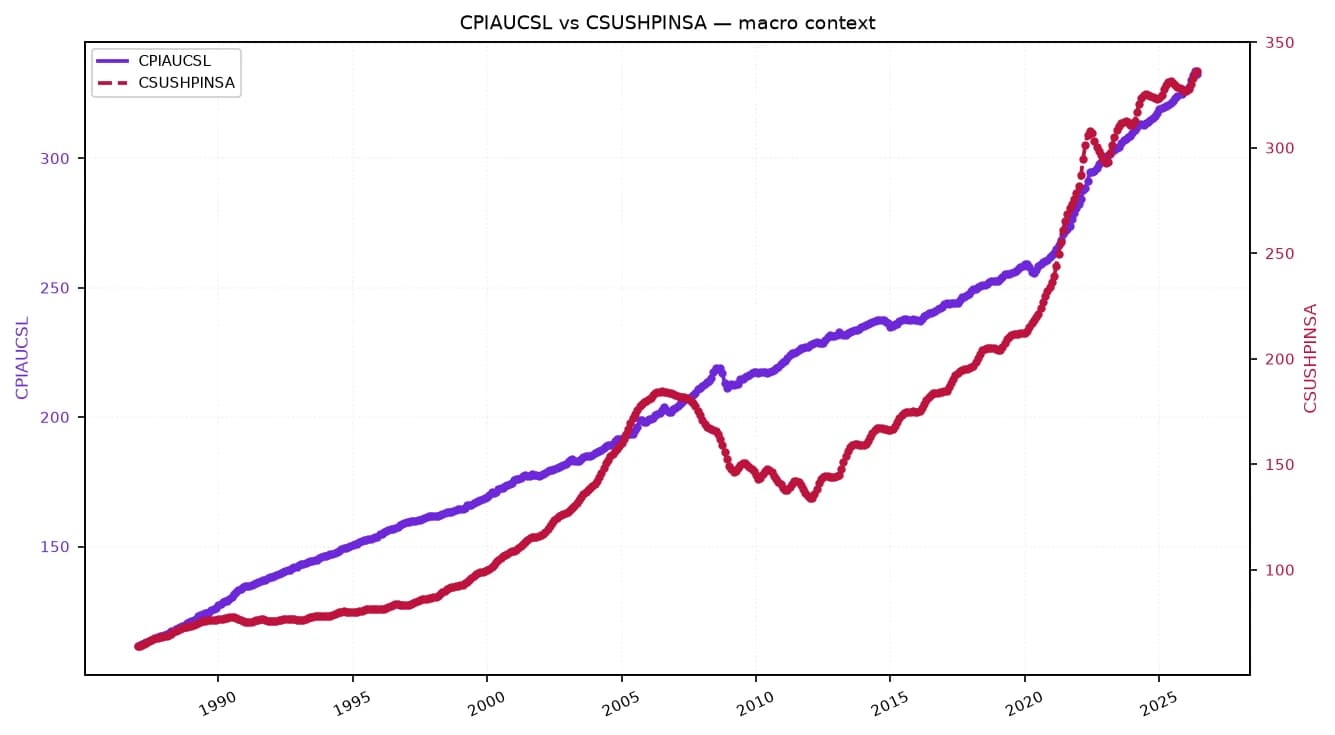
The numbers are stark. A median Phoenix home that cost about $109,000 15 years ago would have been closer to $170,000 today if it had simply tracked the national inflation rate of 47.17%. Instead, the median reached $445,000 as of January 2026, a jump of more than 308%. Orlando and Tampa were next on the list, also showing home-price growth that dwarfed inflation.
For investors, the big takeaway is that housing affordability is not just a political slogan. It is a powerful economic force that can change demand across the entire ecosystem. When prices outrun wages and inflation for years, first-time buyers get pushed aside, turnover slows, and more households are forced to rent longer. That tends to support landlords, rental housing REITs and single-family rental operators, while making life harder for traditional homebuilders and mortgage-sensitive buyers.
CSUSHPINSA vs CPIAUCSL — macro contextadalytica.com
Explore this data interactively — full history, time series and cross-market comparisons.Open AlphaPulse
Phoenix is already showing the first signs of that adjustment. A local agent said prices fell about 2% over the past year as more inventory has come to market and homes are sitting longer. That matters because markets rarely move in straight lines forever. When affordability gets stretched enough, the market can cool even in cities with strong population growth and a pro-building policy backdrop.
The Phoenix story is also a national housing story. Valley and state leaders have pushed faster homebuilding and broader zoning, including accessory dwelling units and middle housing in single-family neighborhoods. Those reforms are aimed at increasing supply, and the latest price data suggest they may finally be helping at the margin. But after more than a decade of gains that far outpaced inflation, any relief is likely to be gradual.
That makes this a useful lesson for long-term investors. The winners in an affordability-constrained market are rarely the same as the people living through the squeeze. Builders can still benefit from volume and land positions over time, but they have to price carefully and manage margins. Rental owners can benefit from persistent demand, though rising costs and regulatory pressure remain real risks. And homebuyers? They need patience, discipline and, often, lower expectations than in the past.
The broader message is that housing in growth markets like Phoenix has become a compounding story. Scarcity, migration and supply constraints pushed prices far ahead of inflation, and now policy and affordability are pushing back. For investors, that means watching not just home prices, but the ripple effects across builders, landlords, lenders and consumer spending. This is a housing market worth keeping on your watchlist.
| Entity | Gains | Losses |
|---|---|---|
| Rental landlords | ▲Stronger tenant demand | ▼More policy scrutiny |
| Homebuilders | ▲More need for supply | ▼Margin pressure from affordability |
| First-time buyers | ▲Potential price correction | ▼Higher entry costs |
| Existing homeowners | ▲Large equity gains | ▼Fewer affordable move-up options |