Drought is now shaving about 7.5 billion zlotys, or roughly 0.2% of Poland’s GDP, off the economy each year, turning a once-farm-specific problem into a wider drag on food processing, transport and trade.
Poland Drought Cuts GDP 0.2% Annually
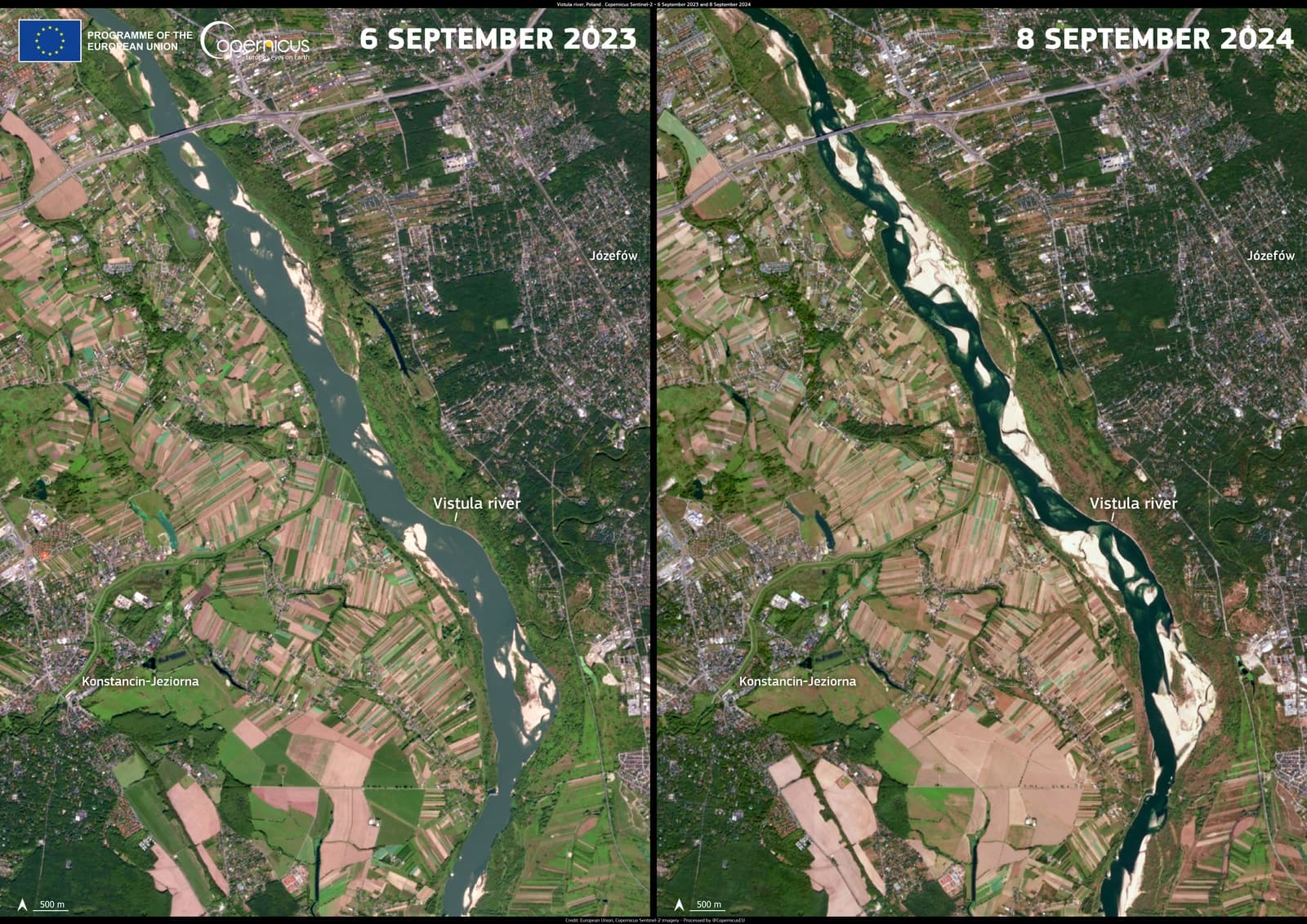
That is the key investor takeaway from a Polish Economic Institute analysis: water stress is no longer just cutting yields, it is rippling through the supply chain and eroding output across multiple sectors. For a country built on manufacturing, logistics and food exports, repeated droughts are becoming a macro issue, not an environmental footnote.
Sentiment Indicators
The institute estimated that losses could be cut by one-fifth if Poland improves landscape water retention, which would save the economy about 1.5 billion zlotys a year. That makes adaptation spending look less like a policy cost and more like a high-return infrastructure investment. In a climate where heat and rainfall volatility are rising, the businesses and assets tied to water security should command a premium.
The numbers are severe. In an average year, drought lowers grain and rapeseed yields by about 12%, while potato and sugar beet output falls roughly 20%. This year’s harvest is already being hit: preliminary government estimates point to cereal output around 5% lower than a year earlier, while the country’s agricultural institute said drought affected spring cereals in about 65% of municipalities and winter cereals in 57%.
What matters for markets is that the damage does not stop at the farm gate. About 45% of the production decline caused by drought hits non-agricultural industries, especially food processing, but also trade and transport. That is a direct hit to throughput, inventory flows and the economics of distribution. The institute’s model does not even include all the losses in industry, power generation, inland shipping and forestry, suggesting the true cost could be higher still.
This is why the story matters for investors. Drought is creating a multi-year capex cycle around water retention, monitoring, land restoration and agricultural resilience. The market still tends to treat climate adaptation as a policy theme, but in Poland and across Europe it is becoming a balance-sheet issue for governments, agribusinesses and logistics firms. The winners are the companies that sell the tools of resilience: irrigation, water infrastructure, sensors, drainage control, farm equipment and food supply-chain efficiency.
The losers are equally clear: crop producers, processors dependent on domestic raw materials, and transport operators exposed to lower volumes and disrupted supply chains. Commodity markets may also stay volatile as weather shocks lift risk premia in grains and oilseeds. Corn and soy funds have already shown how quickly technical momentum can flip when weather conditions tighten or ease, underscoring how sensitive ag prices remain to supply stress.
For Poland, the policy implication is straightforward: prevention is cheaper than cleanup. For investors, the conclusion is sharper. The market underestimates how much drought can reshape a developed economy’s growth path, and it is still underpricing the companies that profit from making water scarcity less destructive. This is an inflection point worth positioning for now.
| Entity | Gains | Losses |
|---|---|---|
| Water infrastructure and retention firms | ▲Higher demand | ▼None |
| Farmers and crop producers | ▲None | ▼Lower yields, lower income |
| Food processors and distributors | ▲Adaptation spending | ▼Lower input availability, weaker output |
| Poland’s economy | ▲Resilience investments | ▼7.5 bln zł annual GDP drag |