Poland’s government is preparing a major overhaul of small heating plants that could redirect billions of zlotys into gas-fired upgrades, a shift that matters because district heating keeps roughly 15 million people warm and remains one of the country’s most politically sensitive energy systems.
Poland Heating Plants Plan Gas Upgrades

The plan, outlined by Energy Minister Miłosz Motyka and reported by Rzeczpospolita, would launch next year and push many smaller municipal and local heating plants away from coal and toward gas, while modernizing ageing equipment that is often unprofitable and inefficient. That makes this more than an energy policy headline: it is a capital-spending program that could reshape local utilities, construction activity and fuel demand across Poland’s smaller cities and towns.
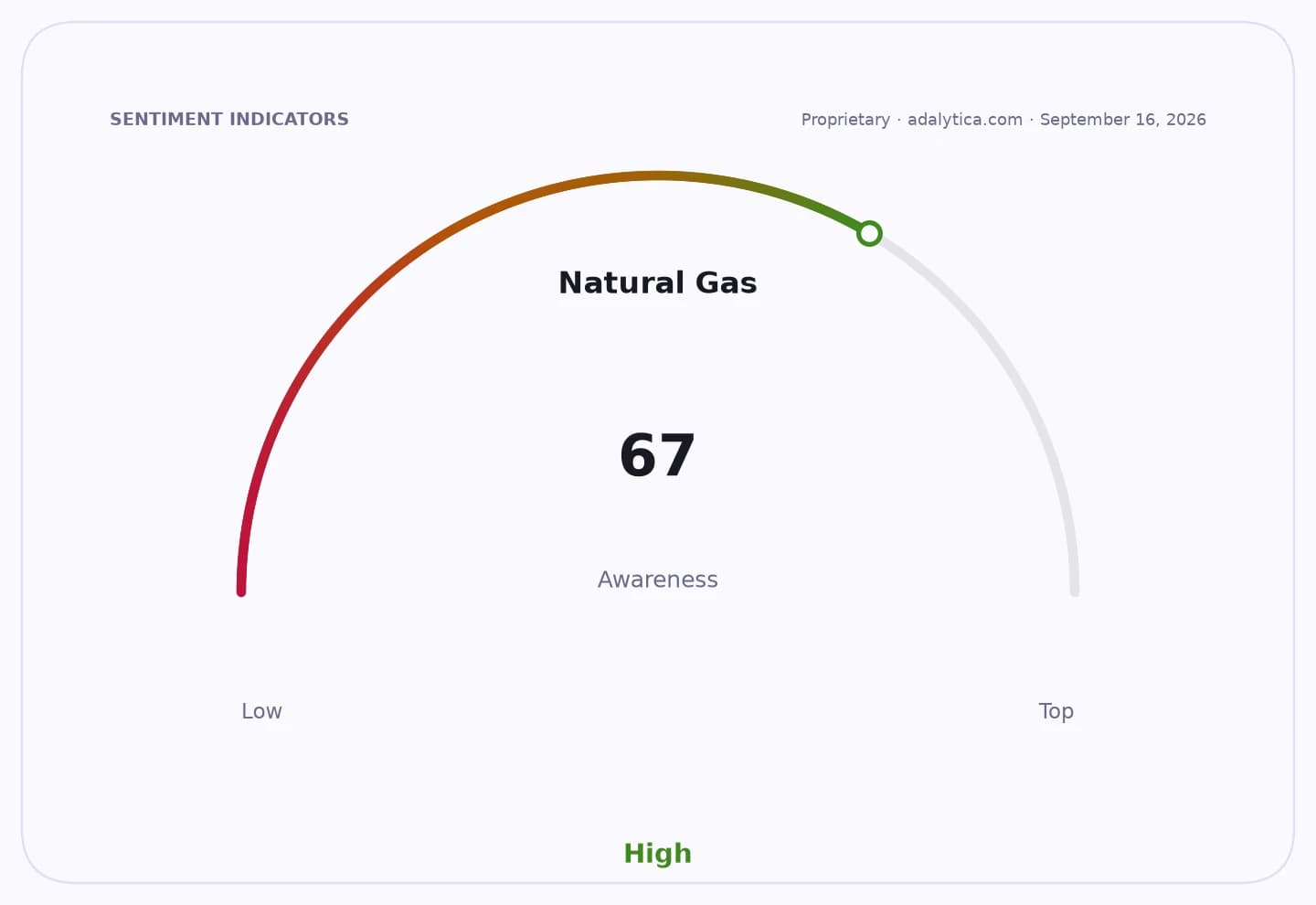
Sentiment IndicatorsⓘProprietary · adalytica.com · September 20, 2026
This is a snapshot — live sentiment, awareness and momentum for 130+ markets update continuously in the dashboard.Open AlphaPulse
For the economy, the logic is straightforward. Local heat systems are essential infrastructure, but many are too small to fund a transition on their own. If the state steps in, it can unlock investment that otherwise would not happen, supporting jobs and potentially reducing heat costs over time. For the ruling coalition, that also turns energy policy into electoral strategy, with the newspaper saying the Polish People’s Party wants the spending targeted to constituencies where it can deliver the biggest political payoff.
For investors, the opportunity is in the second-order effects. Gas suppliers, pipeline operators, engineering firms and equipment makers stand to benefit from a wave of modernization spending. So do companies tied to boiler replacement, control systems and heat-network upgrades. The market is underestimating how large this could become if the program is rolled out broadly across the local heating sector rather than limited to a handful of pilot projects.
The backdrop is a Europe still trying to move away from coal without sacrificing reliability. In Poland, where district heating is deeply embedded in daily life, coal-to-gas conversion offers a faster route to cleaner and more flexible supply than a full leap to electrification. It is also a reminder that energy transition capital is increasingly flowing into infrastructure that looks traditional on the surface but functions as the bridge technology of the decade.
That is why this matters now: a government-backed modernization push could create a durable demand cycle for gas and grid-linked infrastructure, while offering local utilities a path out of chronic losses. If the program is funded at scale next year, the winners will be the companies that sell the hardware and fuel, not the legacy coal plants left behind. For investors, the clearest takeaway is to watch Poland’s heating transformation as a real investment theme, not just a policy announcement.
| Entity | Gains | Losses |
|---|---|---|
| Gas suppliers | ▲Higher demand | ▼Coal suppliers |
| Local heating plants | ▲State-backed capex | ▼Aging coal assets |
| Engineering and equipment firms | ▲Upgrade contracts | ▼Deferred maintenance era |
| Polish voters in target regions | ▲New jobs and lower heat risk | ▼Polluting, inefficient systems |