August’s housing data from Poland’s Central Statistical Office point to a market that is cooling month to month but still building enough momentum to widen supply in the quarters ahead.
Poland housing permits rise as August completions grow

That matters because the latest figures show not a slowdown in demand so much as a larger wave of apartments already moving through the system. Developers completed 11,869 homes in August, up 22.1% from a year earlier, while permits issued to developers since January climbed 20.6% to 127,400 units. The message for the real estate market is clear: the next leg is likely to be driven less by new demand and more by how quickly this permit backlog turns into fresh starts and completed projects.
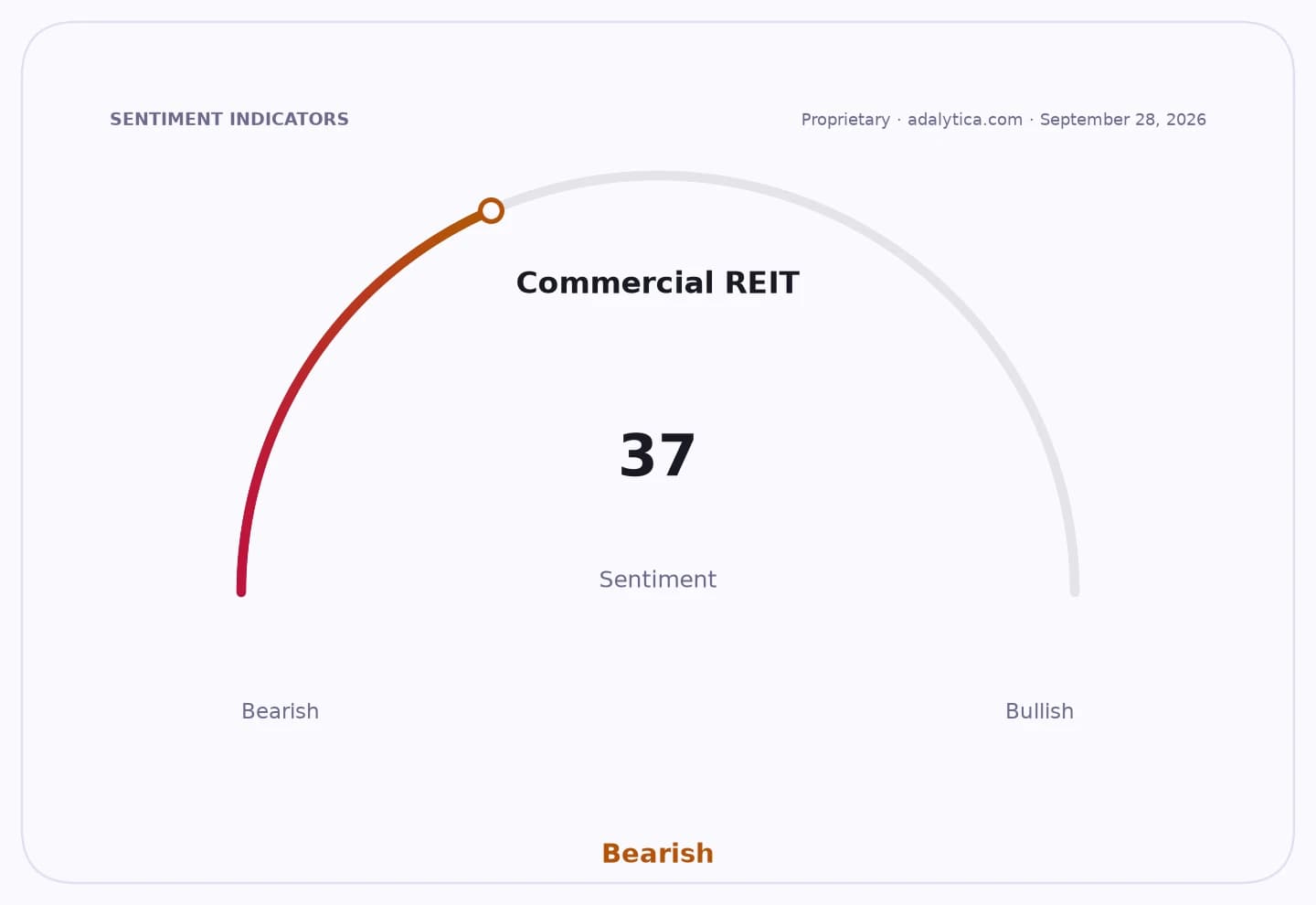
Sentiment IndicatorsⓘProprietary · adalytica.com · October 3, 2026
This is a snapshot — live sentiment, awareness and momentum for 130+ markets update continuously in the dashboard.Open AlphaPulse
For investors, that is the key inflection point. More permits usually mean more inventory down the line, and more inventory tends to ease pressure on prices and improve choice for buyers. In a market where incomes have been rising faster than property prices, that should help affordability gradually improve, even if the adjustment is uneven across cities and segments. The CSO data therefore support a more constructive view on housing availability than on rapid price acceleration.
The August release also shows that the sector is not frozen. Developers started 10,467 homes in the month, 25.6% more than a year earlier, even if starts have been drifting lower since April on a seasonal basis. At the same time, July and August together brought more than 24,000 completed flats, the strongest summer result since 2022. That tells us developers are still pushing projects through, but they are doing so into a market that is likely to become more supply-rich before it becomes tight again.
The risk for sellers is that a large permit stock can become a cushion that keeps a lid on pricing power if financing conditions stay restrictive or if developers hesitate to convert approvals into active construction. The opportunity for buyers, lenders and housing-linked businesses is the opposite: a larger pipeline can translate into a more liquid market, stronger transaction volumes and better access to new homes after a long period of scarcity.
For listed real estate plays, the implication is straightforward. Residential developers can benefit if permits and starts continue to convert into sales, but the broader setup is even more important for housing funds, REIT-like vehicles and anything exposed to rental demand, because a gradually expanding housing stock tends to stabilize the market rather than overheat it. The latest CSO data say Poland’s housing sector is not heading for collapse; it is heading toward a larger supply cycle.
The smartest position now is to watch conversion rates, not just permit counts. If August’s approvals turn into autumn starts, the real estate market could enter 2026 with a meaningfully thicker pipeline and a more balanced supply-demand backdrop.
| Entity | Gains | Losses |
|---|---|---|
| Developers with permit inventory | ▲Future project pipeline | ▼Holding costs if starts lag |
| Homebuyers | ▲More supply, better choice | ▼Less urgency for price gains |
| Housing renters | ▲More competition for tenants | ▼Slower rent inflation upside |
| Existing owners | ▲Stability in market turnover | ▼Softer pricing power |