Poland’s biggest economic risk is not inflation, rates or even this year’s growth slowdown, but a looming labour-force squeeze that will start to bite hard after 2035 and could permanently lower the country’s potential output.
Poland Faces Labour Squeeze After 2035
A new Credit Agricole analysis says the decline in working-age population will be gradual over the next decade, masking the scale of the problem for now, but the pace of shrinkage is set to accelerate after 2035 just as the key pool of workers is thinned by ageing and migration limits. The bank estimates Poland will lose about 750,000 people in working age by 2035, while the overall population should fall by about 2 million to 35.6 million. For investors and policymakers, the message is clear: Poland’s growth model can no longer rely on demographics.
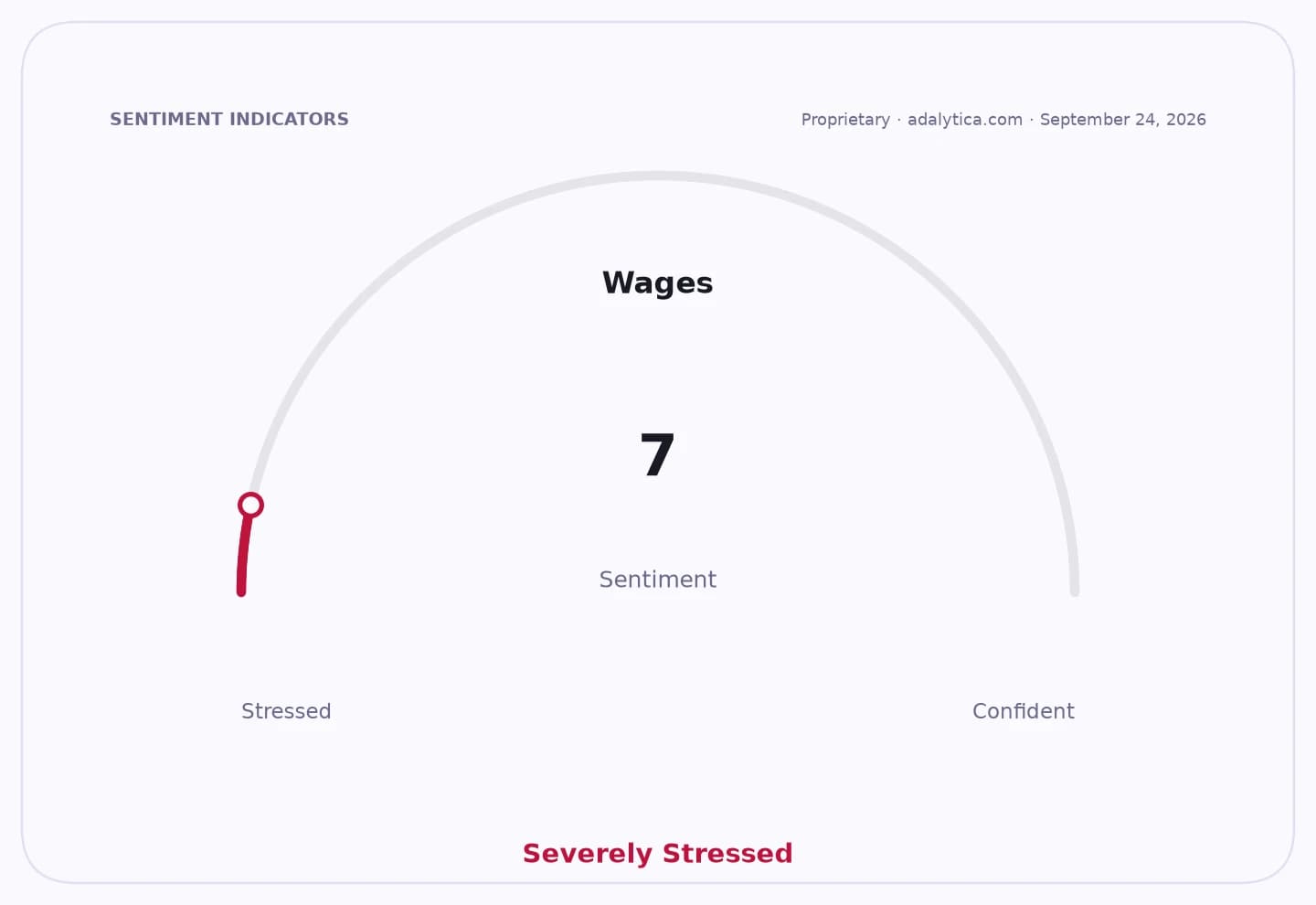
Sentiment IndicatorsⓘProprietary · adalytica.com · September 4, 2026
This is a snapshot — live sentiment, awareness and momentum for 130+ markets update continuously in the dashboard.Open AlphaPulse
The crunch is less about the headline size of the decline than its composition. Credit Agricole says the 25-40 age cohort, the core of the labour market, will shrink by 1.7 million in the next decade, only partly offset by increases in the 41-64 and 15-24 age groups. That replacement is economically inferior: older entrants have lower mobility, shorter remaining working lives and, in many sectors, slower productivity gains. In practice, that means fewer workers, a tighter labour market and a smaller buffer for employers already struggling to hire.
The bank argues there are only three ways to soften the shock: more foreign workers, higher activity among older Poles and return migration. It is sceptical on all three. The government’s migration policy remains selective, limiting the chance of a broad labour influx; even if the number of foreign workers keeps rising, Credit Agricole says it is unlikely to match the pace seen in recent years. The case for greater participation among older workers is also constrained by the shrinking reserve above age 60-64 and the hard boundary of retirement. And the scale of return migration appears too small to change the overall picture.
That matters economically because Poland’s recent outperformance has been built on a combination of strong domestic demand, rising employment and relatively resilient productivity. If the labour pool starts to contract more quickly after 2035, growth will increasingly depend on productivity gains rather than expansion of headcount. That shifts the policy burden toward investment, automation, skills and capital deepening, and away from the assumption that labour supply will keep carrying the economy.
For investors, the implications cut across assets. A tighter labour market can support wages and consumption in the near term, but it also raises costs for employers and reduces long-run earnings capacity in labour-intensive sectors such as manufacturing, logistics, retail and construction. Companies able to substitute capital for labour, or to capture higher value-added production, should be better placed than those dependent on cheap and abundant workers. The same demographic pressure could also keep policymakers focused on education, productivity and immigration rules, all of which feed into Poland’s medium-term fiscal and growth outlook.
There is also a political risk. If migration remains tightly controlled while the workforce ages, the adjustment will fall more heavily on domestic productivity and public finances. That raises questions about pension sustainability, wage pressure and the country’s ability to maintain its recent growth premium over peers. In the near term, the problem is easy to ignore because the annual decline looks modest. Over the next decade, Credit Agricole’s warning is that the seemingly manageable trend becomes structural.
| Entity | Gains | Losses |
|---|---|---|
| Productivity-heavy firms | ▲Higher pricing power | ▼Labour-intensive cost base |
| Older workers | ▲Higher demand for experience | ▼Rising workload pressure |
| Foreign labour seekers | ▲Better job opportunities | ▼Tighter migration policy |
| Poland’s growth outlook | ▲Incentive for reform | ▼Demographic drag after 2035 |