Poland’s standoff with Russia just took a dangerous turn, and that matters because any escalation along NATO’s eastern flank carries risks far beyond the battlefield. Moscow’s warning that Poland could “cease to exist in two or three days” if it attacked Russia came after a fresh cluster of drone incidents and strikes near the Polish border, underscoring how quickly the war in Ukraine can spill into wider European security.
Poland-Russia Tensions Raise Europe Security Premium

For investors, the immediate issue is not just geopolitical theater. It is the possibility of a more entrenched security premium across Europe — higher defense spending, more pressure on energy and transport routes, and another reason capital continues to favor safety over cyclicality in the region when tensions rise. Wars and border incidents do not move in neat straight lines, and markets tend to reprice risk fastest when the rhetoric begins to sound like operational planning.

The latest flare-up began after Polish officials reported repeated drone-related incidents near the frontier with Ukraine and on Polish territory. Poland’s defense minister said the army recovered another drone, likely Russian, near the Baltic coast, while a broader weekend alert was triggered after Polish defenses detected a mass drone attack in western Ukraine. That attack damaged a passenger locomotive close to the border and hit a gas station near the Dorohusk-Yagodzin crossing, feeding fears that Russia’s strikes are deliberately probing the edge of NATO territory.
That is why the language from both sides matters. Russian presidential aide Nikolai Patrushev responded to comments from Polish foreign minister Radoslaw Sikorski by claiming Poland would be wiped out within days in the event of direct military action against Russia. In parallel, Warsaw has said Russia’s provocations are growing and getting closer to Poland’s frontier. European officials, including the EU’s foreign policy chief Kaja Kallas, urged partners not to be intimidated, while Kyiv said Moscow may have been targeting infrastructure used to move weapons into Ukraine.
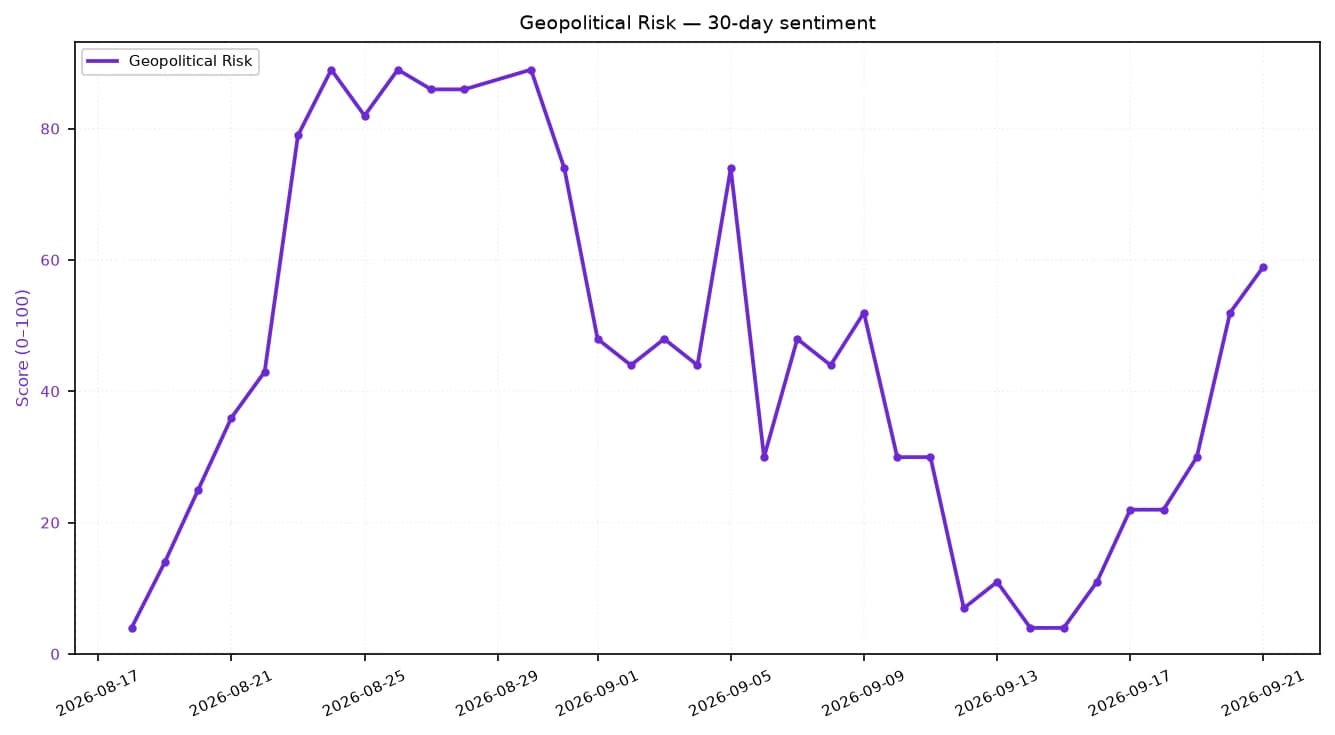
Geopolitical Risk — 30-day sentimentadalytica.com
Explore this data interactively — full history, time series and cross-market comparisons.Open AlphaPulse

The economic significance is straightforward: the more this confrontation intensifies, the more it reinforces Europe’s need to spend on defense, protect logistics and harden infrastructure. That is a tailwind for contractors tied to military procurement and border security, but it also raises the cost of doing business across the region. Transport bottlenecks, insurance costs and energy volatility can all follow when tensions move from words to incidents.
From a long-term investing perspective, this is another reminder that geopolitical risk is not a trading footnote. It can shape capital allocation for years. Europe’s defense budgets were already headed higher after Russia’s full-scale invasion of Ukraine. Fresh threats aimed at Poland only strengthen the case that those spending plans are not temporary. Investors who want exposure to that theme may want to look at diversified defense and infrastructure names rather than trying to guess the next headline.
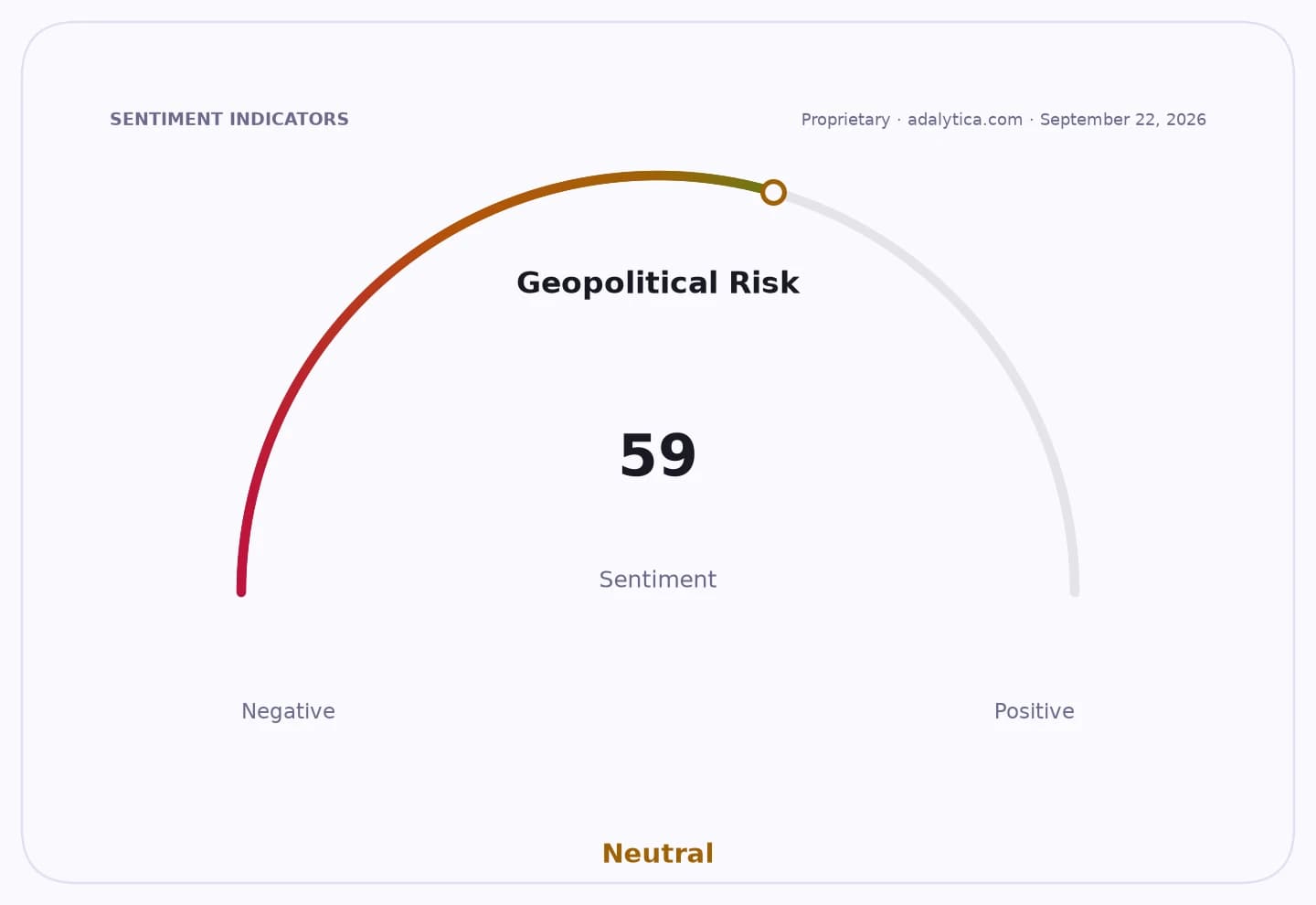
Adalytica’s Global Stability Sentiment gauge is flashing fear, with sentiment at 30 and awareness at 41, and the move higher in the past day reflects how quickly nerves can return when Russia and Poland trade threats around NATO’s border. That does not make the market uninvestable. It does, however, argue for patience, diversification and a focus on businesses that can compound through instability rather than depend on calm.
For now, the takeaway is simple: the rhetoric is ugly, the risks are real, and Europe’s security premium is likely to stay elevated. Investors should keep this on the watchlist, especially if the war keeps edging closer to NATO territory.
| Entity | Gains | Losses |
|---|---|---|
| Defense contractors | ▲Higher spending demand | ▼Slower procurement if tensions ease |
| Poland and NATO hawks | ▲Stronger case for rearmament | ▼Higher security costs |
| Russia | ▲Tactical pressure on neighbors | ▼More sanctions and isolation |
| European transport and energy users | ▲Little to gain | ▼Higher disruption and volatility |