A Polish state-linked think tank has laid out a roadmap for pressure points inside Russia, sharpening the case for a longer, more targeted campaign of sanctions, information warfare and cyber disruption that could reshape how investors assess geopolitical risk across Europe.
Poland Think Tank Maps Pressure Points in Russia
The report, published by the Russian division of Poland’s Eastern Studies Center, is notable not because it says Russia is fragile today, but because it argues the opposite: Moscow has proven more resilient than many in the West expected. That makes the next phase of pressure more strategic. Instead of broad-brush punishment, the document calls for exploiting “weak points” in Russia’s centralized system, elite rivalries, regional income gaps, corruption, aging leadership and dependence on export revenues and imported technology.
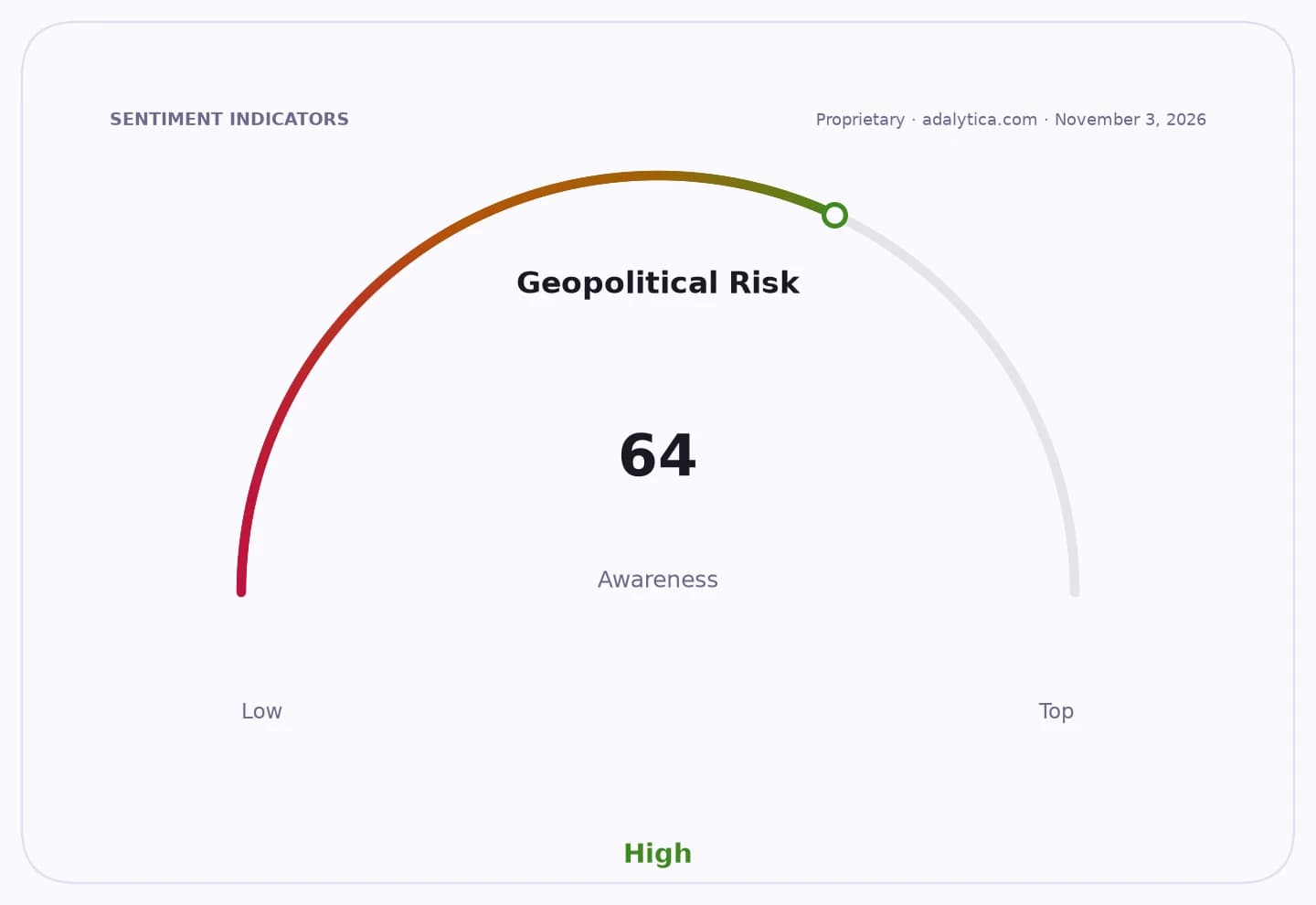
Sentiment Indicators
For markets, that matters because the playbook described is not abstract. It points to further attempts to squeeze Russian oil shipments, complicate cross-border payments through friendly third countries, and block access to advanced technology. Those are exactly the channels that affect energy flows, shipping, insurance, industrial supply chains and the pricing of geopolitical risk in Europe and beyond.
The report’s most consequential recommendation is to move beyond the G7-style oil price cap and toward harsher restrictions on Russian maritime exports. That is a direct signal to energy traders and freight markets that the West may be drifting toward tighter enforcement and more disruptive measures. Any escalation in sanctions pressure would be bullish for oil volatility and for non-Russian supply chains, while keeping a floor under defense spending and cybersecurity demand.
That backdrop helps explain why oil has stayed sensitive even as prices cooled from earlier highs. USO, the U.S. oil fund, is still trading far above its longer-term baseline despite recent weakness, a reminder that the market continues to price geopolitical risk into crude. At the same time, gold remains well supported. GLD is still holding well above its 200-day moving average, a sign that investors have not fully abandoned safe-haven demand even after the latest pullback.
The deeper investment point is that this is not just about Russia. If Western governments decide the most effective way to weaken Moscow is through a sustained campaign of export controls, sanctions leakage enforcement and cyber pressure, the winners are likely to be the companies and funds tied to energy security, defense, satellite communications, cyber defense and domestic industrial reshoring. The losers are the sectors most exposed to commodity shocks, shipping disruptions and policy-driven volatility.
The cyber element is especially important. The same strategic logic that drives sanctions pressure also increases the likelihood of attacks on critical infrastructure, emergency alert systems and public information networks. That raises the premium on firms that protect digital infrastructure and secure communication channels, while keeping geopolitical risk elevated across European assets.
My view is that the market underestimates how institutionalized this confrontation has become. This is no longer just a sanctions story; it is a multi-year contest over export chokepoints, data, logistics and elite cohesion. Investors who position early around that reality — rather than waiting for the next headline shock — are more likely to capture the asymmetric upside.
| Entity | Gains | Losses |
|---|---|---|
| Defense and cyber stocks | ▲Higher spending demand | ▼None directly |
| Oil producers outside Russia | ▲Supply tightness | ▼Price volatility risk |
| Russia’s export-linked sectors | ▲Limited upside | ▼More sanctions pressure |
| European importers | ▲Energy diversification push | ▼Higher input costs |