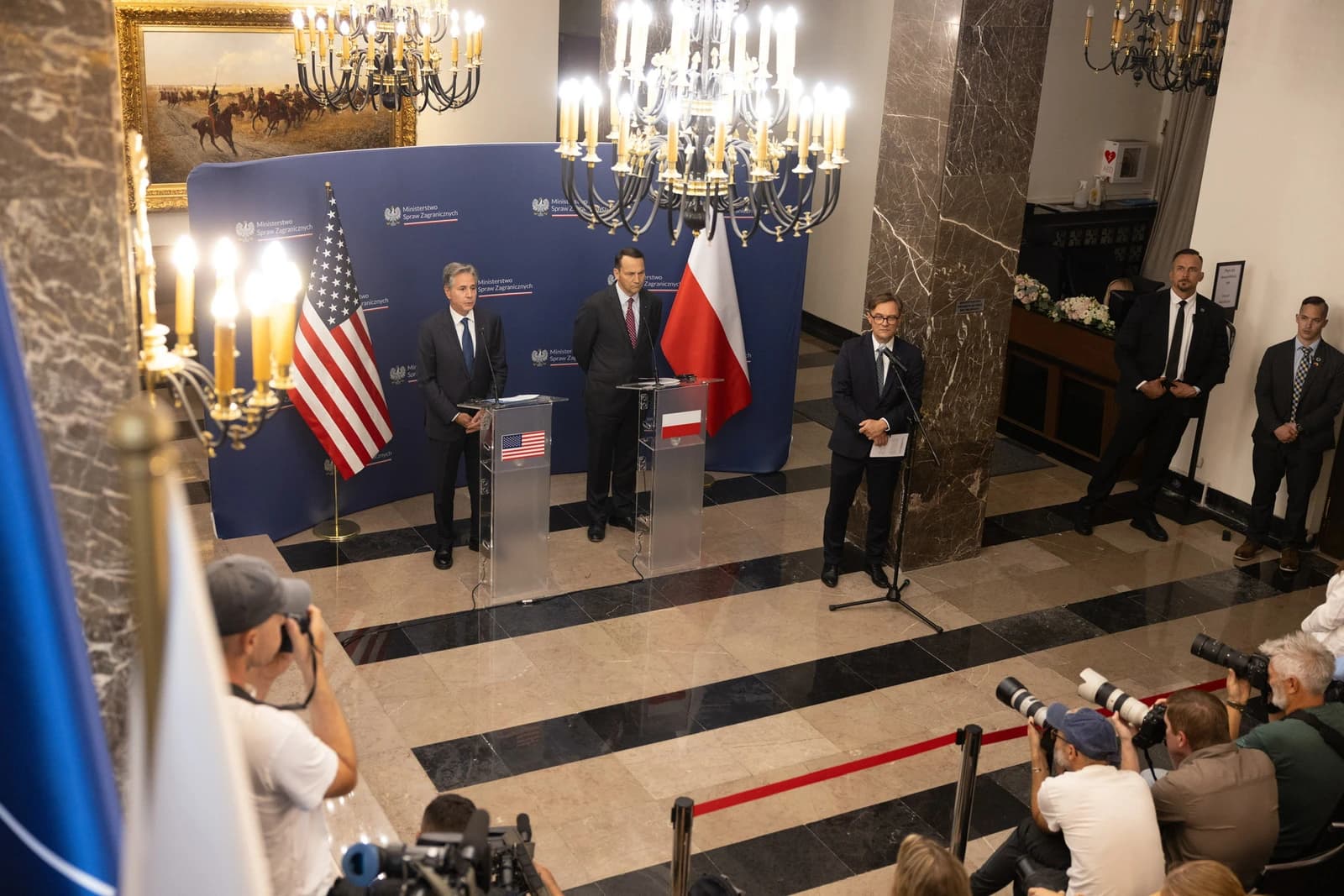
Poland’s foreign minister has sharpened a growing transatlantic rift over Ukraine aid, saying the U.S. has not spent “a cent” on Kyiv since Donald Trump took office and arguing that Europe is now paying for Ukraine’s war effort.
Poland Says U.S. Has Stopped New Ukraine Aid

That matters because it marks a clear political break from the Biden era and underscores how the financial burden of supporting Ukraine is shifting toward European governments at a time when donor fatigue is rising and military aid remains central to Kyiv’s survival. It also raises questions for investors about the durability of Western backing for Ukraine, the outlook for defense spending in Europe and the risk of more volatility across currencies and risk assets if the dispute deepens.
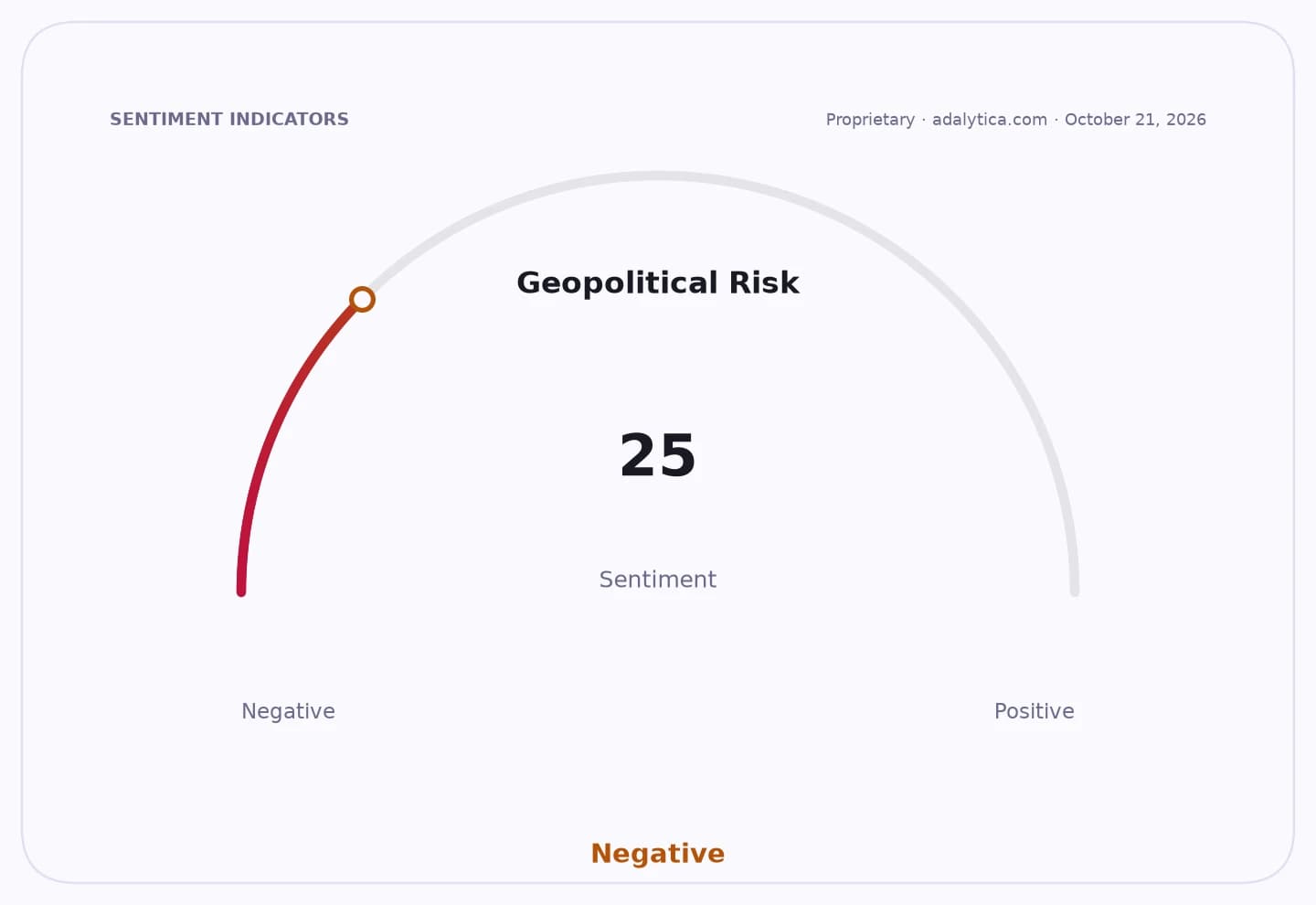
Sentiment IndicatorsⓘProprietary · adalytica.com · October 20, 2026
This is a snapshot — live sentiment, awareness and momentum for 130+ markets update continuously in the dashboard.Open AlphaPulse
Radoslaw Sikorski made the comments in an interview with Al Jazeera, saying that since January 2025 the U.S. has provided no fresh funding for Ukraine’s defense or state support and that “we do that now, Europe.” His remarks came amid an escalating clash between Washington and Kyiv over Starlink connectivity and broader U.S. pressure on President Volodymyr Zelenskyy.
The claim is politically pointed, but the funding picture is more nuanced. A Council on Foreign Relations tally cited in German-language reporting shows that by the end of March 2026, 59% of roughly $195 billion in total U.S. Ukraine-related spending had been disbursed. That includes more than direct cash transfers to Kyiv, and weapons from aid packages approved under President Joe Biden have continued to move through the pipeline even after Trump returned to office.
What has changed is the policy direction: Trump has not approved new large-scale aid packages, while European allies are increasingly covering the cost of U.S.-made weapons and stepping up direct support. The EU has already transferred 2.86 billion euros in emergency military aid, even as member states debate how much more they can sustain while juggling domestic budget strains.
The tension between Washington and Kyiv has also spilled into the battlefield communications network. Sikorski criticized SpaceX chief Elon Musk after Starlink service was reportedly disrupted for Ukrainian forces, while Musk called for Zelenskyy’s removal on X. Trump denied that his administration or Musk was responsible for the outage, but the episode highlights how dependent Ukraine remains on U.S.-linked private infrastructure as well as public funding.
For investors, the immediate market read is less about a direct trade in Ukraine assets than about second-order effects: European defense names may keep drawing support, energy and FX markets remain exposed to any escalation, and the euro could be sensitive if the aid burden keeps shifting onto Europe. The next catalyst is whether Trump formalizes a longer-term funding freeze or whether Europe moves to lock in a larger, more durable aid package.
| Entity | Gains | Losses |
|---|---|---|
| Europe / EU governments | ▲More strategic leverage | ▼Bigger fiscal burden |
| U.S. Treasury / Trump administration | ▲Lower direct aid outlays | ▼Loss of influence over Kyiv |
| Defense contractors in Europe | ▲Higher procurement demand | ▼Budget pressure from governments |
| Ukraine | ▲Continued European support | ▼Less certainty on U.S. backing |