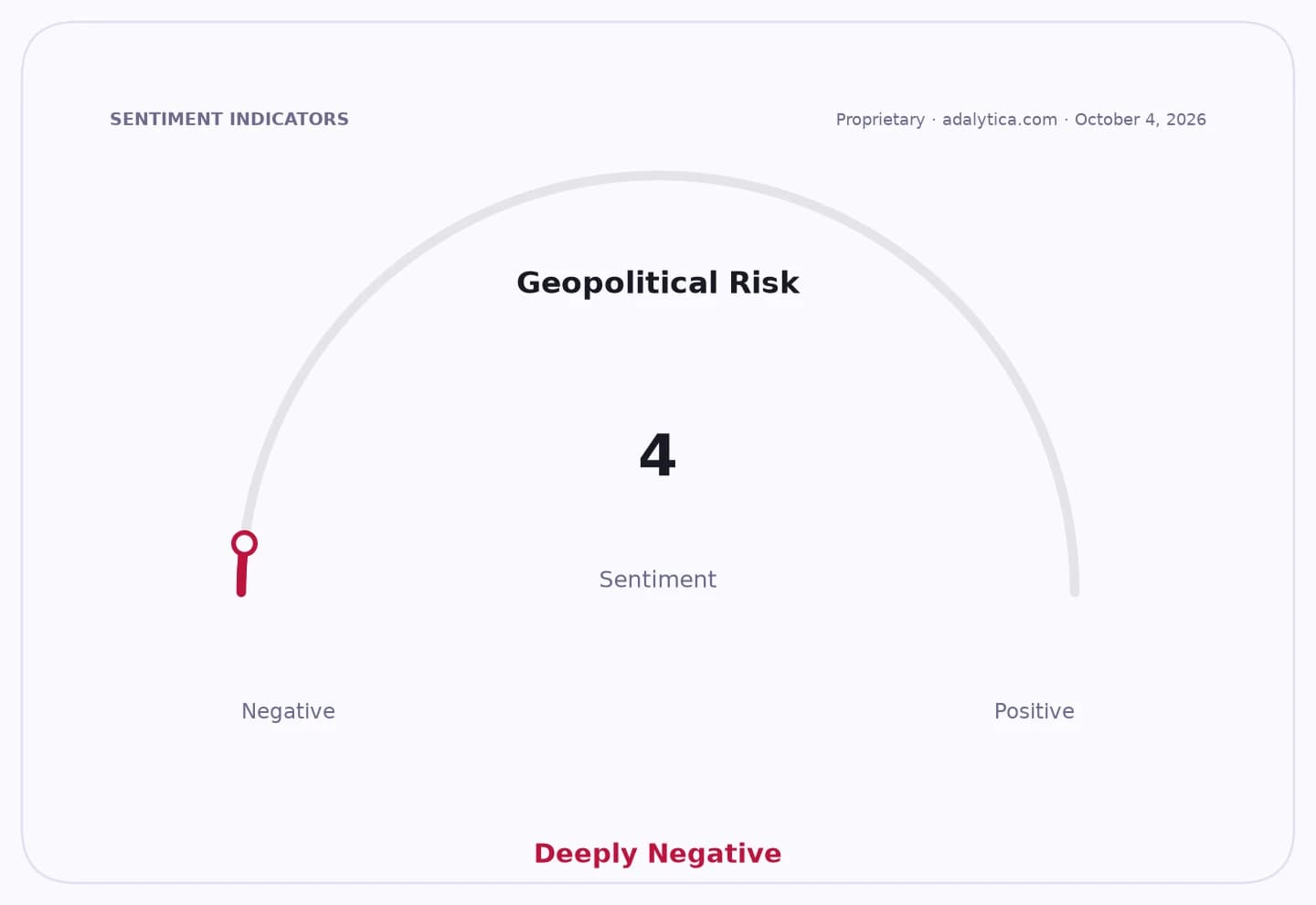
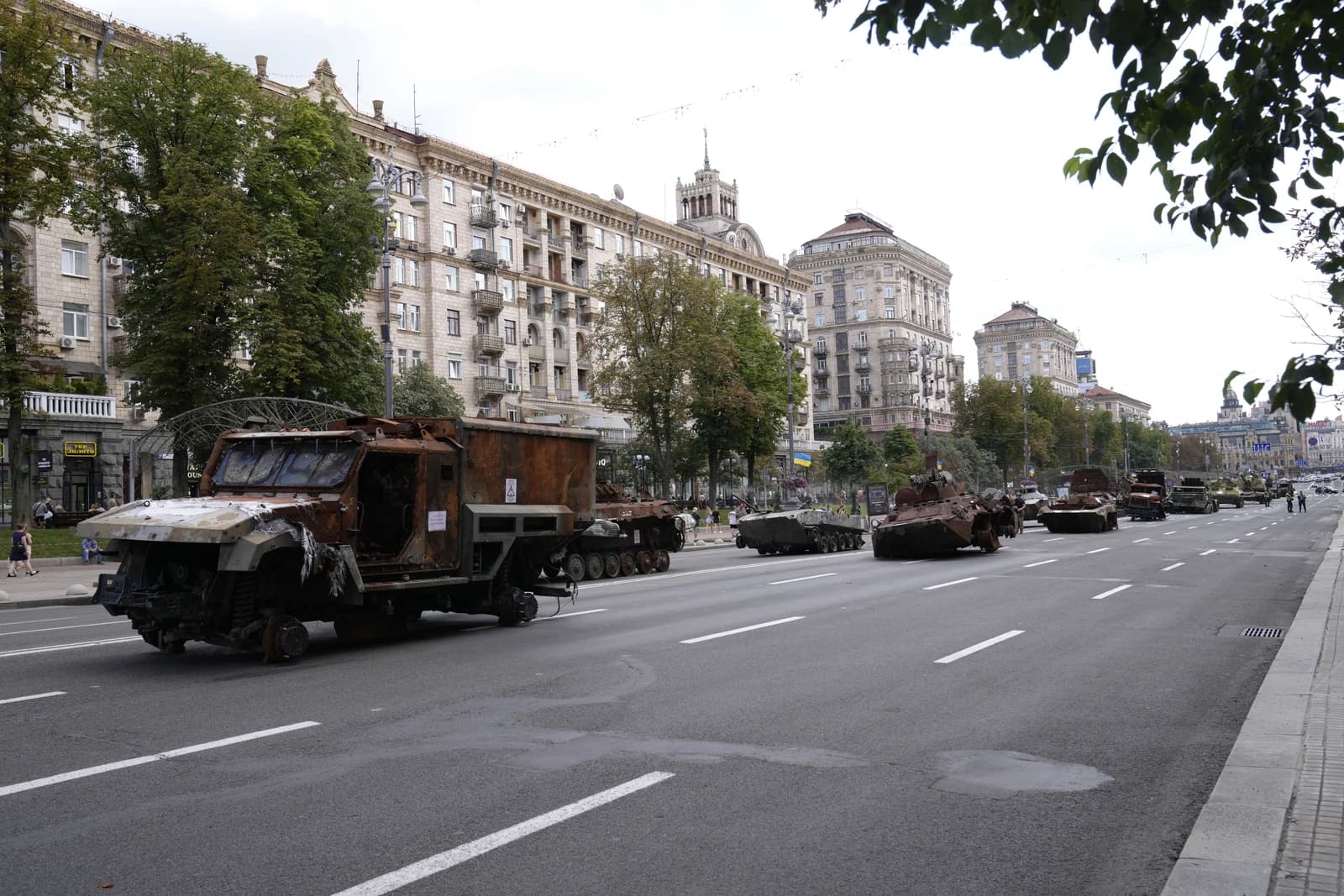
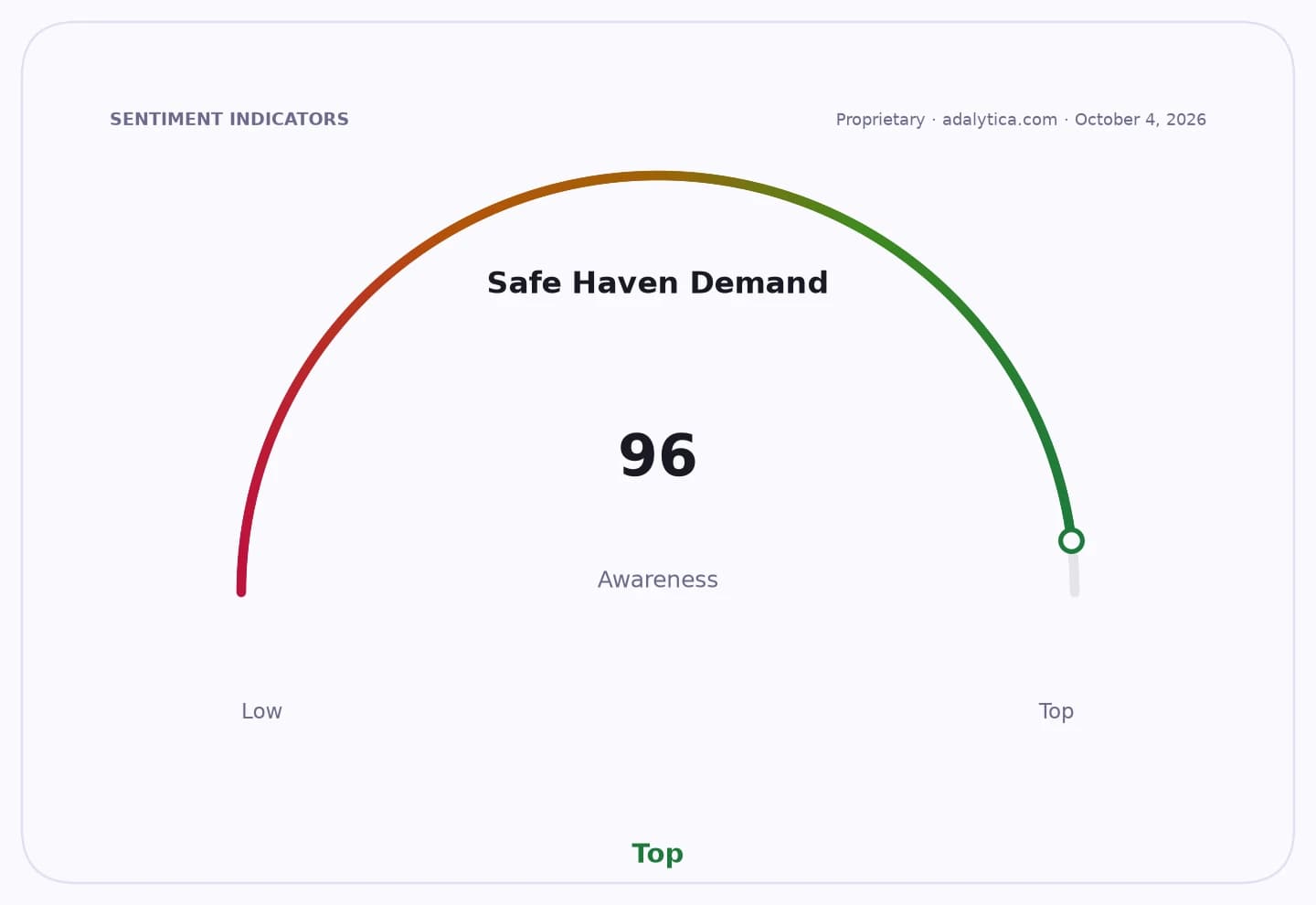
Ukraine is pressing the European Union to speed up military funding disbursements as Brussels keeps the money tied to reforms, underscoring the strain on Kyiv’s war financing and the political friction inside Europe over how quickly to sustain support.
Ukraine Presses EU for Faster Military Funding
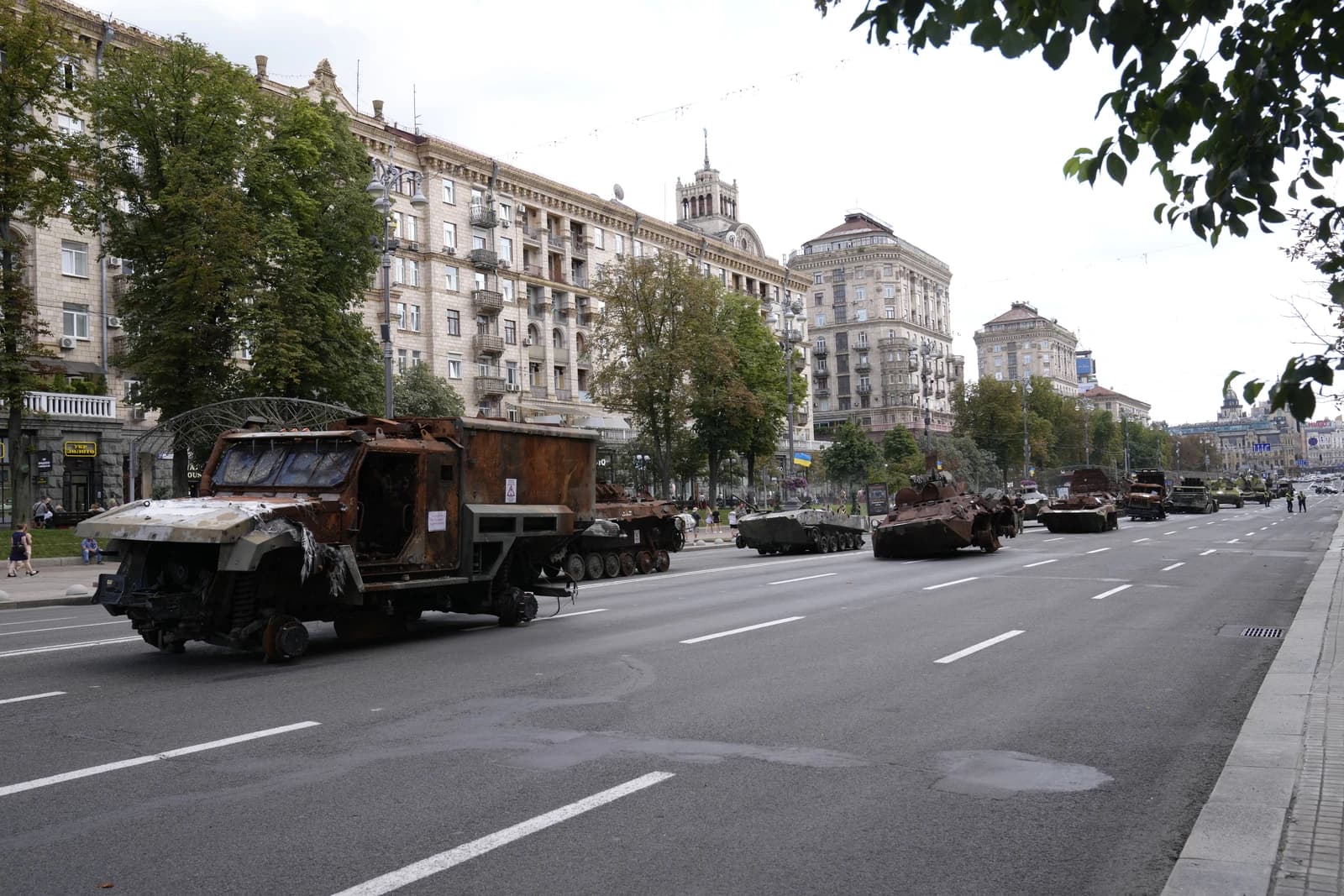
The timing matters because Ukraine’s defense spending needs remain immediate while EU aid continues to move through conditional release mechanisms. Any delay in payments can complicate battlefield procurement, budgeting and the government’s ability to plan around Russia’s prolonged campaign.
Sentiment IndicatorsⓘProprietary · adalytica.com · October 3, 2026
This is a snapshot — live sentiment, awareness and momentum for 130+ markets update continuously in the dashboard.Open AlphaPulse
Brussels has already approved 6.6 billion euros from the European Peace Fund for Ukraine, but the latest push from Kyiv reflects frustration that commitments do not always translate into fast cash flow. The EU has also faced disagreements over other assistance, including a blocked 250 million euro package for Ukrainian farmers hit by Russian strikes, showing how aid can be slowed by political and procedural hurdles even as the war grinds on.
For investors, the main relevance is to the euro, European defense names and broader risk sentiment tied to the war in eastern Europe. The euro was trading around $1.13 in the latest data, with technicals showing the pair below its 50-day and 200-day moving averages and the RSI near deeply oversold territory, while Adalytica’s USD trade signal points to extreme fear around the dollar. That mix suggests markets are still sensitive to any sign of escalation, funding delays or fresh European fiscal commitments.
The broader narrative is that Europe wants to keep Ukraine financed without loosening the political controls attached to the money. Sweden’s pledge of an additional 12 billion euros in military assistance and the EU’s recent release of funds show support remains intact, but Kyiv’s appeal for faster payments highlights the gap between headline pledges and the pace of delivery.
The next test is whether EU governments can accelerate transfers without reopening fights over conditionality, as Ukraine heads into another phase of high military burn rates and Europe balances wartime support against domestic budget pressure.
| Entity | Gains | Losses |
|---|---|---|
| Ukraine | ▲Faster war funding | ▼Delayed cash flow |
| EU policymakers | ▲Reform leverage | ▼Political pressure |
| European defense suppliers | ▲Steadier demand | ▼Payment uncertainty |
| Russian forces | ▲— | ▼Sustained Western support |