Warsaw and Kraków may be Poland’s wage leaders, but the bigger story is how narrow the country’s high-income map still is — and that limits how broadly consumer spending, tax receipts and long-term growth can spread.
Poland wage gains stay concentrated in major cities

The latest earnings data from Poland’s statistics office show that well-paid jobs remain concentrated in a handful of large urban hubs and in a few outlying districts anchored by major industrial employers. In other words, Poland does not yet have a truly even wage landscape; it has islands of prosperity surrounded by a much lower-pay mainland.
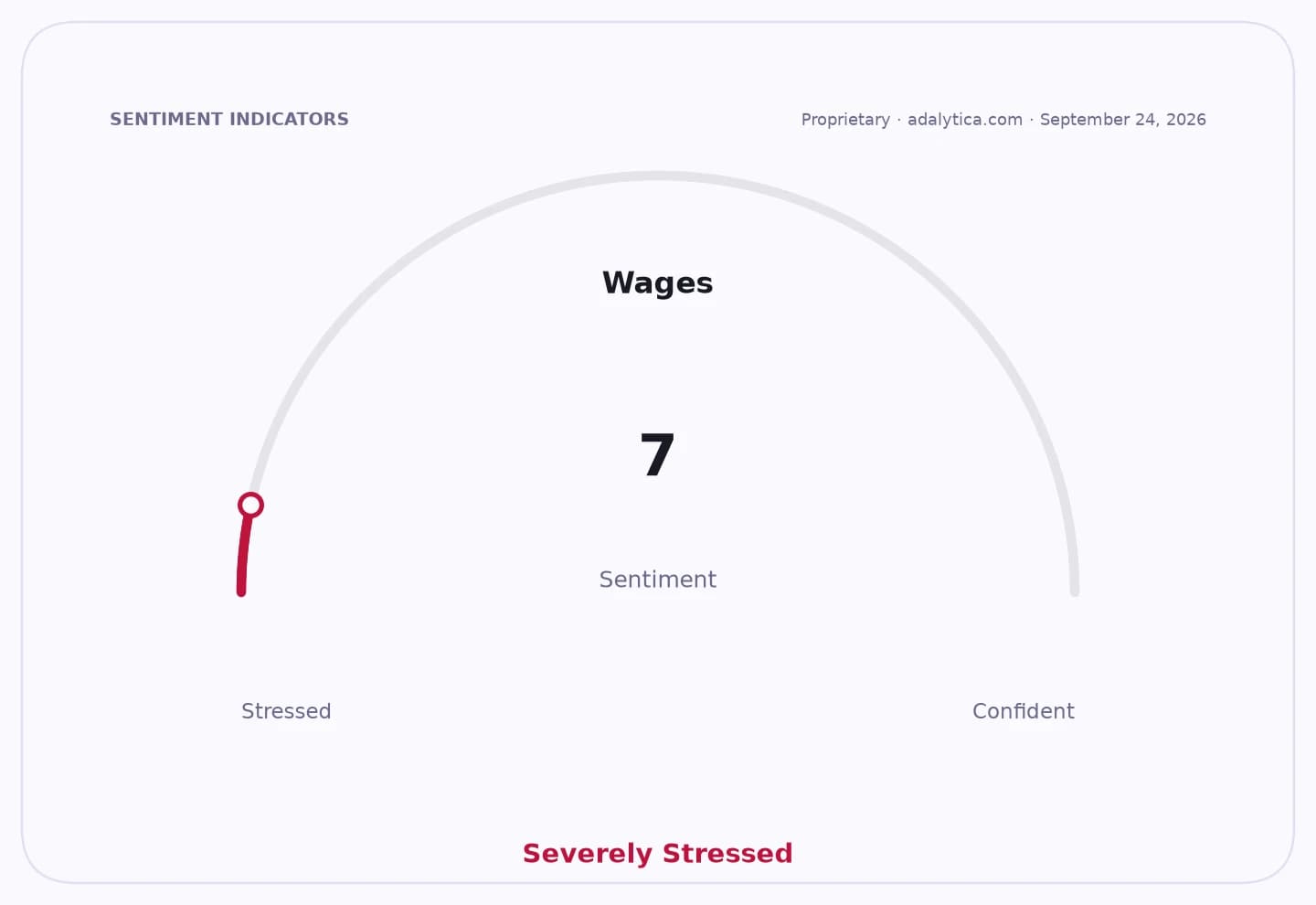
Sentiment IndicatorsⓘProprietary · adalytica.com · September 5, 2026
This is a snapshot — live sentiment, awareness and momentum for 130+ markets update continuously in the dashboard.Open AlphaPulse
That matters economically because wages are one of the cleanest gauges of how much purchasing power households can sustain. When only a few places post top-tier pay, the benefits of growth do not diffuse evenly. Families in those high-wage pockets can spend more, save more and absorb inflation better. But outside them, paychecks are smaller, which keeps broader consumption growth more fragile and reinforces regional gaps in housing demand, retail sales and local investment.
For investors, that uneven map is a reminder that Poland’s long-term story is still about selectivity rather than blanket strength. Companies with exposure to Warsaw, Kraków and industrial enclaves with large employers are likely to find stronger demand and tighter labor markets than firms serving poorer regions. That can be good for banks, consumer brands and property owners concentrated in richer cities, but it also means nationwide demand is less resilient than headline growth figures might suggest.
The pattern also fits a broader macro tension in Poland: the economy continues to grow faster than much of Europe, but manufacturing has been soft and inflation has stayed sticky. That combination makes high wages in a few pockets a positive signal for domestic demand, yet not enough on its own to offset weakness elsewhere. The wage map suggests a country still in transition, where prosperity is real but unevenly distributed.
For long-term investors, the takeaway is simple: Poland’s wage growth is promising, but the most attractive opportunities are likely to remain concentrated in the companies and regions that sit inside those “high-pay islands.” That is worth watching, especially for anyone building a patient, diversified portfolio with exposure to Central Europe.
| Entity | Gains | Losses |
|---|---|---|
| Warsaw, Kraków | ▲Higher wages, stronger spending power | ▼Little |
| Major employers in industrial hubs | ▲Labor-market pull, local demand | ▼Wage cost pressure |
| Consumer and banking stocks in richer cities | ▲Better sales, credit demand | ▼Regional imbalance risk |
| Lower-wage regions | ▲Some spillover from growth | ▼Slower consumption and investment |