Portugal’s borrowing costs fell across the curve on Tuesday, but the move reflects a broader shift in euro-area sovereign demand rather than a change in Portugal’s credit story alone.
Portugal yields fall as euro sovereign demand rises

The yield on Portugal’s 10-year benchmark debt slipped to 3.797% from 3.827% on Monday, while the two-year rate eased to 3.123% from 3.148% and the five-year to 3.393% from 3.419%. The decline kept Portuguese paper moving in step with Spain, Greece and Italy, and alongside lower German and French yields at the long end, suggesting investors were buying sovereign debt across the bloc.
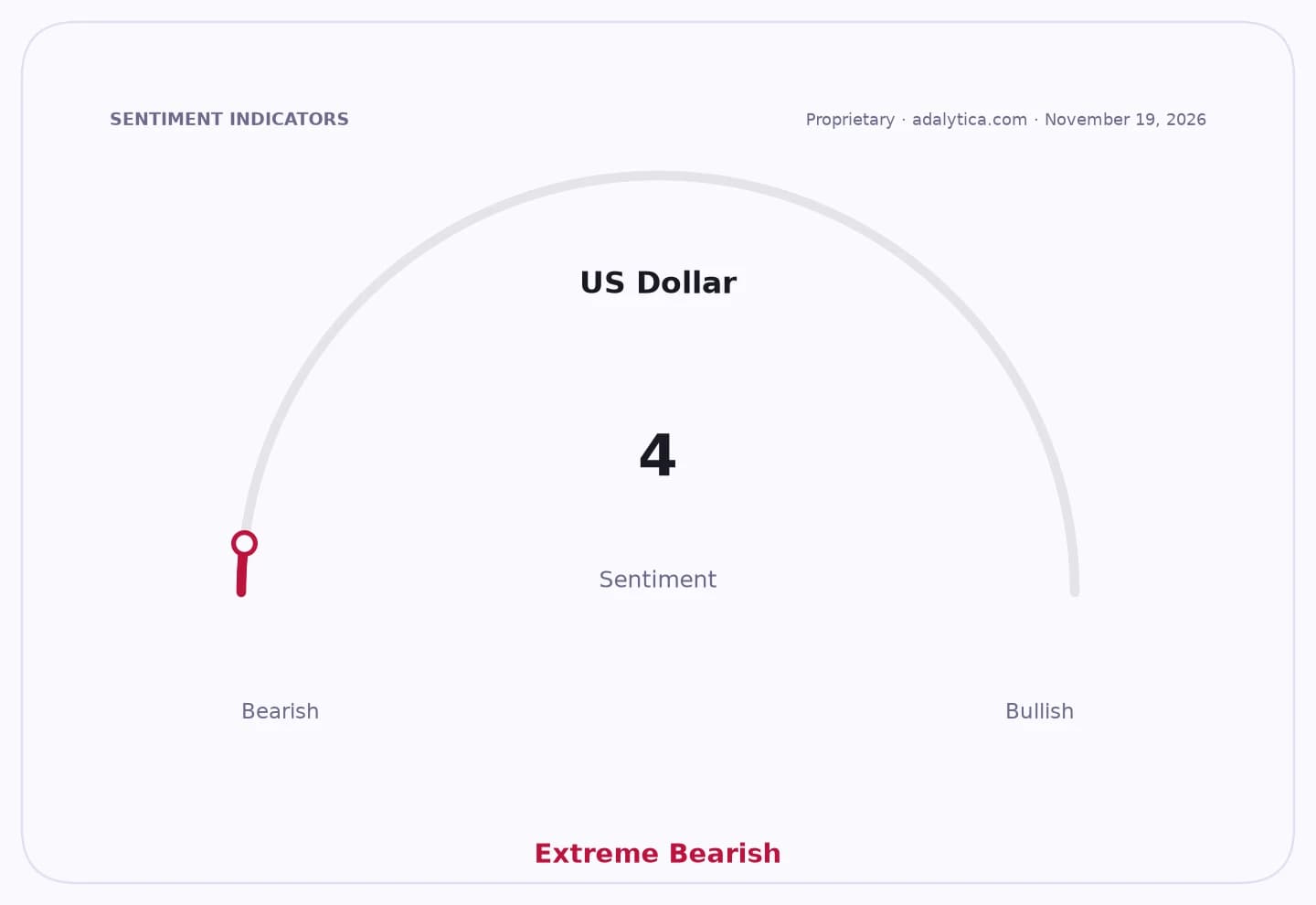
Sentiment Indicators
That matters because sovereign yields are a core funding benchmark for governments, banks and companies. When yields fall, financing conditions improve, helping ease pressure on public borrowing costs and, by extension, on private credit pricing. For Portugal, where debt service remains a sensitive issue for markets, a drop in yields can support fiscal credibility and reduce the risk premium versus core euro-zone debt.
The move was modest, but it comes against a backdrop of persistent tension in European fixed income, where investors remain focused on growth, inflation and fiscal discipline. Germany’s 10-year yield eased to 3.362% from 3.388%, while France’s fell to 4.927% from 4.958%. In the US, the 10-year Treasury yield also edged down, though it stayed above 5% at 5.114%.
Portugal’s debt still trades above German levels, as investors demand a premium for holding peripheral paper, but the narrowing move on the day points to a more constructive tone for euro sovereigns. That is positive for issuers seeking to lock in financing and for banks holding domestic government bonds on their balance sheets.
The next test will be whether the rally in government bonds broadens beyond a single session or proves to be a temporary repricing driven by global rates. If yields keep easing, Portugal’s funding outlook should improve; if not, the market will quickly refocus on fiscal risks and the wider strain in Europe’s debt markets.
| Entity | Gains | Losses |
|---|---|---|
| Portuguese government | ▲Lower funding costs | ▼Less urgency from falling yields |
| Portuguese banks | ▲Better bond valuations | ▼Smaller carry on sovereign holdings |
| Investors in peripheral debt | ▲Price gains | ▼Lower yield income |
| Short-duration bond sellers | ▲Reduced losses | ▼Less downside protection |