Procter & Gamble shares surged toward their biggest one-day gain since 2020 on a wave of demand for consumer staples, but the rally is less a verdict on the company than a bet that investors want shelter from slowing growth and sticky prices.
Procter & Gamble Rises on Consumer Staples Demand
Consumer Spending
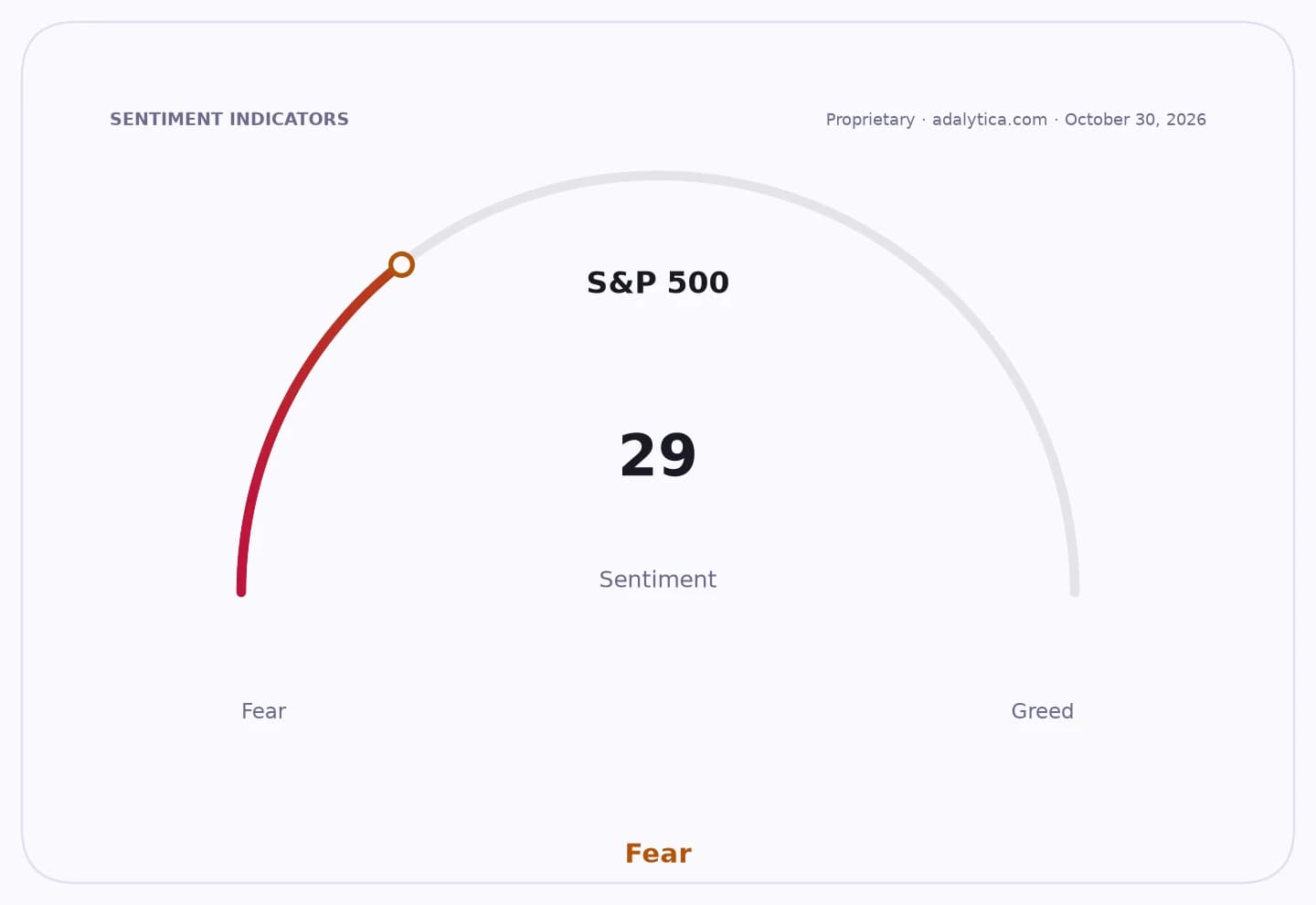
The stock’s move came as money rotated out of more cyclical and richly valued parts of the market and into household names viewed as resilient in a late-cycle or uncertain environment. Consumer staples are having their strongest monthly surge since 1998, underscoring how quickly the market has shifted toward reliable cash flow, pricing power and earnings durability.
Sentiment Indicators
That backdrop matters because inflation has not disappeared. The latest CPI print for September came in at 336.298, up 0.65% from the prior month, while the PCE price index, the Federal Reserve’s preferred gauge, rose to 131.579 in August and was forecast to edge higher in September. Even with unemployment at 4.2%, investors are clearly treating inflation risk and growth uncertainty as reasons to own essentials rather than discretionary names.
P&G sits at the center of that trade. The company said in its latest quarterly filing that organic sales rose 5%, helped by high single-digit growth in Europe and mid-single-digit gains in North America and IMETA. That kind of pricing and volume mix is exactly what investors want from a defensive consumer giant when they are worried about demand softness elsewhere in the economy.
Consumer Spending vs PGadalytica.com
Explore this data interactively — full history, time series and cross-market comparisons.
The market is also signaling that the move is not just about macro fear. P&G shares have been trading above both their 50-day and 200-day moving averages, and the recent spike pushed the stock into overbought territory on the relative strength index before easing back slightly. That suggests momentum buyers joined the defensive rotation, amplifying the move beyond a simple valuation adjustment.
Still, the bull case has limits. If inflation keeps cooling and growth stabilizes, the urgency to pay up for staples could fade, especially if investors pivot back toward technology and other higher-beta sectors. The bear case is that the rally already prices in a lot of safety, leaving less room for upside if earnings merely meet expectations.
For now, the message from the tape is clear: investors are paying for certainty, and P&G is one of the clearest beneficiaries of that instinct. Whether the stock can sustain gains will depend on whether macro anxiety persists or gives way to a broader risk-on shift.
| Entity | Gains | Losses |
|---|---|---|
| Procter & Gamble | ▲Defensive inflows and valuation support | ▼Less upside if rotation reverses |
| Consumer staples sector | ▲Higher demand for safety and earnings visibility | ▼Risk of crowded positioning |
| Cyclical/growth stocks | ▲— | ▼Capital outflows and relative underperformance |
| Consumers/retailers sensitive to inflation | ▲— | ▼Pressure from sticky prices and cautious spending |