Publicis Groupe is doubling down on the most valuable asset in digital advertising — first-party data — with a LiveRamp acquisition and a new AI platform designed to let brands personalize campaigns and measure results without handing data over to the big tech platforms.
Publicis Groupe launches AI ad data platform
The deal matters because marketers are under pressure to do more with less data, tighter privacy rules and rising expectations for measurable return on ad spend. Publicis is betting that the next phase of ad spending will favor companies that can combine identity, activation and measurement in one stack, while keeping client data inside their own environments.
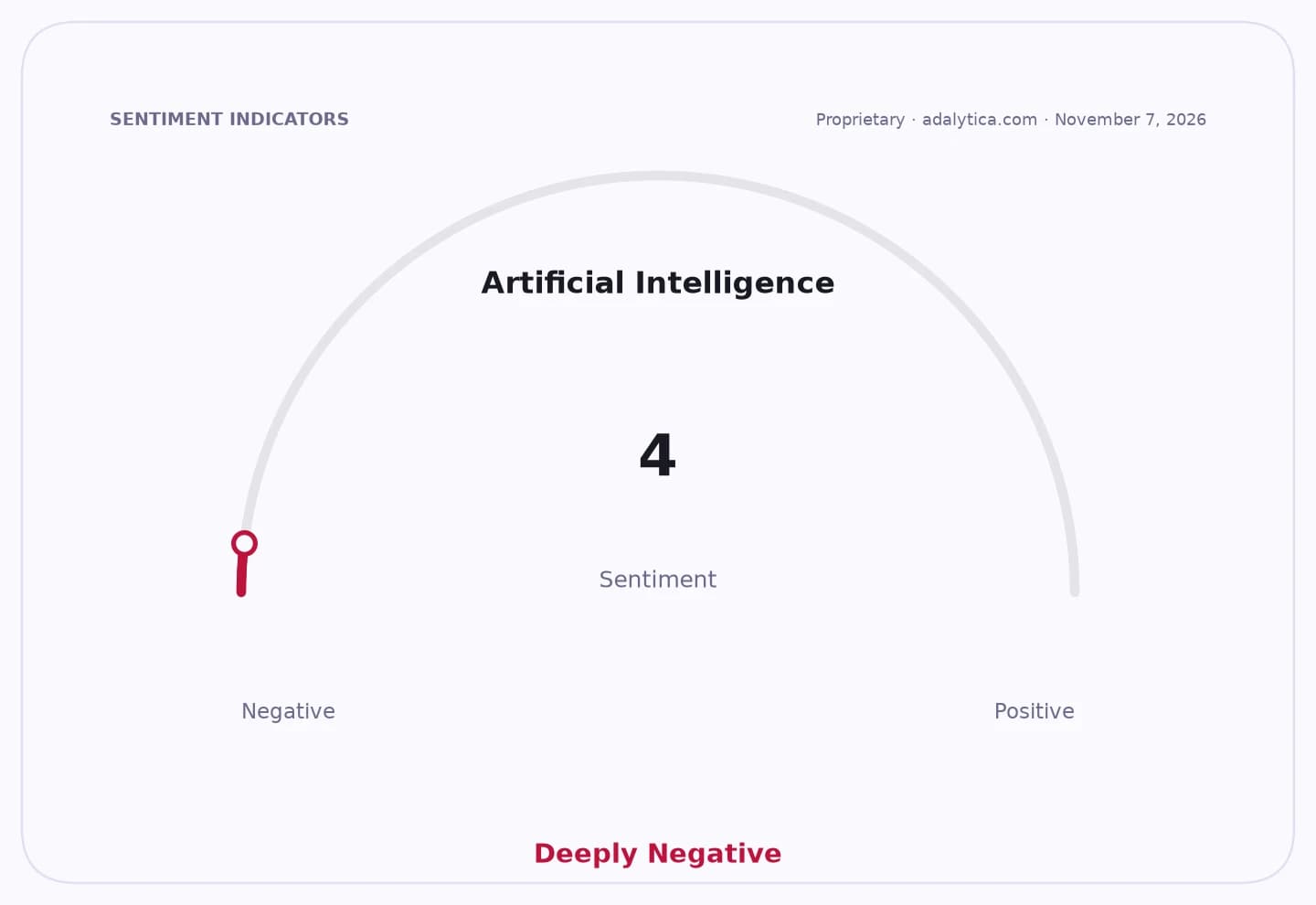
Sentiment Indicators
The French group said the platform combines LiveRamp’s data-collaboration tools with Epsilon’s consumer identity capabilities to form what it calls an “AI growth engine.” It will allow brands to enrich proprietary data, activate it across media channels, tailor content and track the effect on sales and other business outcomes. Publicis said the network spans 25,000 publishers and more than 500 data and technology partners, including retail media, streaming and large language model integrations.
That architecture is designed to address one of the advertising industry’s most persistent problems: how to use customer data at scale without sacrificing control. Publicis said the platform uses clean room and zero-copy technology so clients retain ownership of their information and any AI assets they build on top of it. For brands, that is a direct challenge to the trade-off between reach on walled-garden platforms and control over data and measurement.
For Publicis, the move also strengthens its position in a sector where the winners are likely to be the groups that can turn data infrastructure into recurring revenue and stickier client relationships. The company is linking the new platform with Publicis Sapient, its transformation unit, the Marcel AI layer and its creative, media, influencer and commerce businesses, suggesting a broader shift from agency services toward integrated operating systems for marketing.
Investors will read the deal as both an offensive and defensive play. It deepens Publicis’ differentiation versus rivals that remain more dependent on outsourced media buying and fragmented tech partnerships, while potentially improving pricing power if clients view the platform as a strategic layer rather than a commodity service. The risk is execution: integrating data assets, proving measurable lift and convincing brands to adopt a new workflow will take time, and the economics will depend on whether the platform drives higher-margin growth rather than simply adding complexity.
The timing is favorable. Corporate AI spending is increasingly shifting from experimentation to applications that can show direct financial payoff, especially in marketing, where measurement and automation are easiest to monetize. If Publicis can prove that its system improves targeting and sales while preserving data sovereignty, it could set a template for how agencies compete in the AI era — not as intermediaries, but as owners of the marketing infrastructure itself.
| Entity | Gains | Losses |
|---|---|---|
| Publicis Groupe | ▲Deeper client lock-in | ▼Higher integration risk |
| Brands/advertisers | ▲Data control and better measurement | ▼More workflow complexity |
| Big tech ad platforms | ▲— | ▼Less data dependence |
| Rivals in ad agencies | ▲— | ▼Weaker differentiation |