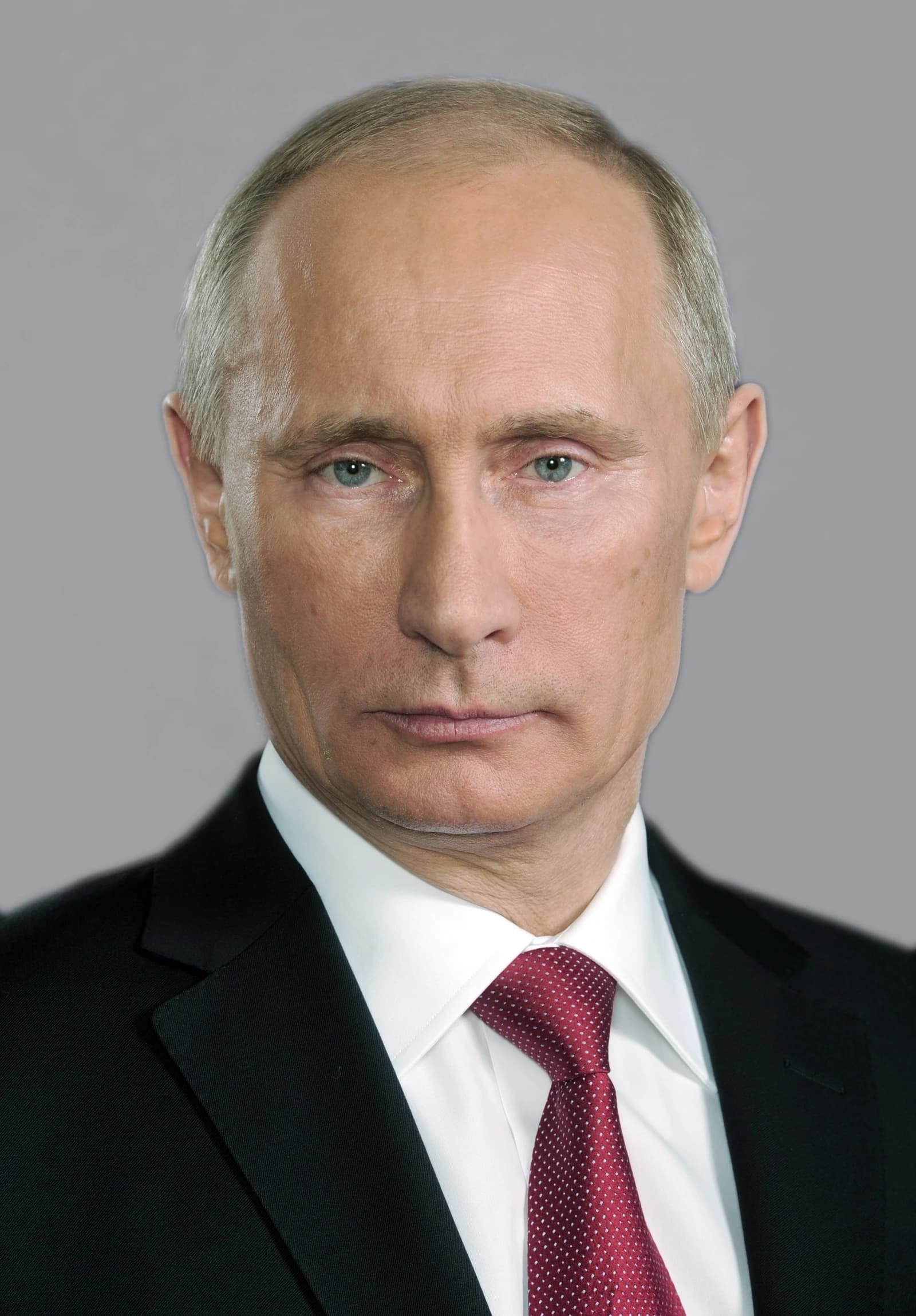
Vladimir Putin used Russia’s Eastern Economic Forum to argue that the war in Ukraine is now reshaping everything from diplomacy and energy security to the domestic macro backdrop, with the Kremlin presenting itself as open to talks while warning that attacks on civilian shipping and infrastructure are hardening the conflict.
Putin EEF Remarks Keep Russia War Risk Elevated

That matters because the message was less about battlefield updates than about the policy regime investors must price: a prolonged confrontation that keeps geopolitical risk elevated, supports defense and security spending, and complicates any clean easing in sanctions, trade flows or regional capital allocation.
Putin said the “mainly” required settlement must come from Moscow and Kyiv, although he left the door open to outside help from the U.S., China and others. At the same time, he accused Kyiv of “state terrorism” over strikes on civilian trade vessels and threats to civil aviation, saying Western allies who stay silent are complicit. The rhetoric underscores how fragile any peace track remains even as both sides have signaled, in different ways, a willingness to talk.
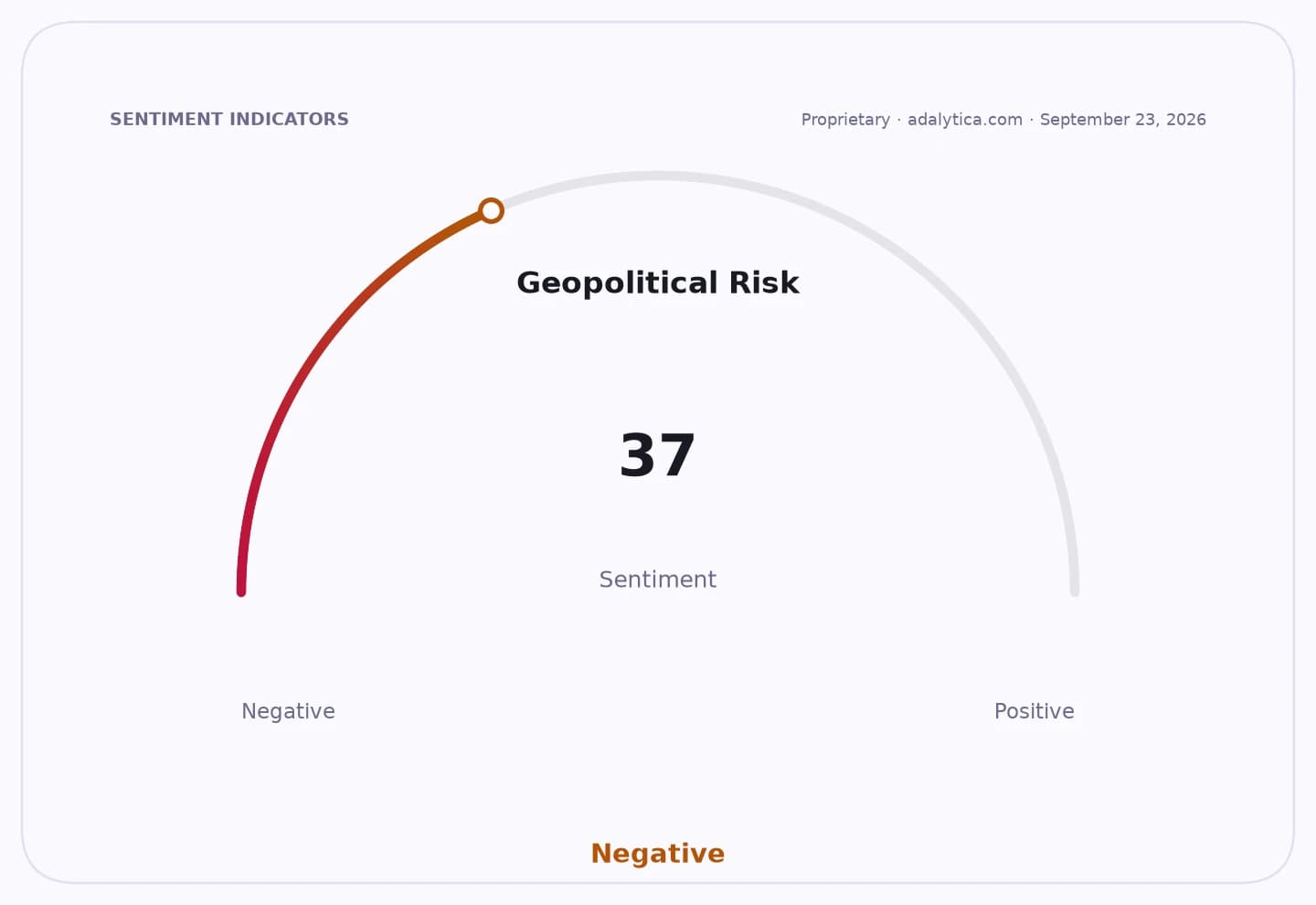
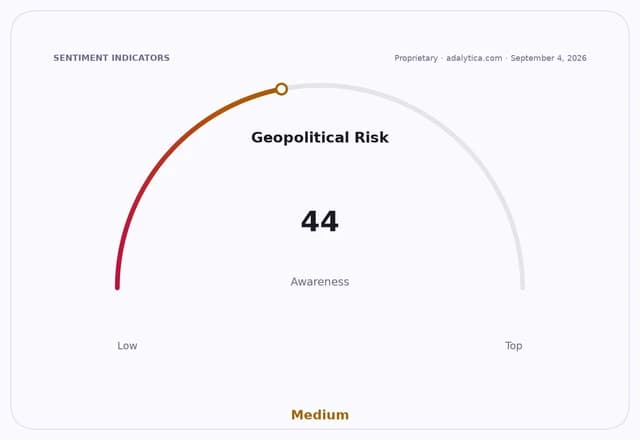
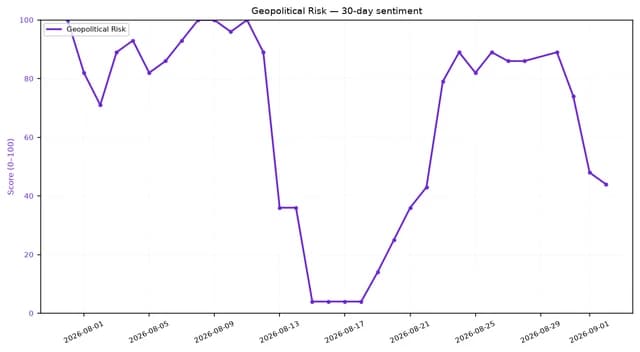
For markets, the significance is that the war premium is still a live input across commodities, shipping, insurance, defense and currency trading. Russia’s move to frame its response as “mirror” retaliation to attacks on civilian infrastructure suggests the risk of further escalation has not eased. Adalytica’s Global Stability Sentiment gauge fell to 44 from 48 a day earlier and is down 45 points over the past week, reflecting how quickly the geopolitical backdrop can deteriorate when conflict rhetoric intensifies.
Putin also sought to reassure domestic markets by rejecting the need for mobilization, saying Russians are still signing contracts voluntarily and insisting there is no scenario that currently requires a draft. That is politically important ahead of parliamentary elections and economically relevant because a mobilization shock would carry far greater fiscal and labor-market costs than the current contract-based model.
On the macro front, the Kremlin is trying to project stability: Putin said Russia’s debt remains among the world’s lowest, the budget deficit is manageable and the central bank’s higher policy rate is a deliberate tool to preserve financial stability even as inflation runs at 6.3% year on year. The subtext is that Moscow wants investors to see a government that can keep financing the war without forcing the banking system into stress, though the longer the conflict lasts the more that defense outlays, sanctions friction and higher rates squeeze private credit and growth.
The energy message was equally strategic. Putin said new obligations on oil and gas firms to protect critical infrastructure are not a step toward nationalization, but a response to attacks that had exposed a security gap. That implies higher capital spending for producers and a tougher operating environment for Russian energy assets, even as the Kremlin argues the costs are the price of resilience. The beneficiaries are domestic security contractors and state-linked industrial groups; the losers are energy margins and, potentially, export reliability.
He also tried to cast Russia as a technology and industrial winner in the Arctic and the Far East, pointing to the country’s lead in small-scale nuclear power and a planned single incentive regime for the Far East and Arctic from 2027. Those projects matter for long-term investment flows into infrastructure and power generation, particularly if Moscow is trying to redirect capital eastward as ties with Europe remain strained.
Markets were little moved on the day, but the U.S. dollar proxy UUP held near 28.17-28.21, with its 50-day moving average at 28.26 and RSI around 49.5-50.5, suggesting no major trend break in the currency response. Gold ETF GLD traded around $402.78, well above its 200-day moving average near 415, after a violent year of swings that still leaves it in a geopolitically sensitive zone. The broader read is that investors remain positioned for uncertainty rather than resolution.
| Entity | Gains | Losses |
|---|---|---|
| Kremlin | ▲Narrative control | ▼Pressure for compromise |
| Russian energy firms | ▲Security spending support | ▼Higher compliance costs |
| Gold and safe-haven assets | ▲Geopolitical bid | ▼Risk appetite |
| Ukraine and Western allies | ▲Diplomatic leverage | ▼Escalation risk |