Australia’s central bank has kept the door open to another rate increase in November after a senior policymaker said the inflation outlook has deteriorated materially, even as higher borrowing costs are already slowing the economy.
RBA Keeps November Rate Hike Option Open

Reserve Bank of Australia Deputy Governor Andrew Hauser said on Wednesday the bank is still finalizing its quarterly forecasts, but the latest readings suggest inflation is running hotter than officials expected, driven in part by the recent jump in oil prices. Brent has risen to about $108 a barrel from $102 at the RBA’s previous meeting three weeks ago, and is now roughly a third above the bank’s August assumptions.
The shift matters because it puts the RBA in a familiar but uncomfortable bind: inflation remains uncomfortably above target while the domestic economy is softening. Hauser said policy is already working, with the labour market loosening and consumer spending subdued, but he also warned that pockets of growth remain and that the inflation backdrop has worsened enough to force policymakers to weigh whether they need to “act more” or protect jobs.
Markets have moved quickly toward that latter question. Traders are now pricing about a 40% chance of a hike to 4.85% at the RBA’s Nov. 2-3 meeting, up from 30% earlier this week, with a further move fully priced by May next year. That repricing reflects a growing belief that a headline inflation reading next week could accelerate to 4.0% in the third quarter, while core inflation is expected to remain around 3.5% — well above the bank’s 2% to 3% target band.
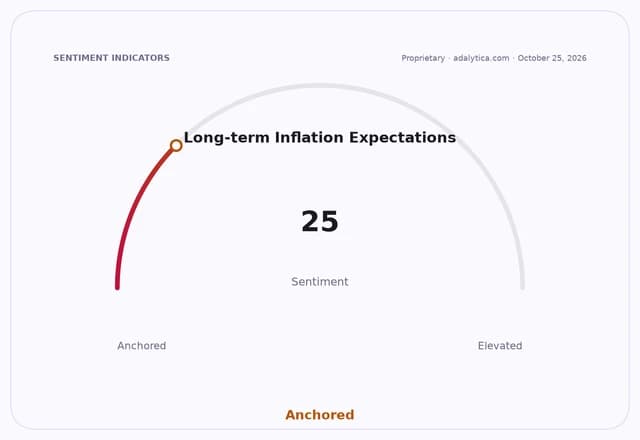
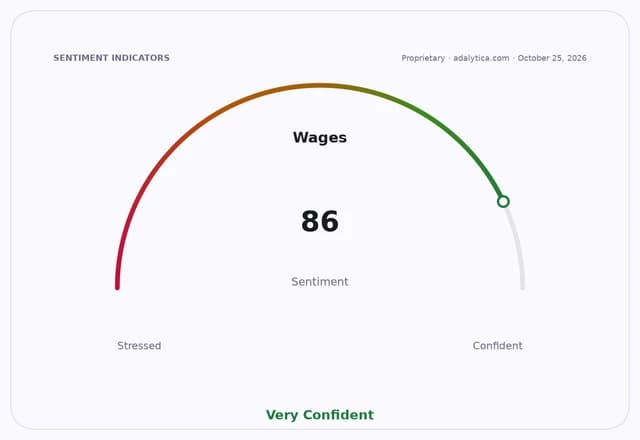
Long-term Inflation Expectations — 30-day sentimentadalytica.com
Explore this data interactively — full history, time series and cross-market comparisons.Open AlphaPulse
For investors, the message is that the RBA is not yet ready to declare victory over inflation, even after four rate rises this year. Higher rates would support the Australian dollar and squeeze domestic equities, property and rate-sensitive sectors, but a pause would also be interpreted as acknowledgement that growth and the labour market are weakening faster than anticipated. The clearest market signal has been in the Australia ETF EWA, which has recently been volatile as traders reposition for either a more aggressive RBA or a softer economy.
The policy debate is also broadening beyond rates. Australia’s unemployment rate unexpectedly climbed to a five-year high of 4.7% in September, and house prices have fallen faster than officials forecast. Those data points strengthen the case for caution, but they also raise the risk that the central bank waits too long to prevent inflation expectations from becoming embedded.
The next catalyst is the inflation report due next week, followed by the RBA’s November meeting. If the numbers confirm that price pressures are still sticky despite weaker demand, policymakers are likely to keep tightening bias alive. If they show a faster-than-expected cooling in underlying inflation, the central bank may judge that the economy can absorb no more pain.
| Entity | Gains | Losses |
|---|---|---|
| RBA hawks | ▲Anti-inflation credibility | ▼Growth-sensitive borrowers |
| Australian savers | ▲Higher deposit returns | ▼Mortgage holders |
| Australian dollar | ▲Rate-supportive repricing | ▼Exporters facing stronger currency |
| Rate-sensitive equities | ▲Pause scenario | ▼Hike scenario |