The US dollar stayed on the back foot on Wednesday after Treasury yields and crude prices slipped, while the Australian dollar held near a three-week high after a senior Reserve Bank of Australia official left the door open to another rate increase next month.
US Dollar Slips as RBA Keeps Hike Option Open

The move matters because the dollar has been trading as the market’s default haven through a stretch of geopolitical and macro volatility. Lower yields reduce the currency’s interest-rate advantage, while softer oil prices ease one of the forces supporting the greenback through energy-linked risk aversion. With the dollar index steady at 101.78 after Tuesday’s decline, investors were signaling that the latest pullback in yields and crude was enough to cap near-term demand for the US currency, even if broader haven buying has not fully reversed.
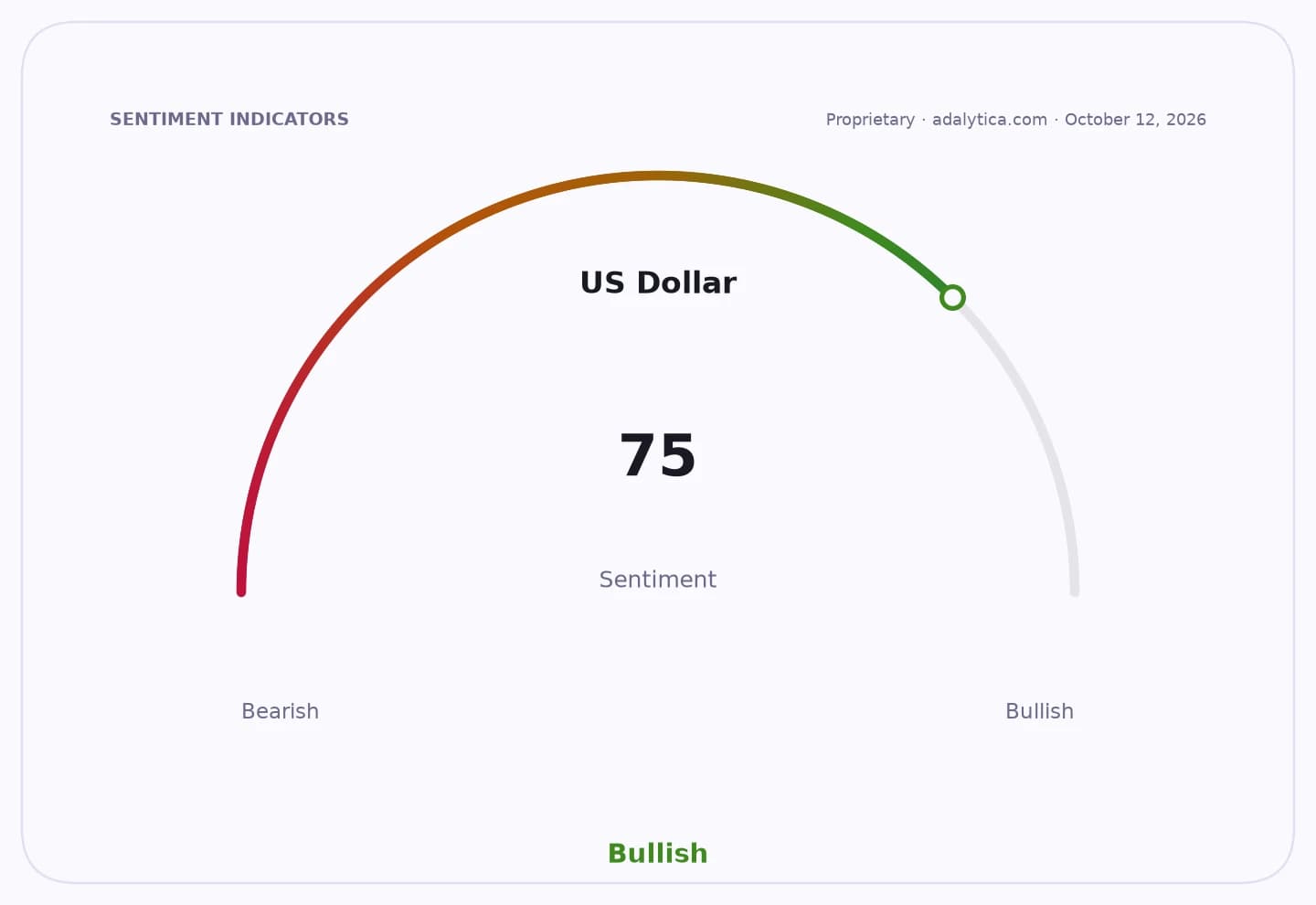
Sentiment IndicatorsⓘProprietary · adalytica.com · October 25, 2026
This is a snapshot — live sentiment, awareness and momentum for 130+ markets update continuously in the dashboard.Open AlphaPulse
The Australian dollar rose 0.1% to $0.7013, just below a three-week peak, after Deputy Governor Andrew Hauser said the inflation outlook had become “materially worse” and he was unsure whether the central bank would need to lift rates again next month. That kept traders leaning toward a more hawkish RBA than many other developed-market central banks, giving the currency a relative policy premium at a time when the Federal Reserve is expected to hold steady.
For investors, the split is important. A softer dollar eases pressure on commodities and emerging-market currencies, especially those exposed to imported energy costs. It also narrows some of the valuation support for US assets that had benefited from haven inflows. The dollar’s earlier strength had been built partly on war-related demand and US energy independence; as oil retreated from a five-month high, that narrative lost some force for the moment.
Against the yen, euro and sterling the greenback was little changed, but the broader tone suggests a market waiting for the next catalyst rather than extending the dollar’s haven bid blindly. Traders are also looking ahead to consecutive policy decisions from the Fed, European Central Bank and Bank of Japan next week, with no rate changes expected from those three, while the RBA’s more hawkish tone stands out as a near-term support for the Aussie.
If Middle East tensions cool further and oil keeps easing, the dollar’s haven premium could fade more quickly. But if yields stabilize higher again, or if tech earnings and equity volatility revive growth concerns, the greenback may yet regain its footing. For now, the market is rewarding currencies with a tightening bias and trimming exposure to assets that depend on persistent risk-off flows.
| Entity | Gains | Losses |
|---|---|---|
| Australian dollar | ▲Higher rate expectations | ▼Dollar strength |
| US exporters | ▲Softer currency tailwind | ▼Imported inflation relief |
| US importers | ▲Cheaper foreign goods | ▼None |
| Oil importers | ▲Lower crude costs | ▼Energy producers |