The record industry is moving to put visible labels on AI-made songs and set new eligibility rules for charts, a push that could reshape how millions of tracks are surfaced, monetized and measured across streaming platforms.
Record labels push AI music labels and chart rules

The proposals matter because AI music is no longer a niche issue: Luminate says more than 100,000 tracks are uploaded to streaming services every day, while Apple Music’s Oliver Schusser said fully AI tracks account for about a third of monthly uploads and Deezer said they reached more than half of daily uploads at peak levels in June 2026. That volume gives the debate real economic weight for labels, distributors and streaming platforms, which face pressure to preserve listener trust while avoiding a flood of low-cost AI content that can dilute royalties and discovery.
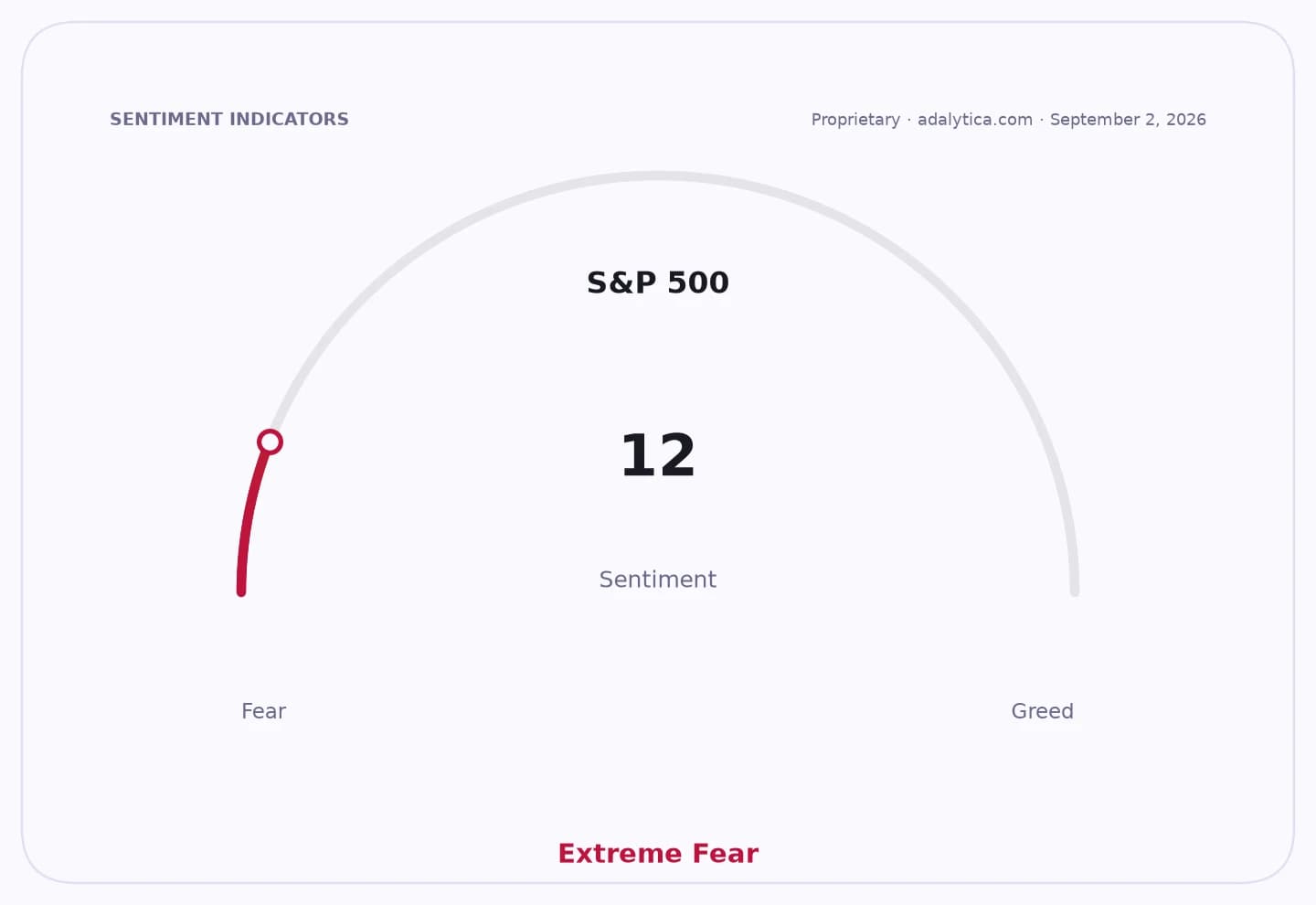
Sentiment IndicatorsⓘProprietary · adalytica.com · September 5, 2026
This is a snapshot — live sentiment, awareness and momentum for 130+ markets update continuously in the dashboard.Open AlphaPulse

The industry is now splitting the problem into two parts. One coalition, led by trade groups including the RIAA, A2IM, WIN, IMPALA, the Recording Academy, SAG-AFTRA and the Human Artistry Campaign, wants streaming services to display labels for AI-generated and AI-assisted tracks, similar to a parental advisory sticker. A separate group of major labels and independents — including Sony Music, Universal Music Group, Warner Music Group, HYBE and Believe — wants chart rules tightened so only songs that are “substantially” human made can qualify, and so works made with unauthorized models such as Suno are excluded.
That distinction matters to investors because it affects different parts of the music business. Streaming labels would require changes to metadata, upload workflows and moderation systems at Spotify, Apple Music, Deezer and Tidal, while chart rules would influence which songs gain visibility, promotional power and downstream revenue. DIMA, which represents streaming services, signaled it is open to the idea, saying it wants more detailed AI metadata and a “robust supply chain,” but no major platform has adopted the proposal yet.

Enforcement is the biggest hurdle. The definitions of AI-generated and AI-assisted music are broad, and the streaming proposal relies on voluntary disclosure from uploaders rather than detection by the platforms, raising the risk that some creators simply omit AI use. The chart rules face a similar problem in deciding what counts as “substantially” human made and how chart operators would verify it at scale.
For Spotify, the issue lands against a stock that has been volatile but remains above its 200-day moving average at about $508, with shares last around $542 and an RSI reading of 67.3, suggesting the market is still firm but not far from overheated territory. Warner Music, meanwhile, has been trading near $28.78 after rebounding from summer lows, with its 50-day moving average at $27.26 and RSI at 74.4, leaving the stock extended as the regulatory backdrop becomes a new variable for the sector.
The immediate catalyst is implementation. IFPI said the chart principles will apply to several rankings worldwide, including Australia’s ARIA charts and the Official MENA and Southeast Asia charts, but the more consequential test is whether Spotify, Apple Music and other DSPs agree to add visible AI labels — and whether Billboard and the U.K.’s Official Charts follow.
| Entity | Gains | Losses |
|---|---|---|
| Record labels | ▲More control over AI music | ▼Exposure to implementation costs |
| Streaming platforms | ▲Clearer metadata standards | ▼Added compliance burden |
| AI music creators | ▲Defined disclosure rules | ▼Chart access risk |
| Human artists | ▲Less market dilution | ▼More competition from labels debates |