REITs are regaining investor attention as the 10-year Treasury yield hovers near 4.6% and bond-market volatility keeps income assets in play, giving high-yield property names a fresh bid even after a bruising stretch for rate-sensitive stocks.
REITs Catch a Bid as Yields Stay Elevated
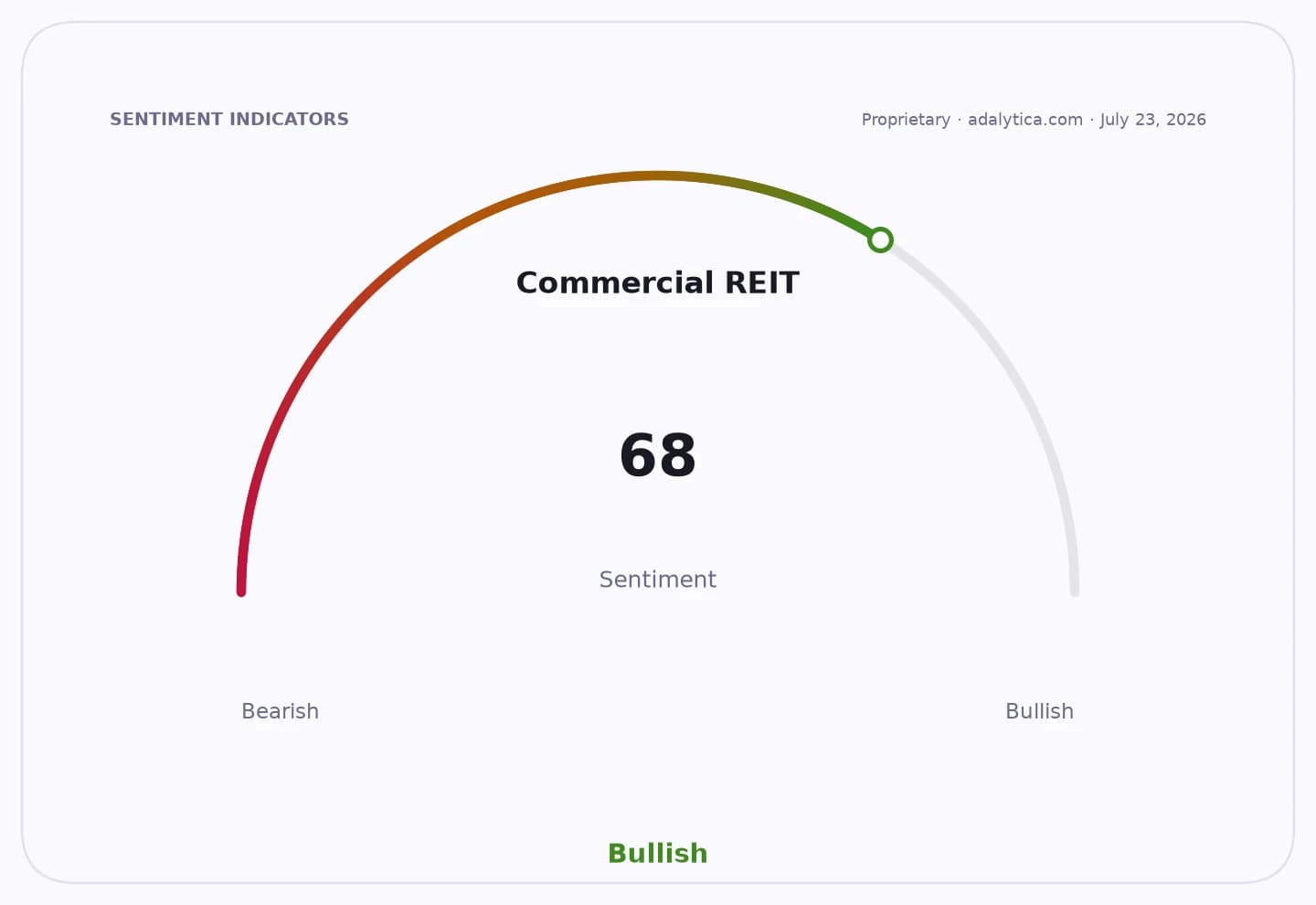
The backdrop matters because REIT valuations are tightly linked to the cost of capital and the relative appeal of their dividends versus Treasuries. With the 10-year yield forecast at 4.637% and the fed funds rate still around 3.63%, investors are again being forced to choose between guaranteed sovereign income and the larger cash payouts offered by real estate trusts.
Sentiment IndicatorsⓘProprietary · adalytica.com · July 23, 2026
This is a snapshot — live sentiment, awareness and momentum for 130+ markets update continuously in the dashboard.Open AlphaPulse
That shift helps explain why three closely watched REITs — Realty Income, W. P. Carey and Prologis — are back in demand, with the group averaging a forward yield of about 9.8% in the current screen. In a market where the S&P 500 trade signals are still only neutral and Treasury-bond sentiment remains in extreme fear, yield is once again doing a lot of the heavy lifting for total-return buyers.
Realty Income has been the cleanest expression of the rebound. The shares recently traded around $64.67, above both the 50-day and 200-day moving averages, while RSI readings in the mid-50s suggest momentum is constructive but not overheated. For income investors, that matters because Realty Income’s premium as a defensive monthly payer tends to widen when rate expectations stabilize.
DGS10 vs FEDFUNDS — macro contextadalytica.com
Explore this data interactively — full history, time series and cross-market comparisons.Open AlphaPulse
W. P. Carey has also recovered after a sharp early-summer dip, with the stock at about $74.93 and holding above its long-term trend line. The company’s June disclosure that tenant Hellweg filed for insolvency under self-administration was a reminder that credit risk still exists inside the net-lease model, but management said it is maintaining full-year AFFO guidance, limiting the damage to the broader thesis.
Prologis, the largest industrial REIT in the group, is trading near $145.23 after a volatile month that saw the stock swing sharply around the 50-day average. The stock’s rebound reflects continued appetite for logistics exposure, even as investors reassess whether industrial real estate can keep pricing power in a slower-growth, higher-rate environment.
The bigger story is that REITs are benefiting from a narrow but important window: yields are still high enough to punish weak balance sheets, but not so high that income investors can ignore property cash flows. If Treasury yields stay pinned near current levels and inflation remains sticky, the sector’s strongest names could keep attracting capital; if rates back up again, the rebound could fade quickly.
| Entity | Gains | Losses |
|---|---|---|
| Realty Income | ▲Income seekers, trend followers | ▼Cash-only bond substitutes |
| W. P. Carey | ▲Value investors, re-lease upside bulls | ▼Credit-risk skeptics |
| Prologis | ▲Logistics exposure bulls, growth-income buyers | ▼Rate-sensitive sellers |
| U.S. Treasuries | ▲Yield chasers needing safety | ▼REIT dividend buyers |