Dani Yogatama’s Reka has crossed the one milestone that matters most in frontier AI: it has moved from a founder story to a globally financed platform with the scale to compete outside Indonesia.
Reka gets $110M from NVIDIA and Snowflake

That matters because the next phase of the AI boom will not be won by apps alone, but by the model builders that control the underlying compute, data and distribution. Reka’s rise to a $1 billion valuation after taking in $110 million from NVIDIA and Snowflake in 2025 shows investors are willing to back a non-U.S. company that is building multimodal foundation models rather than merely wrapping other people’s software around them. Dani’s selection as Endeavor Entrepreneur Indonesia No. 120 adds a second lever: access to an elite global network of mentors, operators and capital that can help a deep-tech startup scale beyond its home market.
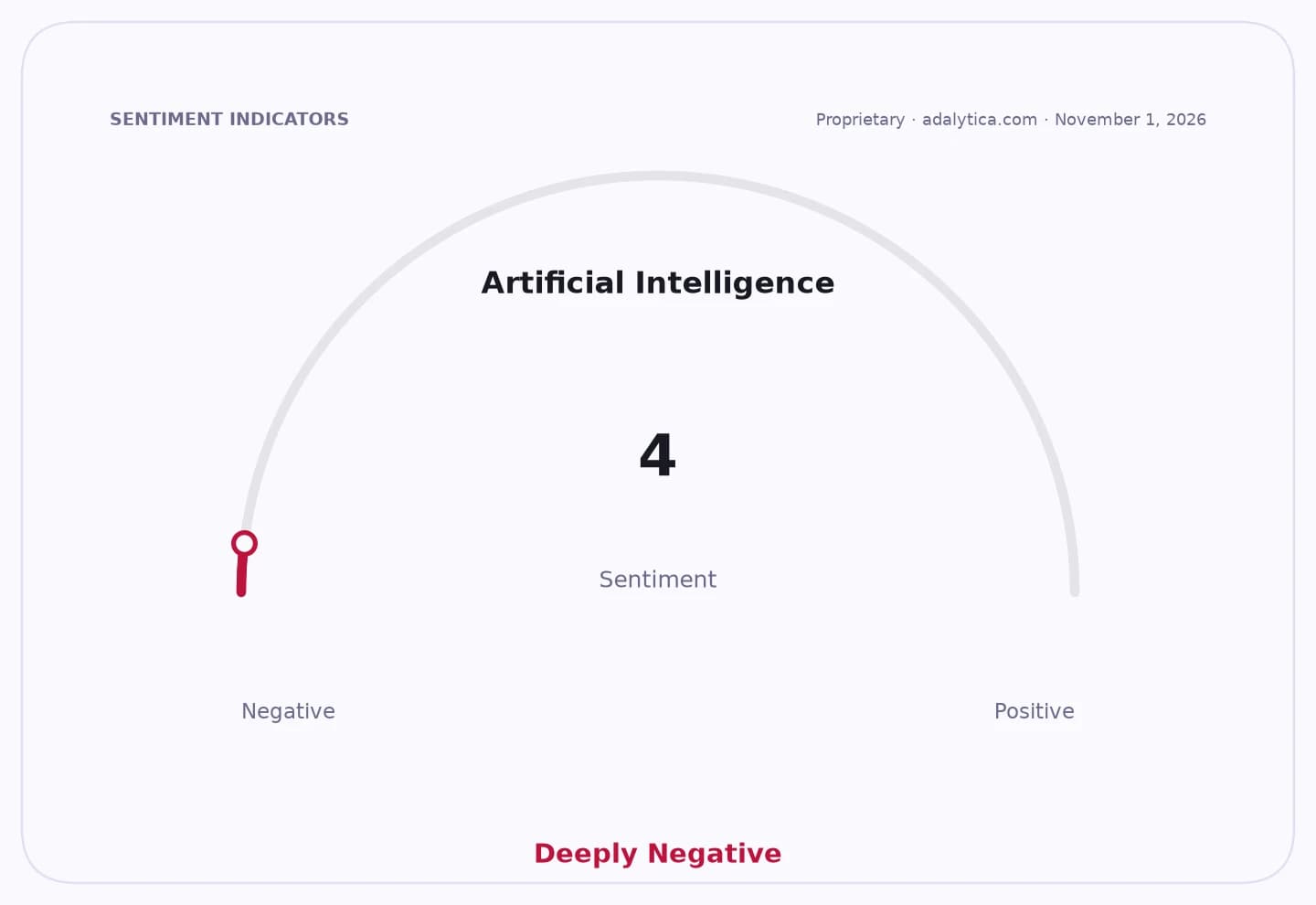
Sentiment Indicators
Nvidia Corp
For Indonesia, the story is bigger than one founder. It is evidence that the country’s best technical talent can graduate from being consumers of imported AI to builders of exportable AI infrastructure. Dani, an ITB graduate and former Google DeepMind researcher, has turned that ambition into Reka, a company making multimodal models that can process text, image, audio and video in one system. Its products include Reka Flash, a 21-billion-parameter model, as well as tools for visual search, web-based research and model efficiency. That emphasis on efficiency is critical: as enterprise AI shifts from experimentation to deployment, the winners will be the models that can deliver capability without crushing inference costs.
This is where the market underestimates the opportunity. The AI trade has largely centered on the largest U.S. platforms and the semiconductor names supplying them, but the real economic value chain is expanding. Every enterprise that wants its own AI stack needs foundation models, tuning tools, retrieval layers and lower-cost inference. That creates room for a new class of beneficiaries beyond the obvious hyperscalers. If Reka can translate research credibility into enterprise adoption, it could become a regional anchor in the same way infrastructure software platforms became essential picks-and-shovels in earlier cloud cycles.
The funding from NVIDIA and Snowflake is especially telling. NVIDIA is not just a chip supplier; it is a strategic validator of where AI demand is headed. Snowflake’s participation signals that data platforms still see a future in specialized model partnerships, not just commoditized model access. For investors, that matters because it points to a broader ecosystem trade: the AI buildout is no longer just about chips, but about every layer that helps companies train, serve and operationalize models more efficiently.
Dani’s Endeavor selection also matters for execution, not just prestige. Global founder networks can accelerate hiring, open enterprise doors and shorten the path to strategic partnerships. For a startup trying to move from a promising lab into a durable global business, those relationships can be as valuable as capital. Endeavor itself says its entrepreneurs have generated more than $111 billion in annual revenue and millions of jobs, which underlines why access to that network can change the trajectory of a company like Reka.
Investors should read this as another sign that the AI opportunity is widening geographically and structurally. The market still prices most AI upside through a handful of U.S. mega-caps, but the next wave of returns may also come from the infrastructure enablers, semiconductor suppliers and cloud platforms that support a global ecosystem of model builders. NVIDIA remains the clearest public-market beneficiary, even after its powerful run, because frontier AI outside the U.S. still relies on its stack. Microsoft remains another obvious winner as enterprise AI spending migrates deeper into production workflows, while data and compute ecosystems stand to benefit from every new frontier model that comes to market.
The bigger takeaway is that Reka is a signal, not an isolated case. A founder from ITB, trained at DeepMind and backed by global capital, is building an AI company from Indonesia for the world. That is exactly the sort of asymmetric story investors should watch early: the market is still focused on the loudest AI names, while the next generation of deep-tech winners is quietly being formed in places that are easy to overlook. For long-term capital, the actionable thesis is simple: stay overweight the AI infrastructure stack and the enablers of global model development, because the demand curve is still broadening.
| Entity | Gains | Losses |
|---|---|---|
| Reka / Dani Yogatama | ▲Global capital, credibility, network access | ▼Local-only market framing |
| NVIDIA | ▲More model demand, ecosystem validation | ▼Dependence on continued AI capex |
| Snowflake | ▲Deeper enterprise AI tie-ins | ▼Competition from integrated cloud stacks |
| U.S. AI incumbents | ▲Ecosystem expansion | ▼Some share of frontier AI mindshare abroad |