Japan’s main labor confederation has sharpened its demand for next spring’s pay talks, signaling that the country’s wage-setting cycle is becoming more entrenched even as inflation eases from its peak.
Rengo sets 2027 wage target at 6% center
Rengo said on Oct. 22 it will ask member unions to seek wage increases of “5% or more” in the 2027 spring wage round, keeping the same floor as in the past four years but explicitly making 6% the “center” of its target. The group also kept separate goals of 6% or more for small and midsize firms and 7% for part-time and other non-regular workers, underscoring that it wants the recent broad-based wage gains to continue rather than fade after three straight years of 5%-range outcomes.
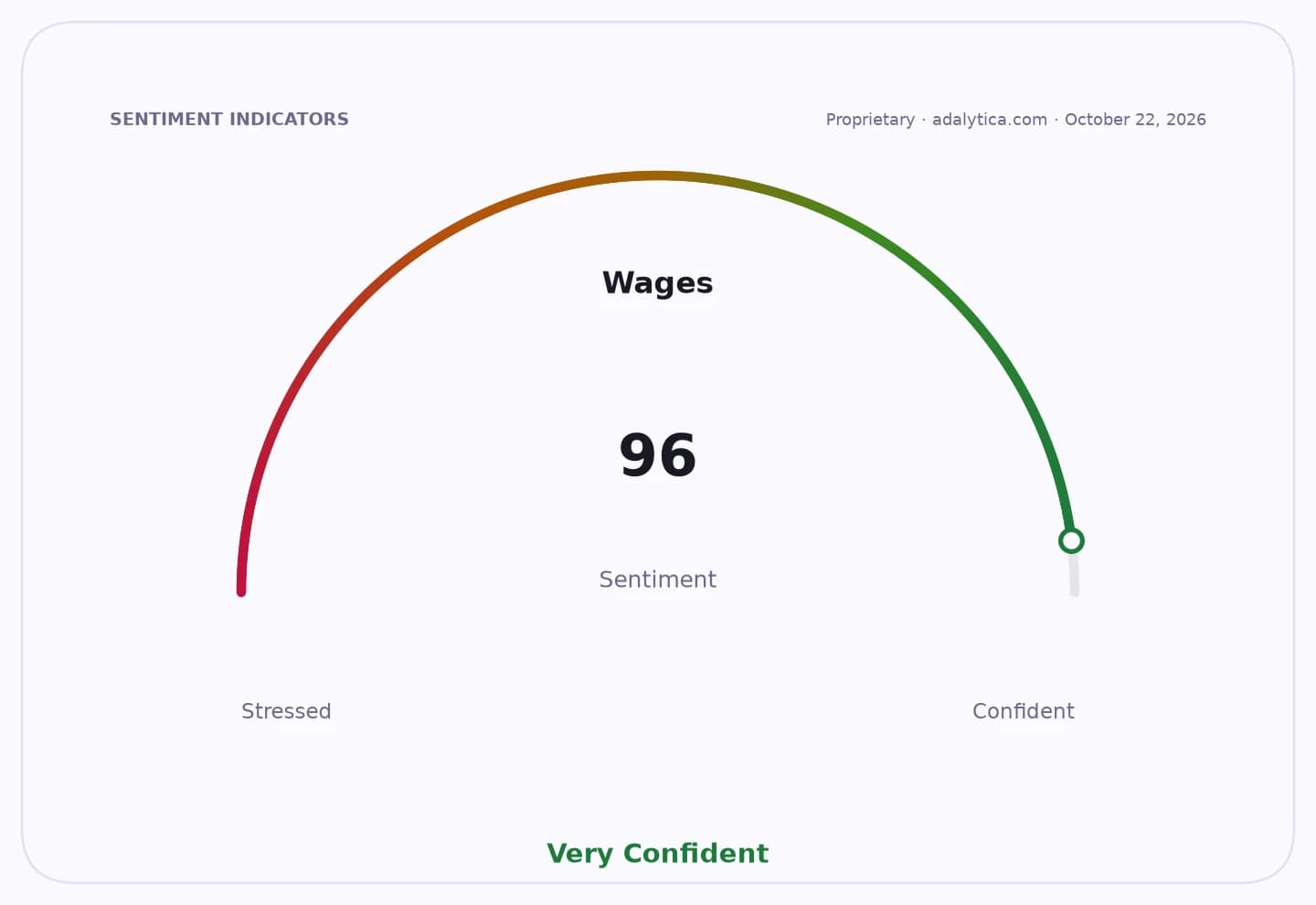
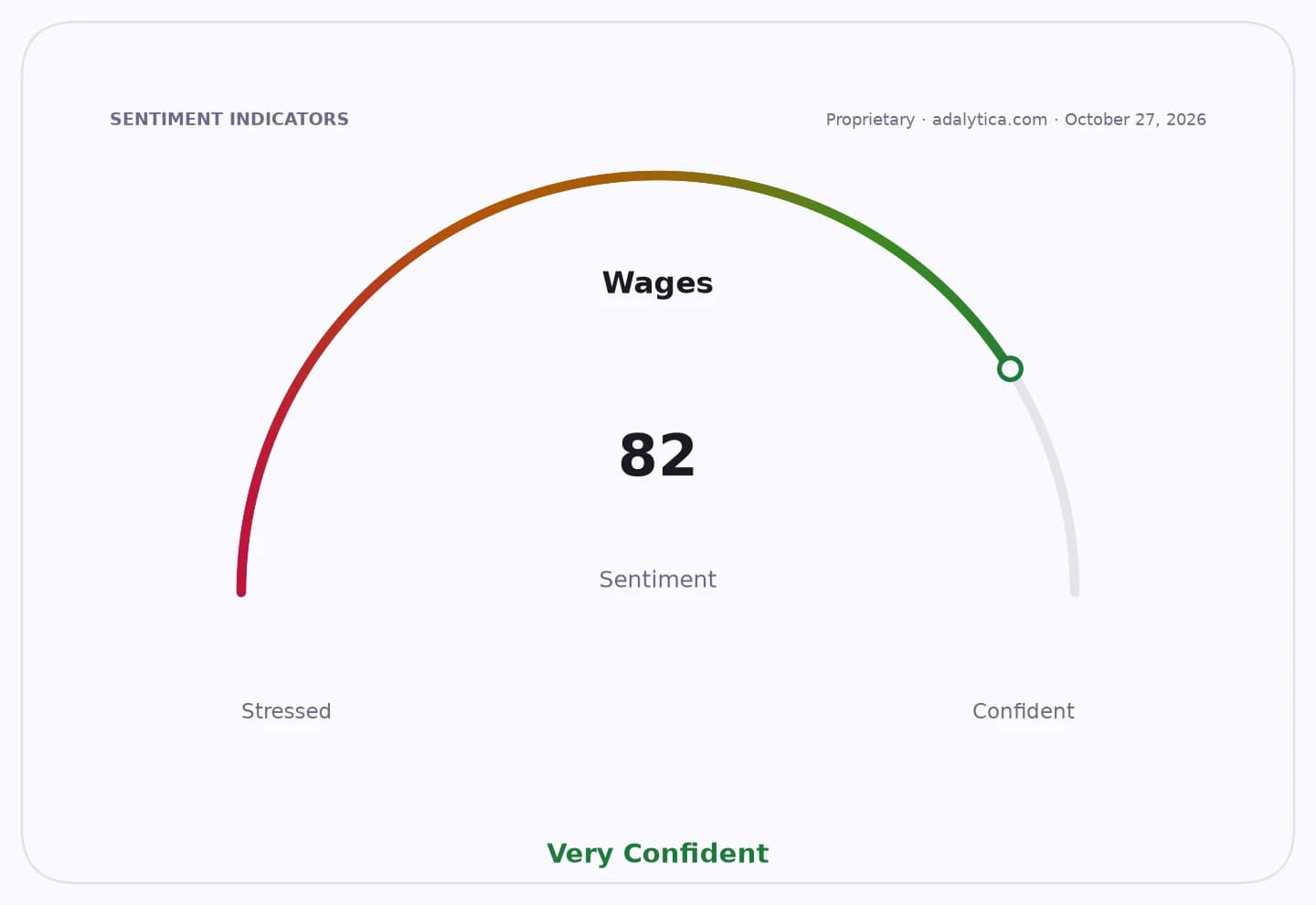
Sentiment IndicatorsⓘProprietary · adalytica.com · October 28, 2026
This is a snapshot — live sentiment, awareness and momentum for 130+ markets update continuously in the dashboard.Open AlphaPulse
The move matters because Japan’s wage dynamics are now central to the outlook for consumption, inflation and Bank of Japan policy. Rengo is effectively trying to lock in a higher nominal wage norm after this year’s unions demanded an average 5.94%, a pace that would have been unthinkable a few years ago in an economy long defined by stagnant pay. By treating 6% as the benchmark, the federation is pushing companies to assume higher labor costs as the base case, not the exception.
That has direct macroeconomic significance. Faster wage gains support household spending and help offset the erosion of purchasing power from years of price increases. At the same time, they make it harder for inflation to slip back to Japan’s old low-growth pattern, increasing the chances that firms keep lifting prices to protect margins. For policymakers, that is the kind of wage-price interaction the Bank of Japan has wanted to see before normalizing policy further.
The target also highlights a structural divide in Japan’s labor market. By maintaining higher goals for smaller companies and non-regular workers, Rengo is acknowledging that wage growth remains uneven across the economy. That is important for investors because it suggests domestic demand will depend not just on big manufacturers and exporters, but on whether pay gains spread to the broader service sector and smaller employers that account for a large share of employment.
For companies, the message is clear: labor costs are unlikely to revert to the subdued patterns of the past. Large employers may be able to absorb or pass on higher pay more easily, but smaller firms face tighter margins and less pricing power. That raises the risk of more dispersion in earnings outcomes across sectors, with domestically focused businesses more exposed than exporters benefiting from a weaker yen and overseas revenue.
The union’s new medium-term target also points to a longer campaign. Rather than treating the current wage cycle as a one-off response to inflation, Rengo is trying to establish a sustained standard for pay increases through the end of the decade. If that effort sticks, it would deepen Japan’s shift away from decades of wage stagnation and give the economy a better chance of generating real income growth.
For investors, the key question is whether higher pay translates into stronger consumption without reigniting cost pressure too quickly. That balance will shape Japanese equities, rates and the yen. The next spring wage round will be watched as a test of whether Japan’s recent wage momentum is becoming a durable trend or merely a temporary post-inflation adjustment.
| Entity | Gains | Losses |
|---|---|---|
| Workers | ▲Higher nominal pay | ▼None if hikes hold |
| Small firms | ▲Potentially stronger demand | ▼Higher labor costs |
| Large employers | ▲Clearer wage benchmark | ▼Margin pressure |
| Consumers | ▲Better real income prospects | ▼Risk of price pass-through |