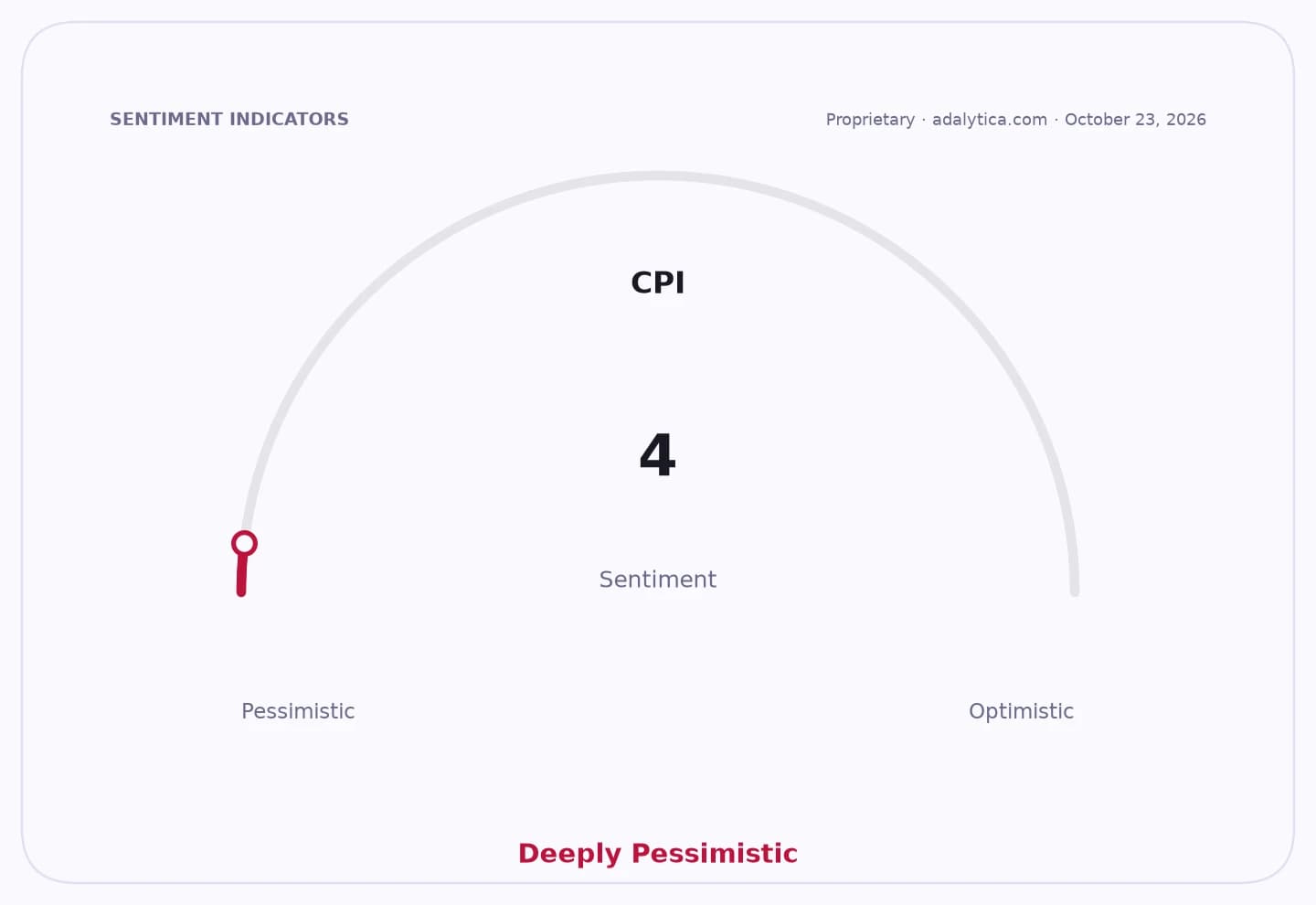
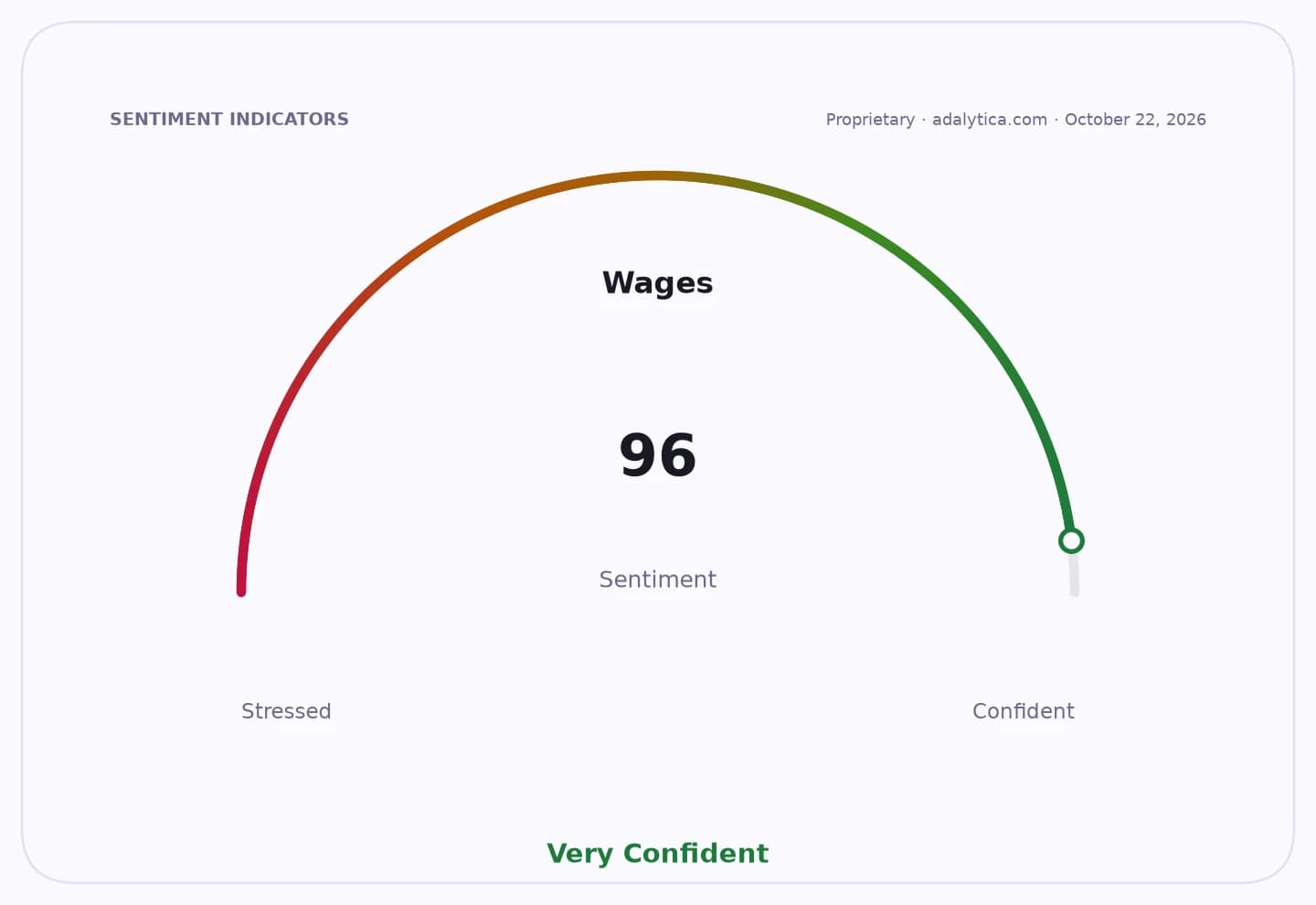
Japan is moving toward a more durable inflation regime driven by wages rather than import shocks, Finance Minister Satsuki Katayama said, strengthening the case for further Bank of Japan tightening and keeping investors focused on the path of rates, the yen and domestic demand.
Japan inflation shifts toward wage-driven gains

Katayama told parliament the economy is still seeing price rises tied to higher import costs, but is “on the cusp” of a period of sustained inflation powered by rising pay. That framing matters because Japan has spent decades fighting deflationary thinking: inflation that comes from wages is typically stickier, more homegrown and harder for the central bank to ignore than a one-off lift from energy or food imports.
Sentiment IndicatorsⓘProprietary · adalytica.com · October 25, 2026
This is a snapshot — live sentiment, awareness and momentum for 130+ markets update continuously in the dashboard.Open AlphaPulse
The remarks also signal that Tokyo is trying to align fiscal and monetary policy rather than clash with it. Katayama said the scheduled consumption tax cut and cash payouts are meant to cushion households from living-cost pressure, while adding that she sees “no gap” between the government’s view and the BOJ’s when asked whether the tax plan could conflict with rate hikes. For investors, that reduces the odds of a policy standoff and increases the market’s confidence that the BOJ can tighten without provoking a political rebuke.
The inflation backdrop supports that message. Japan’s core consumer inflation rose to 2.1% in September, above the BOJ’s 2% target for the first time in nine months, reinforcing speculation that the central bank is nearing another rate increase. That shift has pushed up scrutiny of Japanese assets more broadly, with domestic equities under pressure as higher yields and a stronger policy-normalization narrative weigh on valuations.
Bond markets are already reacting to a world where Japan is no longer the global outlier with near-zero rates. The 10-year US Treasury yield was trading above 5% in recent sessions, while Japan-focused exchange-traded funds have been volatile as rate expectations swing. The yen proxy FXY has recently stabilized around the high-58 level after sharp moves earlier this year, while broad Japan equity exposure through EWJ has weakened and the domestically oriented EWY has fallen more sharply, underscoring how sensitive investor positioning remains to any hint of tighter policy and stronger wage inflation.
The bull case for Japan is that a wage-led inflation cycle would finally confirm a healthier nominal economy, supporting consumer spending, corporate pricing power and eventually bank lending margins. The bear case is that wage gains fail to keep up with living costs, leaving households squeezed even as rates rise and fiscal support is phased in. Either way, Katayama’s comments suggest the BOJ’s next steps are increasingly being interpreted not as a temporary response to imported inflation, but as part of a broader exit from Japan’s deflation era.
For investors, the key catalyst is whether wage negotiations and upcoming price data continue to show that inflation is broadening beyond imported costs. If they do, the BOJ will have more room to raise rates again and markets will likely keep repricing Japanese duration, the yen and rate-sensitive equities.
| Entity | Gains | Losses |
|---|---|---|
| BOJ / hawkish policymakers | ▲More room to normalize policy | ▼Pressure to move faster |
| Japanese households | ▲Higher wages if pass-through holds | ▼Higher borrowing and living costs |
| Banks and lenders | ▲Wider interest margins | ▼Funding and credit risk if growth slows |
| Rate-sensitive Japanese equities | ▲Select exporters with pricing power | ▼Domestic consumers and bond proxies |