Retirees are not spending the way earlier generations did, and that shift matters because it changes where consumer demand, inflation pressure and long-term investing opportunities are headed.
Retiree Spending Shifts Toward Services and Essentials
Retail Goods
New federal data on household spending shows that older Americans are allocating more toward essentials and services than past retirees did, reflecting longer life expectancy, higher health-care costs and a retirement lifestyle that is less about big-ticket goods and more about recurring expenses. For investors, that is not just a demographic footnote. It is a reminder that the retirement economy is getting larger, stickier and more service-heavy, which tends to favor companies with durable pricing power and steady cash flow.
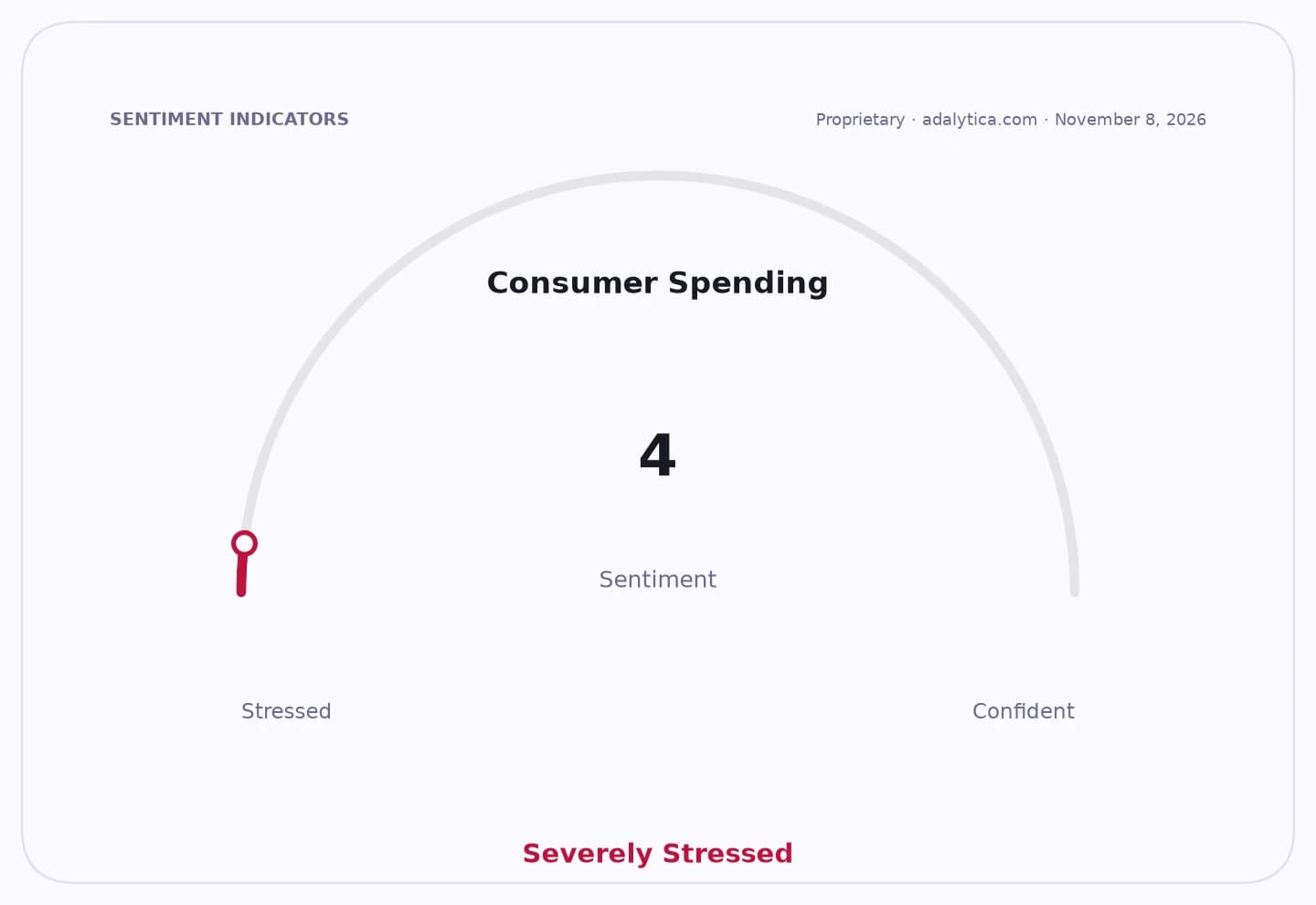
Sentiment Indicators
The broad inflation backdrop reinforces that point. The consumer price index has climbed to 337.476 in October from 333.979 in May, while personal consumption spending reached 22,452.8 in September and is forecast to rise further. In other words, even as price growth cools from the pandemic era, retirees are still living in a world where necessities cost materially more than they did a decade ago. That helps explain why retirement budgets feel tighter, and why older households often have less room for discretionary spending than younger families assume.
That matters for investors because retirees are a huge and growing customer base. Their spending pattern tends to be less cyclical and more focused on health care, travel, insurance, housing services and everyday necessities. That can support businesses with strong brands, distribution scale and subscription-like revenue streams. It also helps explain why companies tied to travel and consumer services can still hold up when the broader economy gets choppy: older consumers may not spend like younger ones, but they still spend, and often with a longer planning horizon.
The message for Gen X is more encouraging than the usual retirement doomsaying. The same data story that shows retirees spending differently also underscores that today’s middle-aged savers still have time to improve their own outcomes. A straightforward increase in retirement contributions can add meaningfully to long-term balances, especially when invested over a decade or more. For investors, that is a powerful compounding lesson: small changes made now can matter more than trying to time the market later.
That is why the best response is not panic, but planning. If you are still in your earning years, boosting savings, diversifying broadly and focusing on high-quality businesses that can serve an aging population may be among the smartest long-term moves you can make. The retirement economy is not just a policy issue — it is a real consumer trend, and one that investors should keep on the watchlist.
| Entity | Gains | Losses |
|---|---|---|
| Retiree households | ▲More tailored spending | ▼Less room for extras |
| Health care and services companies | ▲Steadier demand | ▼Cyclical goods exposure |
| Gen X savers | ▲Time to improve balances | ▼Delay in contributions |
| Consumer staples and travel firms | ▲Durable older-customer demand | ▼Weak discretionary budgets |