The Riksbank raised its policy rate by 25 basis points to 2.00% and said further increases are likely if inflation and the economic outlook hold up, a move that reinforces Sweden’s shift into a more restrictive monetary phase and raises borrowing costs for households, companies and the state.
Riksbank Raises Rate to 2.00% and Signals More Hikes

The decision was widely expected, but the signal accompanying it matters more for markets: the central bank said the combination of a stronger economy, higher inflation linked in part to the war in the Middle East and a weaker krona justifies additional tightening over the coming year. It is the first rate hike in more than three years and the first change in policy in over a year, underscoring how persistent price pressures have forced the Riksbank to move away from an extended period of stability.
Sentiment Indicators
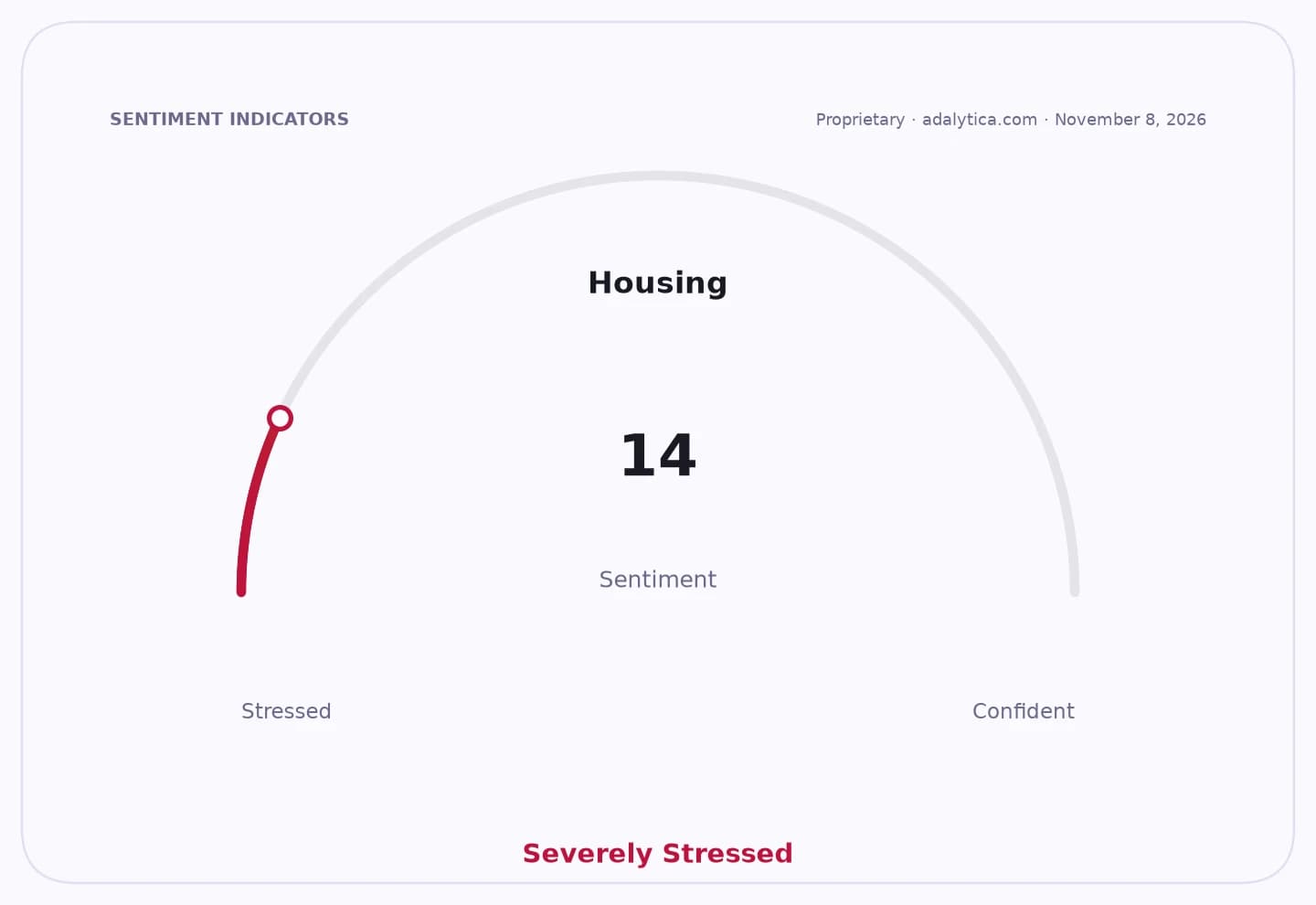
For Sweden’s economy, the rate path is now the key variable. Higher policy rates feed directly into mortgage costs in a country where household debt is elevated and variable-rate lending is common, which means the transmission to consumption can be faster than in many other developed markets. That makes the Riksbank’s balancing act sharper: it wants to prevent inflation from becoming entrenched, but it also risks slowing domestic demand just as growth has begun to improve.
The krona is central to that calculation. A weaker currency makes imported goods more expensive and can keep inflation stickier for longer, but higher rates also support the exchange rate by improving carry and narrowing the gap with other central banks. On the day of the decision, the Swedish currency was trading around 9.89 per dollar, above the 9.73 level seen earlier in the week, after having spent much of the year under pressure. That move is modest, but investors will watch whether the rate guidance can trigger a more durable recovery.
Bond markets are also likely to stay sensitive to the Riksbank’s message. Swedish policy rates have been moving in an environment where global yields remain elevated, and the central bank’s warning of more hikes keeps upward pressure on short-dated paper and mortgage pricing. If inflation proves more persistent than expected, the market will have to price a steeper path; if growth falters or the krona rebounds, the tightening cycle could prove shallower than the central bank currently implies.
The Riksbank also acknowledged the risks around that outlook. It flagged the possibility that the war could last longer, that the economy could grow faster than expected and that global demand could weaken as geopolitical uncertainty rises and concerns around AI investment intensify. That mix leaves the policy outlook unusually dependent on incoming data, particularly inflation prints, wage trends and consumption indicators.
For investors, the immediate takeaway is that Sweden is no longer in a low-rate holding pattern. The policy bar has shifted toward tighter financial conditions, which favors cash, short duration and banks over rate-sensitive sectors such as housing and highly leveraged consumers. The next test will be whether the Riksbank’s confidence in continued tightening is validated by the inflation data—or forced to reverse if growth cools faster than officials expect.
| Entity | Gains | Losses |
|---|---|---|
| Riksbank / krona bulls | ▲Stronger anti-inflation signal | ▼Less room for support |
| Savers / banks | ▲Higher deposit and lending margins | ▼Borrowers face higher costs |
| Mortgaged households / housing sector | ▲None | ▼Higher monthly payments |
| Swedish exporters | ▲Possible currency support | ▼Weaker domestic demand |