Romania has opened a new round of European grants that could give innovative small and midsize companies as much as 3 million euros each to build AI, robotics, communications and other advanced technology projects, a fresh dose of capital that could help turn a thin pipeline of startups into investable businesses.
Romania Opens 3M Euro Grants for AI and Robotics SMEs
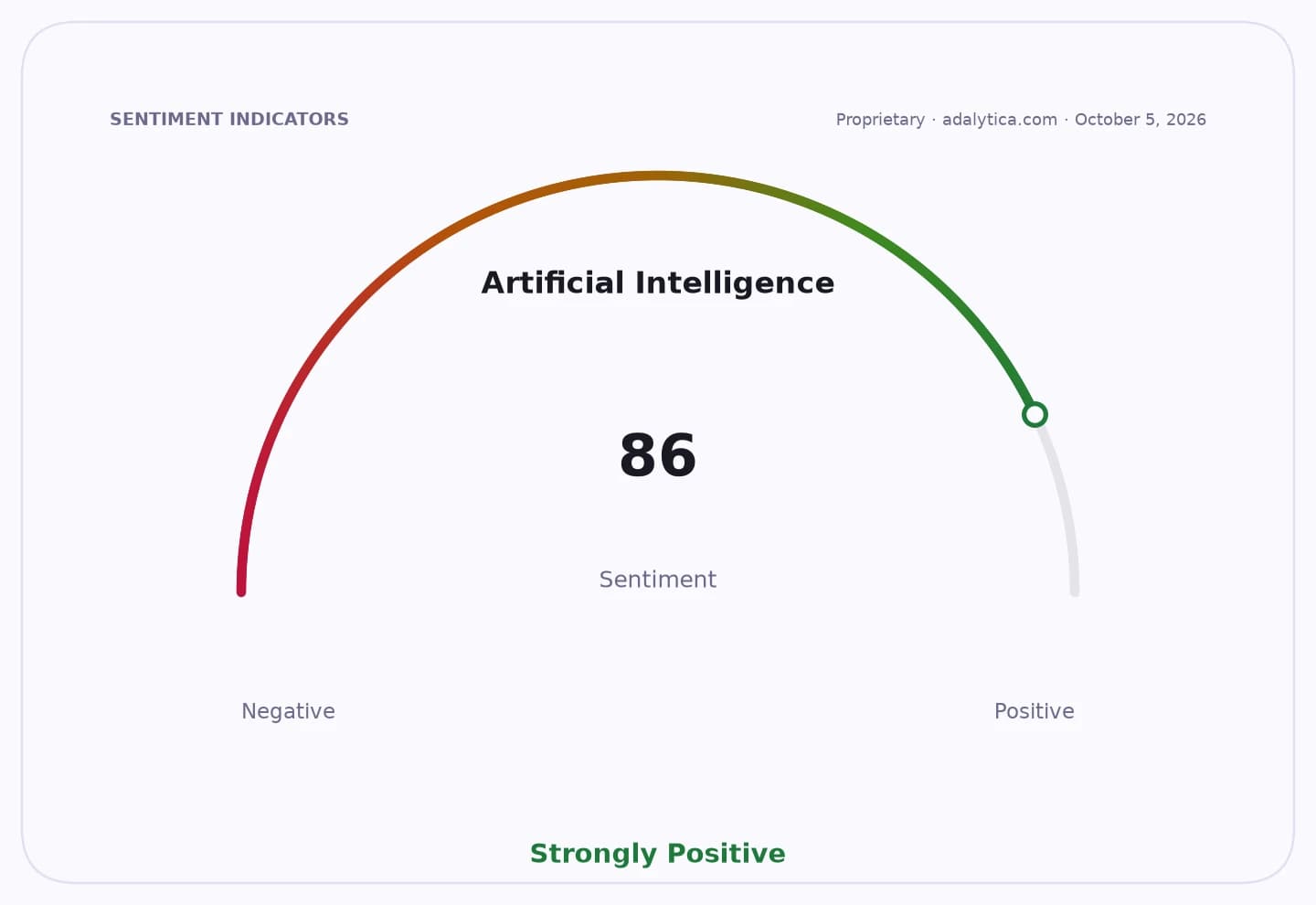
That matters because Europe’s growth problem is not a shortage of ideas so much as a shortage of patient financing for the messy, expensive stage between prototype and scale. Grants of this size can help firms buy equipment, hire engineers, build production lines and push software into commercial use without immediately diluting founders or leaning on costly debt. In a region where financing often runs short just as technology starts to get interesting, that support can be the difference between a promising lab project and a company that hires, exports and compounds for years.
Sentiment IndicatorsⓘProprietary · adalytica.com · October 5, 2026
This is a snapshot — live sentiment, awareness and momentum for 130+ markets update continuously in the dashboard.Open AlphaPulse
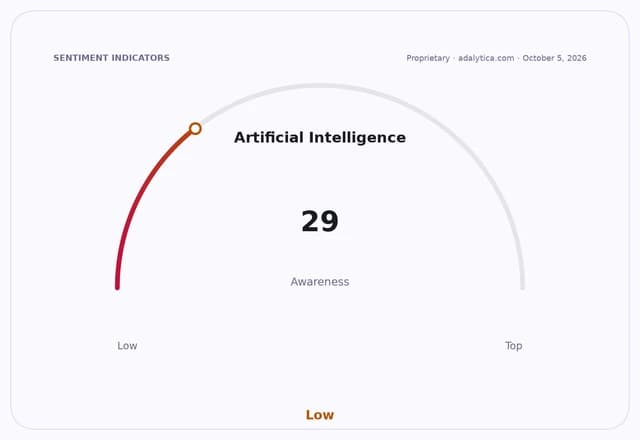
The program, part of Romania’s Intelligent Growth, Digitalization and Financial Instruments plan for 2021-2027, has a total allocation of 48.8 million euros, or about 248.9 million lei. The minimum grant is 200,000 euros, while the ceiling rises to 3 million euros for projects that deliver an innovative hardware product and to 1.5 million euros for innovative software solutions. Startups can receive up to 750,000 euros in more developed regions, 1 million euros in less developed ones and as much as 1.5 million euros for innovative newly formed companies within the broader caps.
For investors, the significance is twofold. First, the money should improve the odds that some of these businesses survive long enough to become venture-style winners or acquisition targets. Second, it could deepen demand for the ecosystem around them — the consultants, integrators, chip and equipment suppliers, cloud providers and automation specialists that benefit when public money lowers the cost of adoption. In other words, this is not just a subsidy for startups. It is a small but meaningful demand stimulus for Romania’s digital economy.
The structure of the grants also favors commercialization over research for research’s sake. Hardware projects must be built by the beneficiary company or its partner, and any funding above 1.5 million euros has to be justified by a production line. That nudges applicants toward real-world manufacturing, deployable products and revenue-generating applications rather than slide-deck innovation. That is exactly the kind of discipline investors like to see when public money is involved.
Still, the pool is limited and competition is likely to be intense. With less than 50 million euros available, the program can support only a relatively small number of firms, and not every funded project will become a durable business. But over a three- to 10-year horizon, these are the kinds of incentives that can help build a more investable SME sector, especially in a market where private capital can remain cautious and banks tend to prefer collateral to experimentation.
For long-term investors, the takeaway is simple: public grants do not replace strong business models, but they can accelerate them. Romania’s latest round is worth watching for the companies it uncovers, the industrial partners it pulls in and the next generation of local AI and robotics winners it may help create.
| Entity | Gains | Losses |
|---|---|---|
| Innovative Romanian SMEs | ▲Non-dilutive growth capital | ▼Firms that miss the cutoff |
| Startups and new companies | ▲Higher startup aid limits | ▼Late-stage rivals without grants |
| Hardware builders and manufacturers | ▲Funding for production lines | ▼Pure software-only applicants |
| EU/Romanian tech ecosystem | ▲More commercialization and hiring | ▼Cash-strapped firms left out |