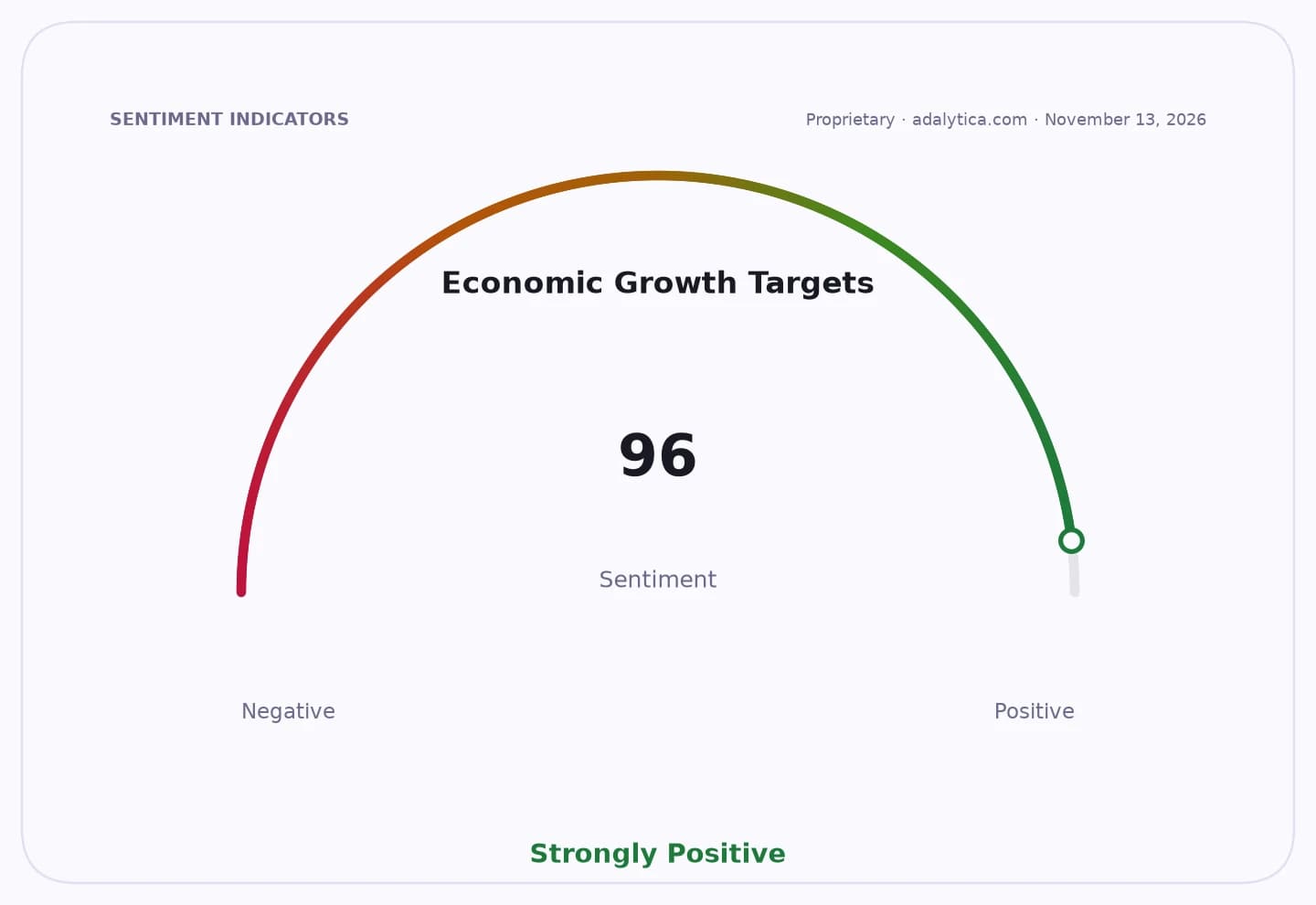
Romania needs a more aggressive Asia policy because the economic center of gravity is shifting east, and its neighbors are already turning that shift into investment, exports and industrial deals.
Romania Asia Policy Gap vs Poland, Italy, France
That matters for growth, jobs and capital formation. The biggest new point in the supplied material is not simply that Asia is rising — it is that Poland, Italy and France are converting Asian ties into measurable economic leverage while Romania still has a gap between diplomacy and actual investment.
France shows the high end of the model: it uses geopolitical clout to pull business, defense, energy and technology into one strategy. Italy shows the more relevant template for Bucharest, using industrial policy and business networks to lock in Asian market access. Poland shows the speed case, moving aggressively in 2026 with South Korea, Japan, India and Vietnam, and treating Asia as both a source of capital and a platform for its own companies.
For investors, the implication is straightforward. The countries that move first will capture more of the next wave of Asian manufacturing, infrastructure, energy and technology flows, as well as the export demand tied to India, Japan, South Korea, ASEAN and the Gulf. Romania risks being left as a subcontractor in other countries’ value chains unless it turns its existing ties into a coordinated economic strategy.
The numbers underline the imbalance. Romanian policymakers already have strategic links with Japan, South Korea, India and the UAE, and Hanwha Aerospace began building a plant at Petrești in Dâmbovița in February 2026. India’s president made the first state visit by an Indian head of state to Romania in more than three decades in July 2026, with both sides targeting a doubling of trade in three years. Yet BNR data for end-2024 show Asian capital still lagging badly: Japan had 1.9 billion euros of foreign direct investment in Romania, the UAE 1.2 billion, China 2 billion and India, South Korea and Singapore were absent from the top 25.
That stands in contrast with Western investors: Germany had 18.7 billion euros, Austria 14.1 billion, France 12.9 billion and Italy 7.2 billion. In other words, the combined capital from Japan, the UAE, South Korea, India and Singapore is still smaller than Italian investment alone.
The European policy backdrop is also opening the door. The EU has trade deals with Japan, South Korea, Singapore and Vietnam already in force, while the bloc’s India deal was concluded in January 2026 and is expected to take effect in 2027. Brussels says the agreement could double EU goods exports to India by 2032 and save firms about 4 billion euros a year in tariffs. That makes the fight for market share inside the EU more competitive, not less.
For Romania, the strategic question is whether it can position itself as a Black Sea and regional production hub for Asian investors serving Southeast Europe, Ukraine reconstruction and the wider EU market. The opportunity is there in logistics, energy, manufacturing and services — but only if Bucharest offers bankable projects, coordinated diplomacy and a clearer pitch than its neighbors.
| Entity | Gains | Losses |
|---|---|---|
| Romania | ▲More Asian FDI and exports | ▼Missed investment if policy stays fragmented |
| Poland | ▲First-mover advantage in Asia | ▼Shares market attention with rivals |
| France and Italy | ▲Deeper Asian business ties | ▼Slower movers in smaller markets |
| Asian investors | ▲EU access and regional hubs | ▼Weak project pipeline in Romania |