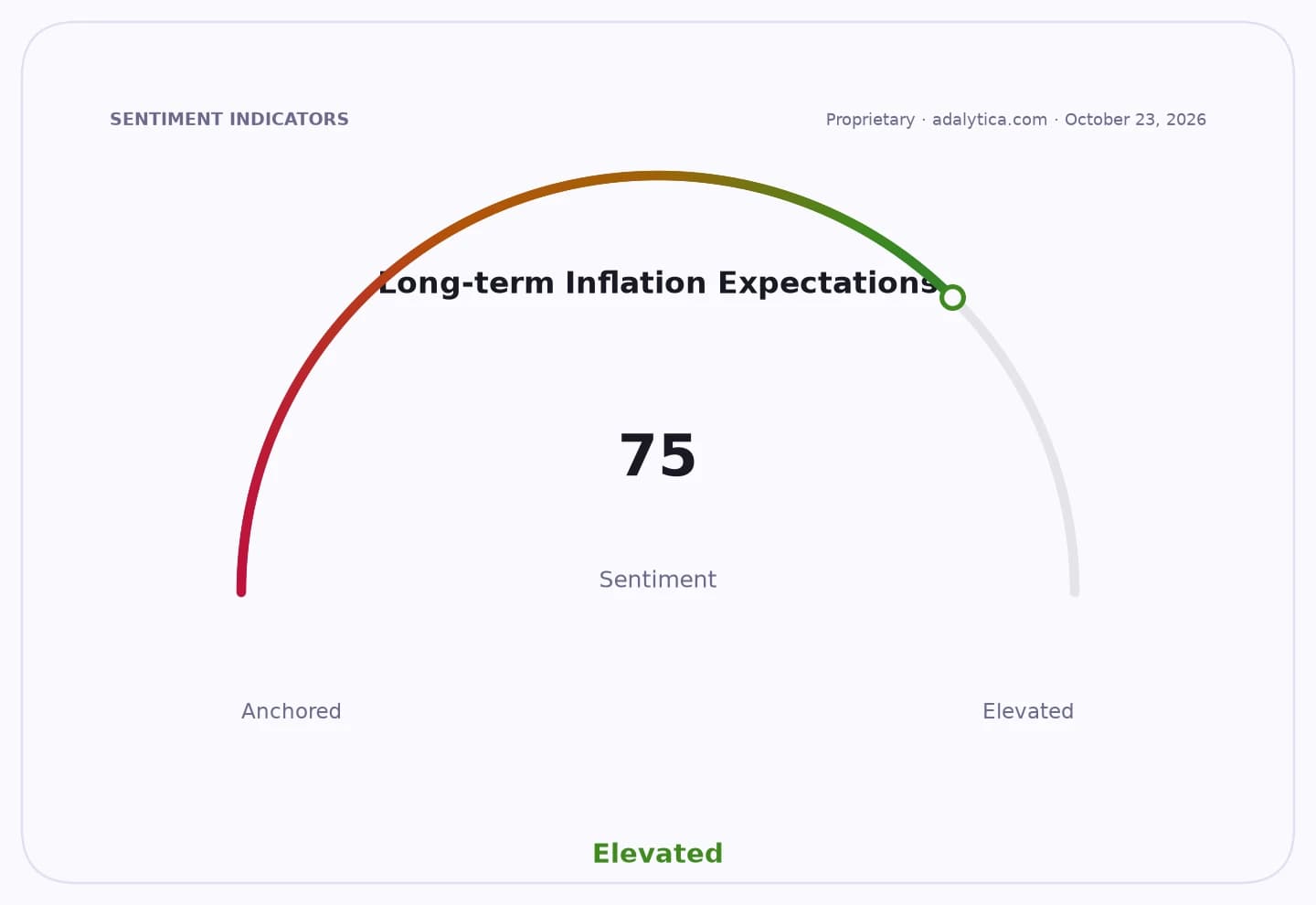
Romania’s economy is getting squeezed from both ends: households are spending almost 85% of income on basic needs, while the state faces a legal bill of nearly 13 billion lei for unpaid magistrates’ wage claims just as public debt has climbed above 60% of GDP.
Romania household spending, debt, and inflation squeeze
That combination matters because it leaves less room for the two things that keep an emerging economy stable: consumer demand and fiscal flexibility. When families are already allocating nearly every leu to food, utilities, transport and taxes, there is little cushion left for discretionary spending or savings. At the same time, Bucharest is being forced to finance a swelling deficit and a court-ordered liability with borrowing, not growth.
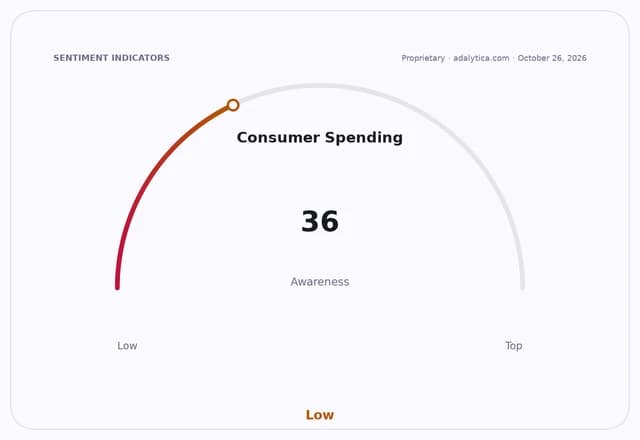
Sentiment IndicatorsⓘProprietary · adalytica.com · October 26, 2026
This is a snapshot — live sentiment, awareness and momentum for 130+ markets update continuously in the dashboard.Open AlphaPulse
Inflation is the immediate pressure point. Consumer prices rose 6.61% in the latest reading, with services up more than 11% year on year, non-food goods nearly 7% higher and food prices rising about 3%. Economists say purchasing power has fallen roughly 5% in the first eight months, a hit that helps explain why consumption is increasingly defensive. For investors, that is a warning signal for retailers, consumer brands and banks that depend on healthy household cash flow.
The policy problem is worse than the headline inflation rate suggests. Romania is still running a fiscal gap that implies the state spends about 115 lei for every 100 lei it collects, and the difference is covered by debt. The government has already paid more than 50 billion lei in interest in the first nine months of the year, money that does not build roads, hospitals or schools. Every extra leu devoted to servicing old debt tightens the squeeze on future budgets and raises the odds of either further tax increases or spending cuts.
Consumer Spending — 30-day sentimentadalytica.com
Explore this data interactively — full history, time series and cross-market comparisons.Open AlphaPulse
The magistrates’ case sharpens that dilemma. A final ruling has lifted the state’s total bill to almost 13 billion lei, a sum roughly comparable to what the government expects to collect in a year from raising the standard VAT rate from 19% to 21%. That makes the episode more than a legal obligation; it is a direct fiscal crowding-out event. The market will read it as another reminder that Romania’s tax base is being asked to absorb not just current spending, but the cost of past policy delays.
That is why the country’s debt trajectory matters to investors. A public debt load above 60% of GDP is not a crisis by itself, but in a high-inflation, high-interest environment it becomes expensive very quickly. Higher borrowing costs can feed through to the leu, local bond yields and ultimately the equity risk premium. The more the state borrows to plug holes, the less room it has to support growth without eventually leaning on households and companies again.
There is an investable takeaway here: Romania’s near-term story is not about a consumer boom, but about scarcity and resilience. Staples, utilities and businesses with pricing power are better placed than discretionary names, while sectors exposed to wage erosion and tax pressure face a tougher operating backdrop. The country may still avoid a funding crisis, but the adjustment path is becoming more visible, and investors should assume the fiscal squeeze will remain a dominant theme into next year.
| Entity | Gains | Losses |
|---|---|---|
| Romanian state | ▲Higher tax intake | ▼Fiscal flexibility |
| Magistrates | ▲Court-ordered payouts | ▼None |
| Consumers | ▲None | ▼Purchasing power |
| Staples retailers | ▲Defensive demand | ▼Discretionary spending |