Romania’s incoming finance minister, Alexandru Nazare, says the next government faces immediate pressure from public debt above 60% of GDP, a renewed pickup in inflation and a weak economy that contracted in the first quarter and stagnated in the second.
Romania Finance Minister Warns on Debt, Inflation

Nazare, who received a favorable opinion from parliamentary committees, said public debt has reached 1.205 trillion lei, while inflation eased from 10.4% before rising again to 6.6% in September from 6.2% in August as energy costs picked up. He said goods and services prices are rising by about 8.9%, with health costs among the biggest contributors.
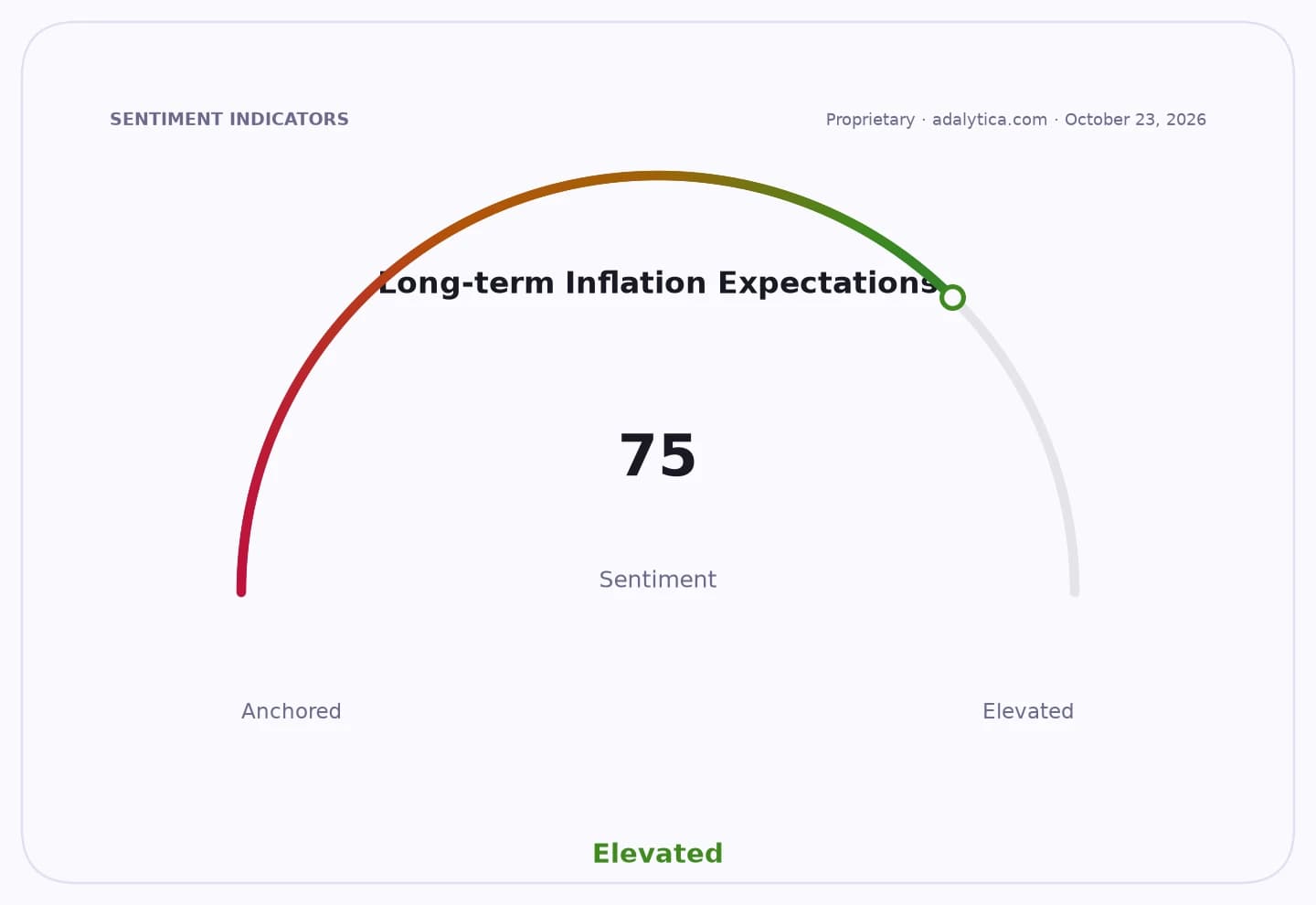
Sentiment IndicatorsⓘProprietary · adalytica.com · October 23, 2026
This is a snapshot — live sentiment, awareness and momentum for 130+ markets update continuously in the dashboard.Open AlphaPulse
The warning matters because Bucharest is preparing a budget adjustment and a deficit target of 6.2% of GDP at a time when financing costs remain elevated and fiscal room is thin. Romania’s 10-year bond yield was around 5.15% in the latest available data, underscoring the cost of borrowing for a state already carrying a larger debt load and facing more expensive social and energy spending.
Nazare also pointed to 633 million lei in arrears across the consolidated budget and said the state still has significant liabilities tied to court-enforced payments for magistrates, energy compensation and health spending. He said the government plans a budget rectification at the end of October to cover urgent needs, especially interest costs and health, followed by a second adjustment in November.
For investors, the message is that Romania’s fiscal repair is still incomplete even after the government secured a more stable outlook from rating agencies. Nazare said Fitch, Moody’s and S&P are due to revisit Romania in early 2027 to reassess the sovereign rating, making the next few months critical for showing the deficit can be contained without worsening growth.
The broader narrative is one of a new cabinet inheriting a fragile mix of high debt, sticky inflation and sluggish growth. If the finance ministry can deliver a credible spending reset and protect the rating outlook, Romanian assets may steady; if not, higher borrowing costs and fiscal slippage could keep pressure on bonds, the leu and domestic equities.
| Entity | Gains | Losses |
|---|---|---|
| Romanian government | ▲More stable rating outlook | ▼Fiscal flexibility |
| Bond investors | ▲Budget clarity if cuts hold | ▼If debt and deficits worsen |
| Taxpayers | ▲Potential spending discipline | ▼Higher interest and social costs |
| Magisterial claimants / energy beneficiaries | ▲Payment visibility | ▼Delays if budget tightens |