Romania’s renewed discussion of when and how it could join the euro area is back on the policy agenda after the announcement of minister Dragoș Pîslaru, putting the country’s long-running currency ambitions under a sharper political spotlight.
Romania euro entry debate returns to policy agenda

The timing matters because any credible move toward the euro would reshape Romania’s borrowing costs, investment profile and policy flexibility at a time when the region is still navigating higher-for-longer rates and uneven growth. For investors, the question is not just whether Bucharest wants the single currency, but whether it can meet the fiscal, inflation and institutional standards that would make adoption believable.
Sentiment IndicatorsⓘProprietary · adalytica.com · August 17, 2026
This is a snapshot — live sentiment, awareness and momentum for 130+ markets update continuously in the dashboard.Open AlphaPulse
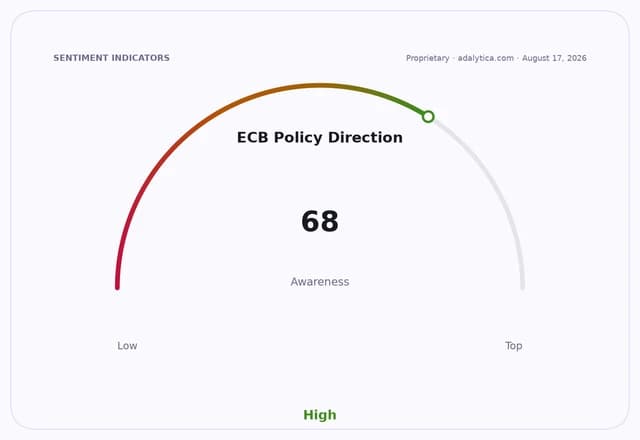
Romania has talked about euro entry for years, but the issue has often slipped behind domestic politics and macro volatility. A clearer ministerial push suggests the government wants to reopen a debate that goes beyond symbolism and toward the practical costs and benefits of locking the leu to the euro area’s monetary framework.
That would matter for bond markets first. Convergence toward euro adoption typically implies stronger policy discipline, narrower risk premia and lower long-term financing costs if markets believe the commitment is real. It can also support foreign direct investment by reducing currency risk for manufacturers and exporters that already trade heavily with the euro zone.
It also carries trade-offs. Romania would give up its own interest-rate setting once inside the euro, so the process depends on more than political intent; it requires sustained inflation control, smaller deficits and a central bank path that does not leave the economy exposed. Any perception that the push is premature could instead remind investors of the country’s fiscal vulnerabilities and keep pressure on sovereign spreads.
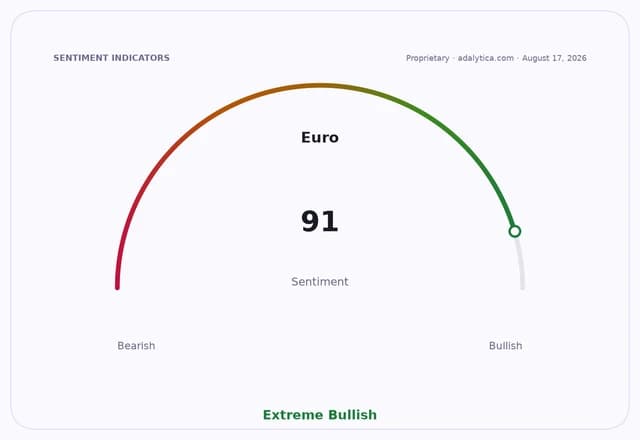
The euro itself has remained in demand, with Adalytica’s trade signals showing extreme-greed readings for the currency, while the U.S.-German 10-year yield spread has narrowed to about 0.51 percentage point, underscoring the market’s sensitivity to relative policy paths and growth expectations. That backdrop gives any euro-area enlargement story added relevance for portfolio managers watching rate differentials and capital flows.
For Romania, the next catalyst is whether the government follows the announcement with a concrete timetable, fiscal targets and institutional reforms that turn a political statement into a credible accession roadmap.
| Entity | Gains | Losses |
|---|---|---|
| Romanian government | ▲Reform credibility | ▼Policy room if timetable hardens |
| Investors in Romanian debt | ▲Lower risk premia | ▼Higher scrutiny on deficits |
| Euro-area exporters/banks | ▲Larger market integration | ▼Limited near-term |
| Romanian leu holders | ▲Stability and lower FX risk | ▼Loss of currency independence |