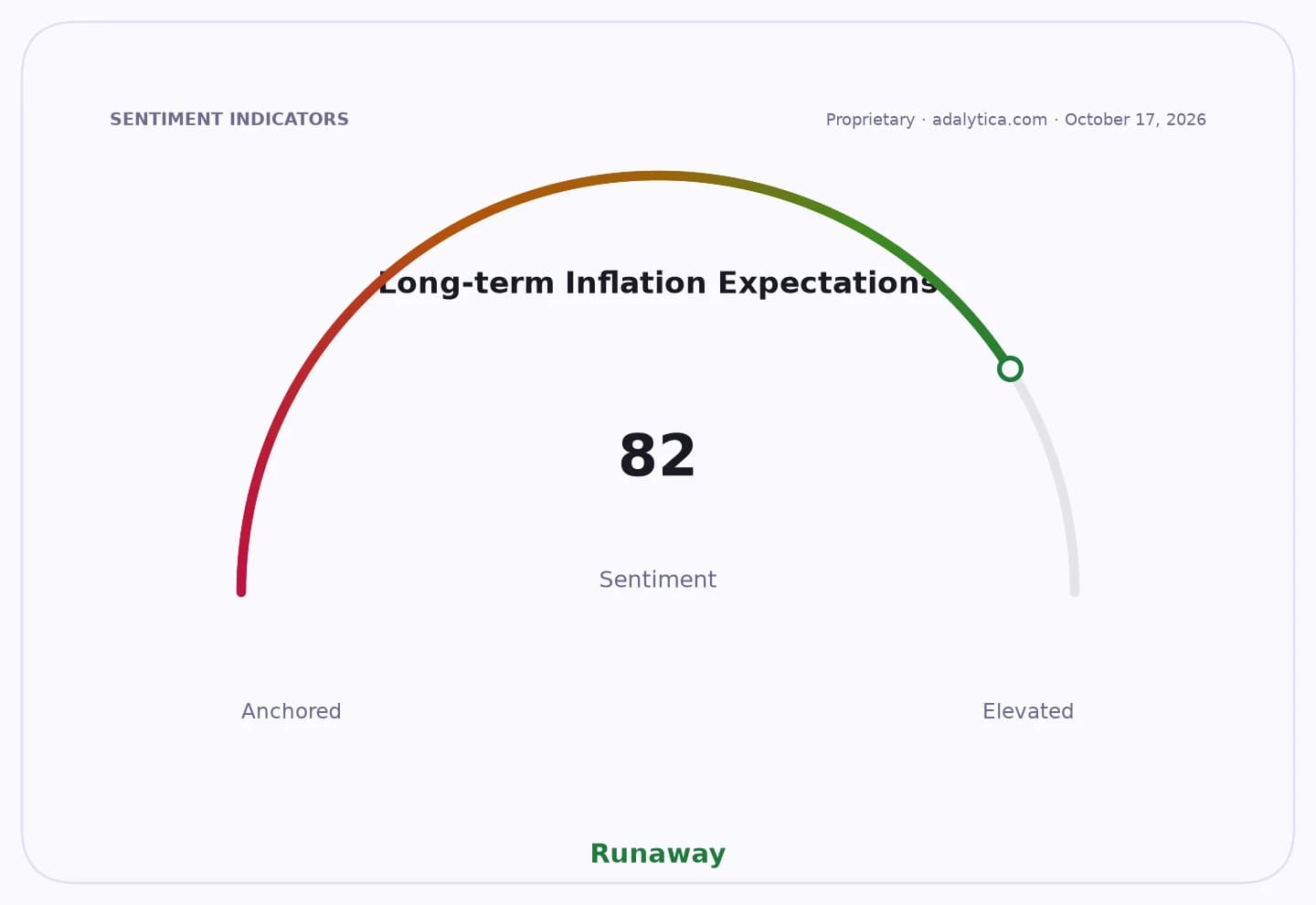
Inflation in Romania is doing more than squeezing households — it is limiting how much the leu can strengthen, even after a modest respite in foreign-exchange markets.
Romania Inflation Keeps Leu Under Pressure
That is the key message from Thursday’s trading, when the euro slipped only marginally to 5.3370 lei from 5.3373 lei, after briefly moving between 5.33 and 5.338 lei. The leu’s muted appreciation came after the National Institute of Statistics said annual inflation accelerated to 6.6% in September from 6.2% in August, reinforcing expectations that price pressures will stay sticky in the months ahead.
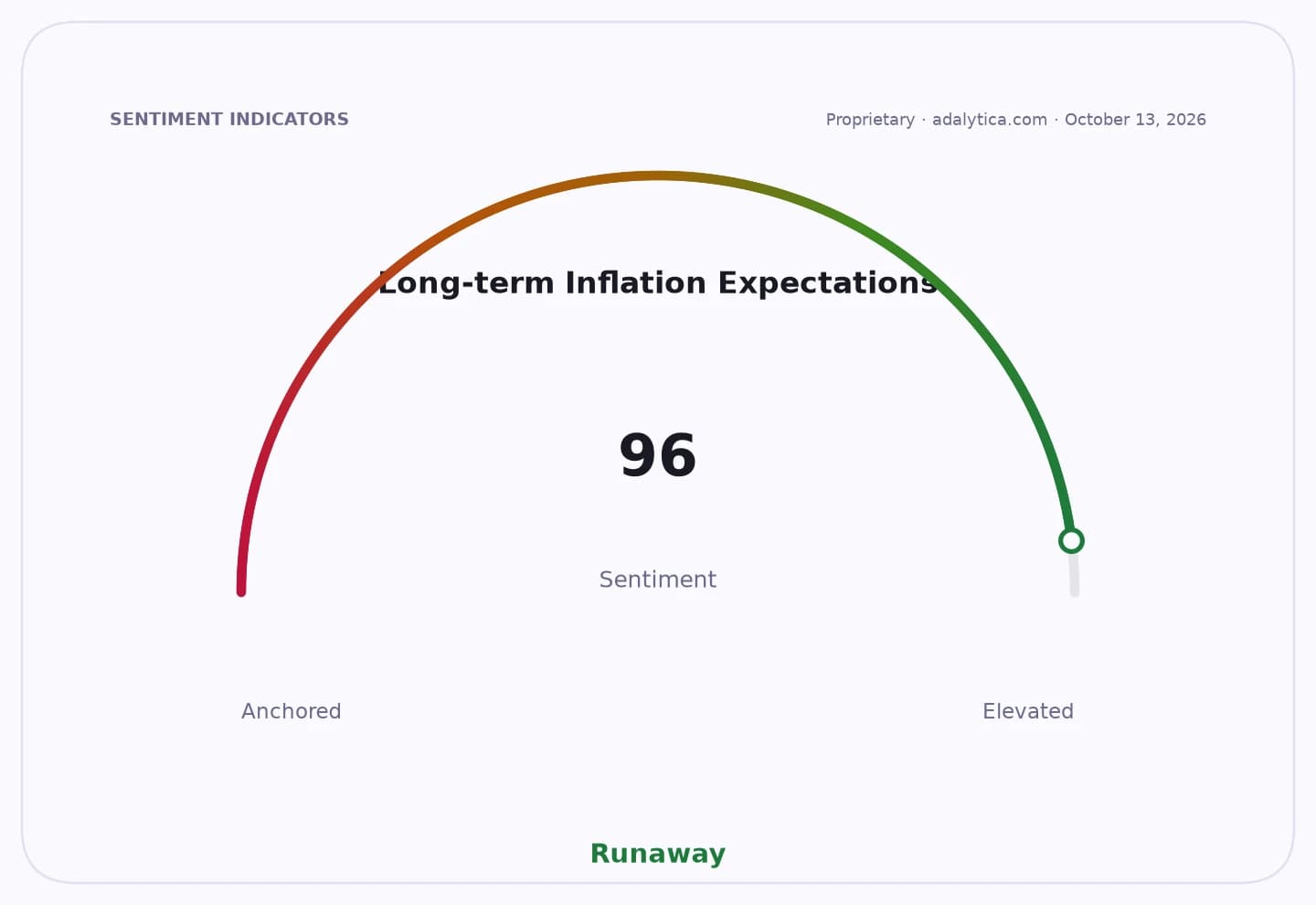
Sentiment IndicatorsⓘProprietary · adalytica.com · October 13, 2026
This is a snapshot — live sentiment, awareness and momentum for 130+ markets update continuously in the dashboard.Open AlphaPulse

For investors, the problem is simple: high inflation keeps Romania’s policy rates elevated for longer, weighs on growth and leaves the leu with less room to rally than regional peers. The currency has already been the weakest in central and eastern Europe against the euro this year, with a 4.8% decline since January. That compares with a 3.9% drop in the Polish zloty, a 1% fall in the Czech koruna and a 5% gain in the Hungarian forint.
The leu’s performance matters because it sits at the intersection of inflation, monetary policy and financing conditions. A weaker currency feeds imported inflation through energy, fuel and raw materials, making it harder for the National Bank of Romania to ease policy. The central bank has kept its benchmark rate at 6.5% since August 2024, and there is little sign it can cut soon while price growth is still climbing.

That tension was visible across Romania’s money markets. Three-month ROBOR, used to price many legacy lei loans, held at 6.10%, while the six-month rate eased just one basis point to 6.14% and the 12-month rate to 6.21%. Local bond yields also remained elevated, with the 10-year benchmark fluctuating between 7.21% and 7.32%, even after touching 7.80% late last month. In other words, borrowing costs are still high enough to restrain credit demand, investment and consumption.
The broader economic backdrop is not helping. Romania is already in a technical recession, with output flat in the second quarter and down 0.6% in the first half of the year. S&P’s negative outlook on the sovereign underscores the strain from fiscal consolidation, political deadlock and persistent inflation. The World Bank expects a 0.5% contraction this year before a modest recovery in 2027, but that rebound depends on inflation easing and policy credibility holding up.
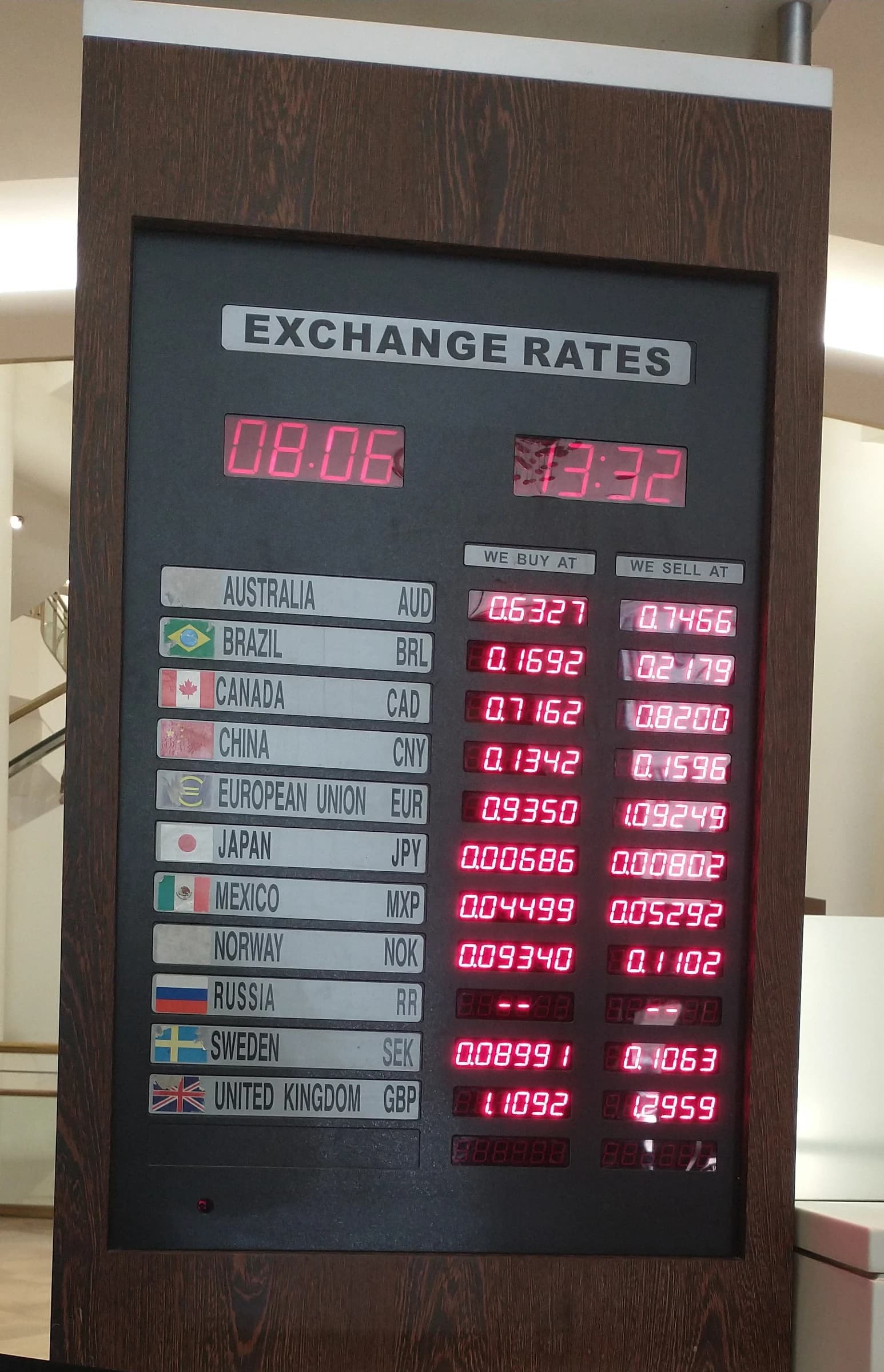
Elsewhere in markets, the picture was more benign. A softer dollar and lower oil prices supported a slight improvement in risk appetite, helping currencies on the edge of the euro zone. The dollar slipped from 4.7714 to 4.7784 lei, while the euro traded around $1.1153 to $1.1197. Gold edged higher to 642.84 lei per gram as the metal and the dollar moved up together.
For long-term investors, the message is that Romania’s currency story is now inseparable from its inflation story. Unless price pressures cool, the leu is likely to remain range-bound at best, while local rates stay too high for the economy to regain momentum quickly. That keeps Romanian assets interesting, but only for investors willing to accept volatility and a slower path to stabilization.
| Entity | Gains | Losses |
|---|---|---|
| Romanian savers in lei | ▲Higher deposit yields | ▼Erosion from inflation |
| Borrowers in lei | ▲— | ▼Higher debt service costs |
| National Bank of Romania | ▲Policy credibility from restraint | ▼Less room to cut rates |
| Exporters receiving foreign currency | ▲More competitive local revenues | ▼Weaker domestic demand |