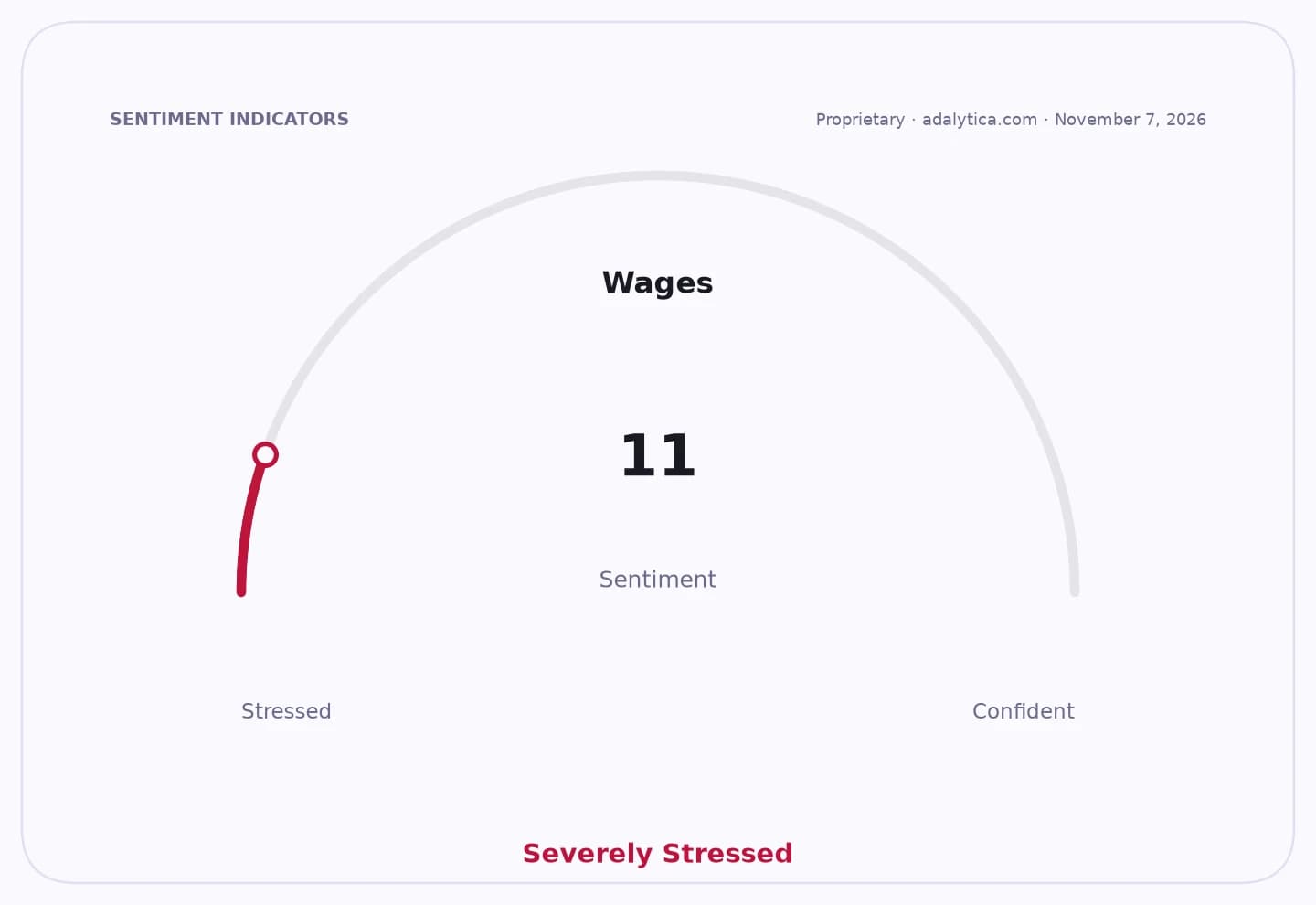
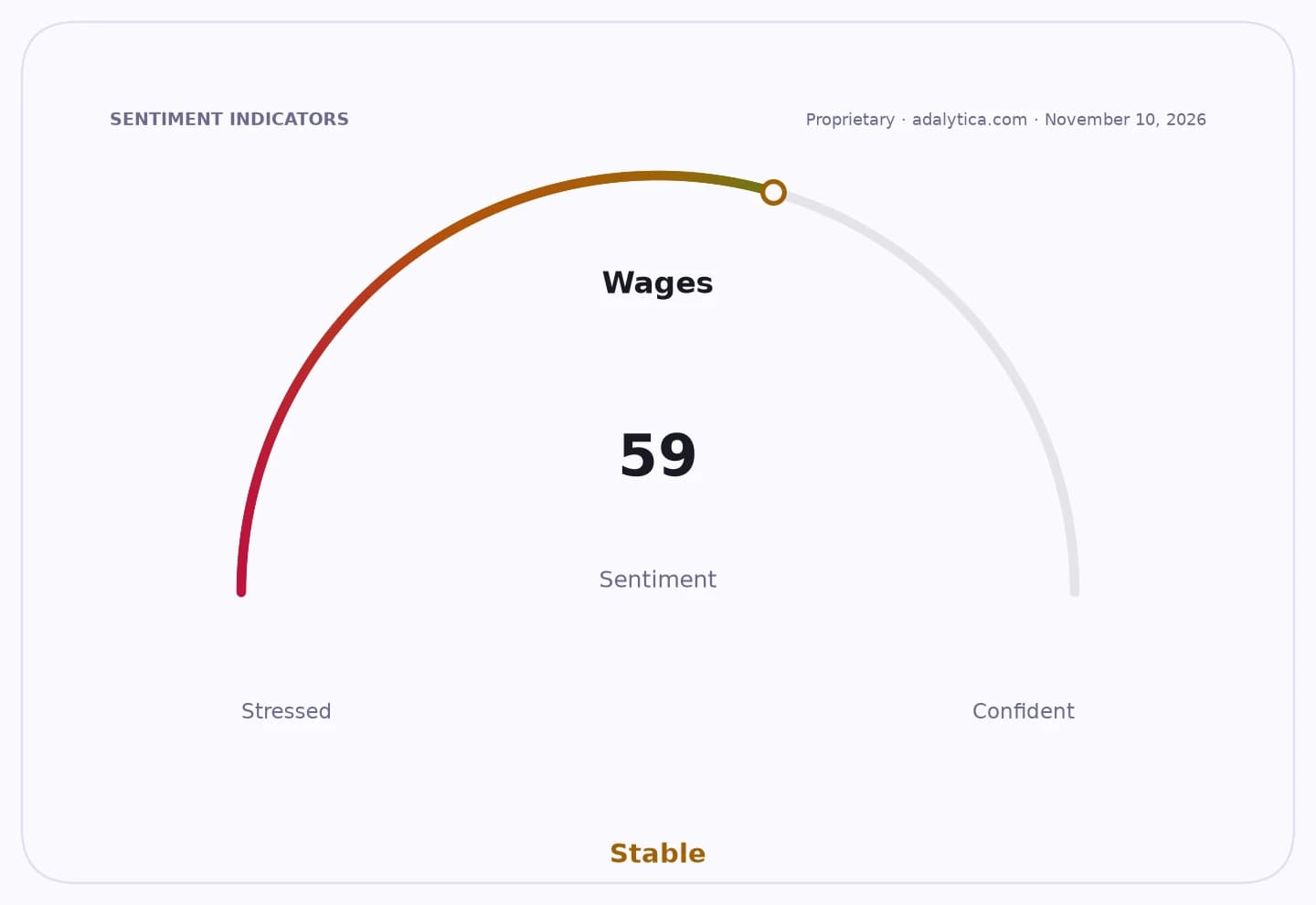
Romania’s plan to push the minimum wage to 5,000 lei in 2027 is shaping up less as a windfall for workers than as a test of how much of a pay rise the state will keep for itself.
Romania minimum wage plan to 5,000 lei in 2027
Wages
That is the core warning from economist Adrian Negrescu, who argues that a gross increase of 675 lei would not show up in full in workers’ bank accounts because taxes, social contributions and any changes to fiscal exemptions will determine how much of the raise actually survives. For investors and business owners, the bigger issue is that higher labor costs could ripple through prices, especially in retail, food manufacturing and services.
Sentiment Indicators
The proposal is still just that — a proposal from unions, not a government decision. But the numbers already show why the debate matters. Romania’s current minimum gross wage is 4,325 lei after the July increase. If it rose to 5,000 lei, employers would pay materially more, yet employees could end up with a much smaller net gain if the government trims tax breaks again.
Negrescu says the last minimum-wage hike is a good example of how nominal progress can hide a weaker real outcome. He notes that in July, the gross minimum wage rose by almost 7%, but net pay increased only 4.9% because the monthly tax-free amount was cut from 300 lei to 200 lei. Employers paid an extra 284 lei a month per worker, while employees saw only 125 lei more in their pockets, with the rest flowing to the budget.
That is why this story matters economically. When governments lean on minimum-wage increases without easing the tax burden, they can end up transferring income from companies to the state rather than from companies to workers. In a country where private firms are already managing thin margins, that can mean less room for hiring, less room for investment and more pressure to raise prices.
For investors, the key question is whether higher wages feed demand or simply squeeze margins. If employers pass through the cost, consumers absorb it through inflation. If they do not, earnings come under pressure. Either way, the sectors most exposed to labor costs — food, commerce and consumer services — could feel the strain first.
The risk is especially relevant in Romania because this is not just a labor-policy debate; it is a competitiveness debate. A higher minimum wage can support consumption at the margin, but if inflation rises alongside it, the real benefit to households shrinks quickly. That is the same old trap: workers get a headline raise, but prices move to reclaim part of it.
Adrian Negrescu’s broader point is hard to ignore for long-term investors: the cleanest way to help low-paid workers is often not to inflate payrolls, but to reduce the tax wedge between gross and net pay. Until Bucharest decides whether it wants a real wage boost or just a bigger flow into the treasury, the 5,000-lei target looks more like a political headline than a genuine improvement in living standards. Investors should keep it on the watchlist, especially in companies with heavy Romanian labor exposure.
| Entity | Gains | Losses |
|---|---|---|
| Romanian state | ▲Higher tax intake | ▼Credibility on worker relief |
| Low-wage workers | ▲Higher gross pay | ▼Smaller net gain |
| Employers | ▲None | ▼Higher payroll costs |
| Consumers | ▲None | ▼Risk of higher prices |