Romania’s decision to lift the minimum wage comes after a Eurofound report found it was the only European Union country where the real purchasing power of the floor wage fell, a politically sensitive gap that now has fiscal and investor consequences well beyond pay packets.
Romania minimum wage hike and investor impact

That matters because Romania is trying to defend household demand at a time when inflation has eroded income and the government is already under pressure to keep its budget onside. If low-wage workers are losing ground in real terms, consumption weakens, inequality widens and social pressure builds for more intervention — exactly the kind of mix that can complicate policy in an economy still reliant on foreign capital, EU transfers and disciplined public finances.
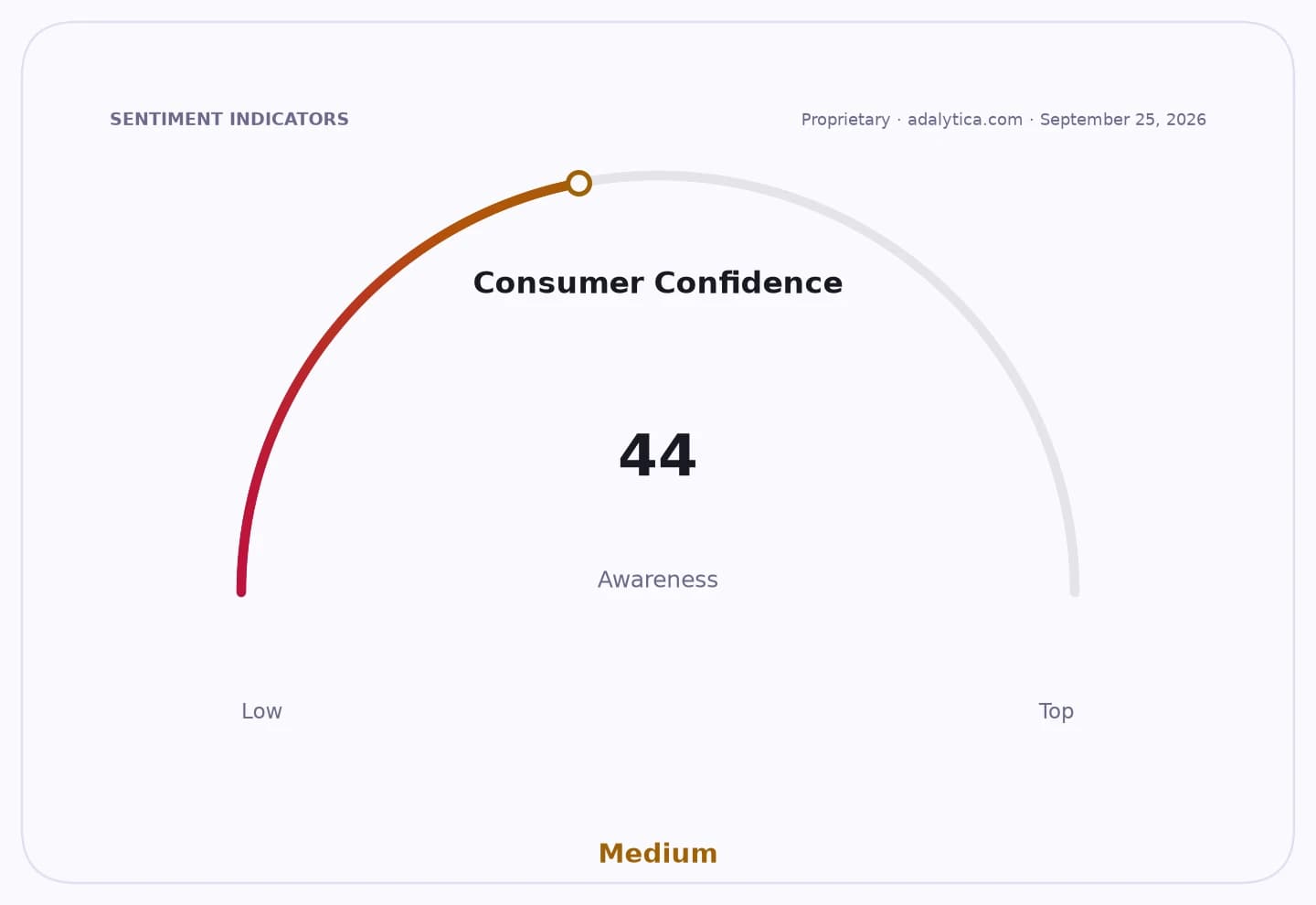
Sentiment IndicatorsⓘProprietary · adalytica.com · September 1, 2026
This is a snapshot — live sentiment, awareness and momentum for 130+ markets update continuously in the dashboard.Open AlphaPulse
The wage hike is also a test of how far Bucharest can go before markets start to worry about the price tag. Authorities are trying to avoid a deeper political backlash while facing warnings that failure to pass a wage law could endanger access to about 770 million euros from the EU’s recovery fund, forcing the state to bridge the gap with more expensive borrowing. For a country that has already had to watch its credit standing closely, that is not a trivial trade-off.
Investors should read this as a broader signal on the region’s labor-cost trajectory. Romania is no longer just chasing catch-up growth; it is being pushed into a more mature debate over wage floors, fiscal space and competitiveness. If minimum pay rises faster than productivity, margins get squeezed in labor-intensive sectors. If it rises too slowly, demand and political stability suffer. Either way, the adjustment is increasingly being made in public, not in the background.
The market implication is straightforward: the winners are workers and domestic demand, while the losers are employers in retail, manufacturing and services that rely on low-cost labor, plus sovereign bondholders if the government has to fund the gap with debt rather than grants. That is why this story matters. It is not just a social-policy footnote; it is a stress test for Romania’s investment case and for how much wage growth emerging Europe can absorb before it starts to hit funding costs and equity valuations.
For investors, the key takeaway is to watch which companies can pass through labor costs and which cannot. Defensive consumer names with pricing power, automation plays and exporters with stronger margins are better positioned than domestic employers facing tighter payrolls. Romania’s wage reset may look small on paper, but in a market increasingly driven by labor scarcity, fiscal discipline and EU money, it is the kind of policy move that can reprice a lot more than salaries.
| Entity | Gains | Losses |
|---|---|---|
| Minimum-wage workers | ▲Higher take-home pay | ▼Real wage erosion |
| Romanian consumers | ▲Stronger household demand | ▼Inflation pressure |
| Domestic employers | ▲Better labor retention | ▼Higher payroll costs |
| Romanian government | ▲Social relief, EU compliance | ▼Bigger fiscal strain |