Romania’s government is set for politically sensitive talks on raising the minimum wage from Jan. 1, a decision that would lift pay for about 720,000 workers but could also feed costs and prices at a time when fiscal room is limited.
Romania Weighs Minimum Wage Rise to 5,000 Lei

The immediate issue is not whether wages need support — unions argue they do — but whether the state can absorb another increase without worsening inflation, eroding company margins or forcing employers to trim hiring. Five national union confederations want the gross minimum wage lifted to 5,000 lei from 4,325 lei, a 675-lei increase that would add about 282 lei net a month for workers at the floor. Employers are resisting, warning that any pay rise is likely to be passed through into prices for goods and services.
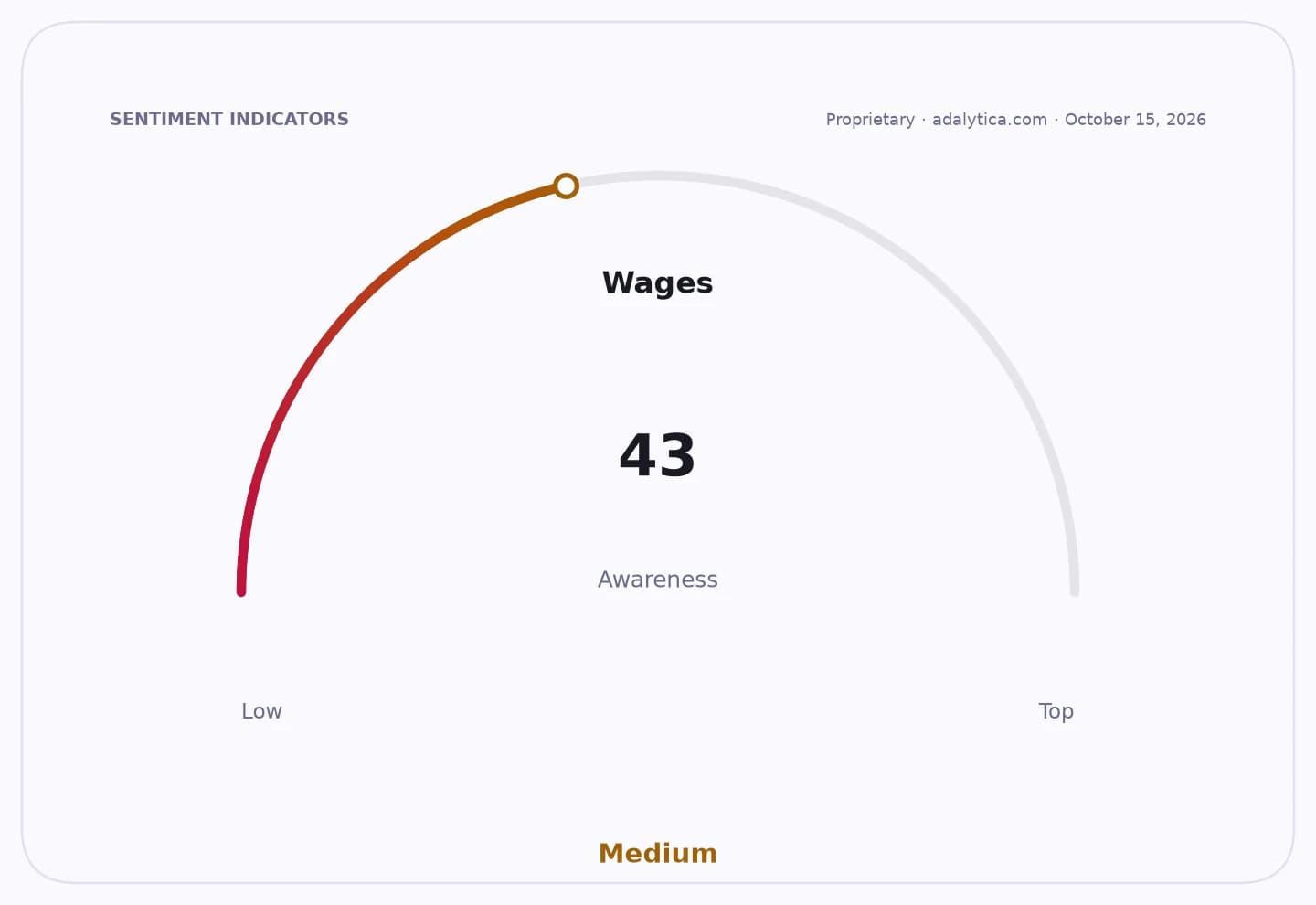
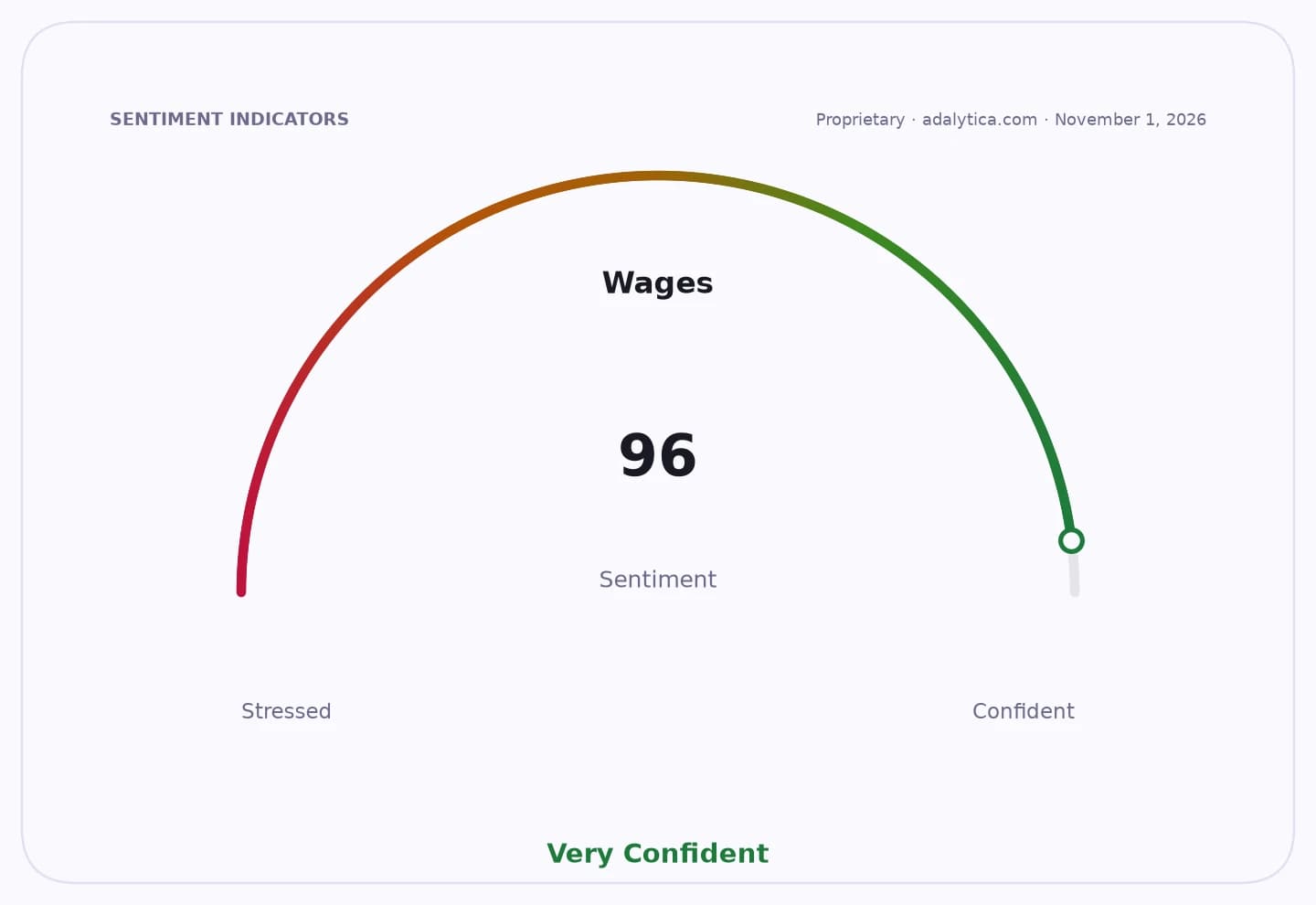
Sentiment Indicators
That tension goes to the heart of Romania’s policy trade-off. Higher minimum pay would support household consumption among lower-income workers, who are more likely to spend extra income quickly and locally. But for a labour market already facing repeated wage demands, it would also raise non-wage labour costs for firms, especially in labour-intensive sectors such as retail, hospitality, transport and services. For smaller companies with thinner margins, the increase could be the difference between absorbing higher payroll costs and raising prices or delaying investment.
Finance Minister Alexandru Nazare has framed the issue as one of available budget space, saying decisions must be made against “credible parameters” and the fiscal room that exists. That suggests the government will try to balance social pressure with the need to keep the budget on track, particularly after a second budget revision later this month. The final call is expected in the second half of November, which leaves room for last-minute bargaining between unions, employers and ministers.
For investors, the minimum wage debate matters less as a single labour-market measure than as a signal of Romania’s broader inflation and policy mix. A larger-than-expected increase would be mildly supportive for consumer demand, but it could also complicate the central bank’s disinflation efforts if firms lift prices to protect margins. It would also be another reminder that wage growth in Romania remains politically constrained but structurally important, with labour shortages and union pressure continuing to keep pay claims elevated across sectors.
The most likely market impact is at the margin: domestically focused companies with heavy labour costs would be the most exposed, while retailers and service providers may have the hardest time passing on the full increase if consumer spending weakens. If the government settles on a compromise below the unions’ demand, it could ease cost pressure on employers but risk renewed labour unrest. If it accepts the full 675-lei rise, households gain immediately, but the inflation and margin consequences would be harder to ignore.
| Entity | Gains | Losses |
|---|---|---|
| Low-wage workers | ▲Higher take-home pay | ▼None immediately |
| Employers | ▲Policy certainty if compromise is reached | ▼Higher labour costs |
| Consumers | ▲Slightly stronger household demand | ▼Possible higher prices |
| Government budget | ▲Less pressure if rise is moderated | ▼More political pressure if wage talks stall |