A pay rise of just 1 leu can leave Romanian minimum-wage workers with more than 80 lei less in take-home pay, exposing a tax design that turns nominal wage increases into a net loss for many employees.
Romania minimum wage tax cliff cuts net pay
The issue matters because it hits a large share of the labor force at the bottom of the pay scale and risks distorting wage negotiations just as unions and the government debate the 2027 minimum wage. The problem is not that the gross salary is being cut, but that a 200-leu fiscal exemption for minimum-wage workers disappears in full once the contractual base salary rises even slightly above the legal minimum.
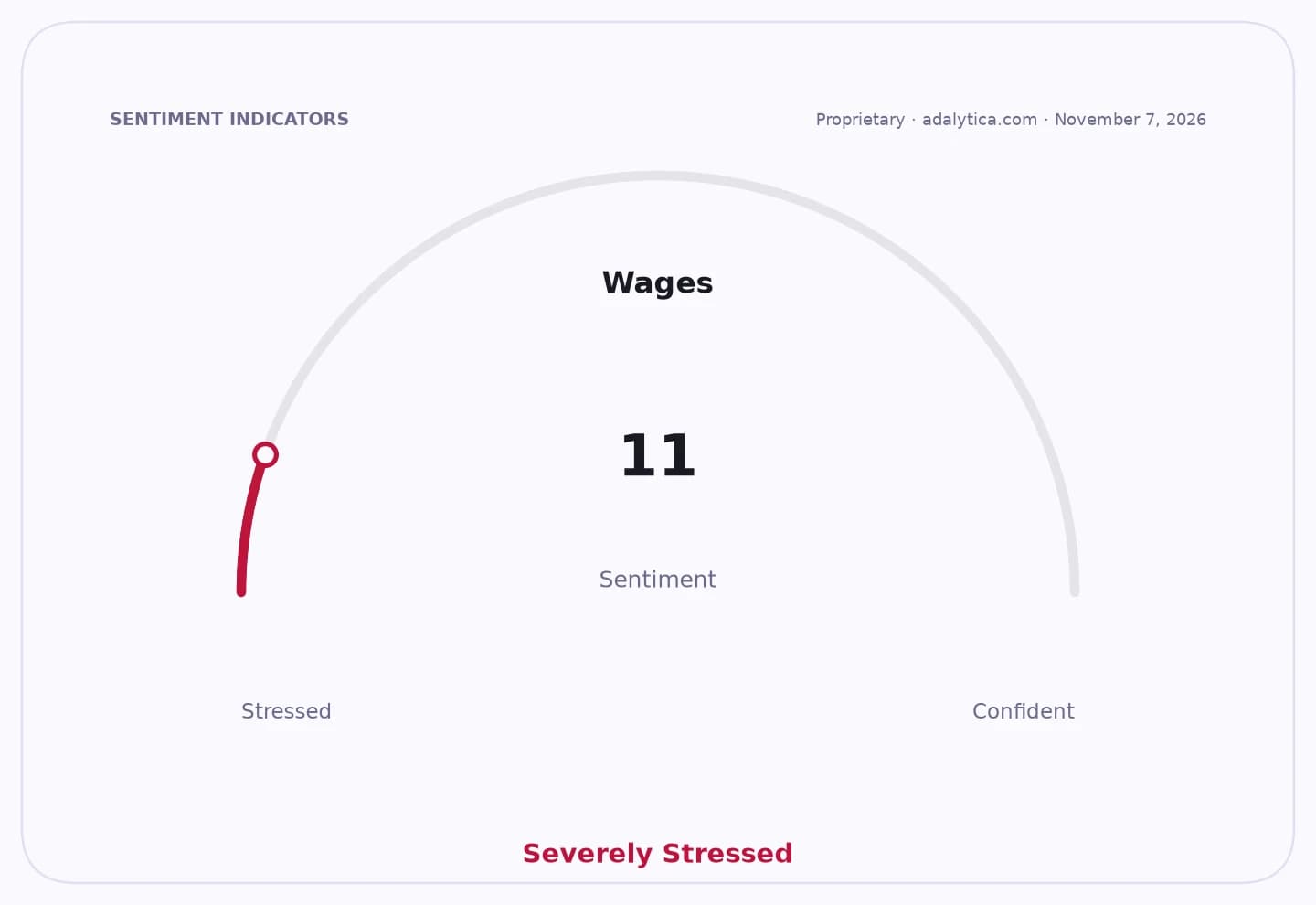
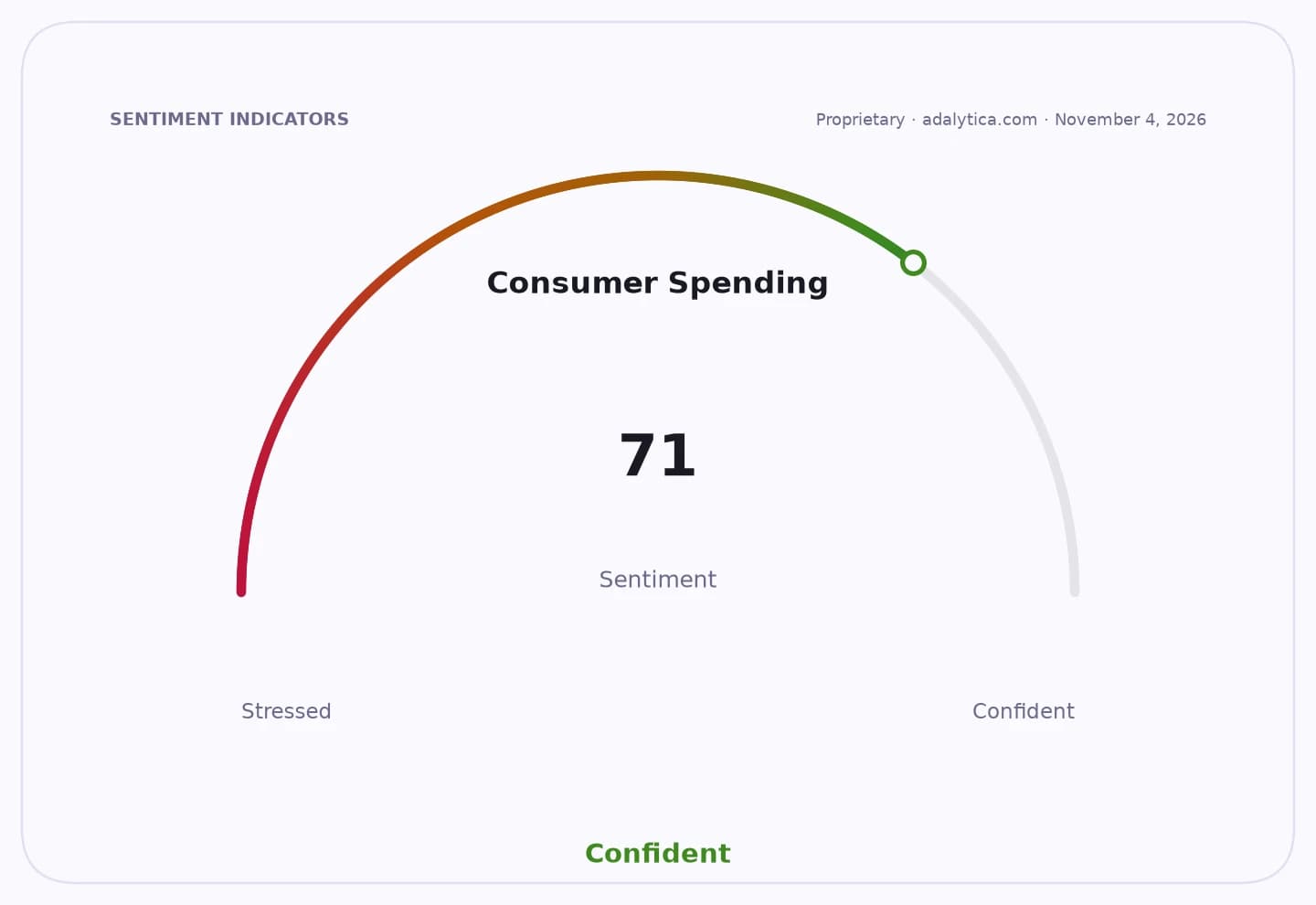
Sentiment Indicators
That means the system creates a cliff, not a glide path. In the example presented by the National Trade Union Bloc, a worker on 4,325 lei gross — the minimum wage in force from July 1, 2026 — can keep the 200-leu exemption if the contract salary exactly matches the minimum. But if the employer raises the base salary to 4,326 lei, the worker loses the exemption altogether. Contributions and income tax then apply to the full amount, producing an estimated net loss of about 81 lei in a simplified calculation, or roughly 85 lei in the union’s version.
For workers, that is a powerful disincentive to accept small nominal raises. For employers, it complicates retention and pay progression because a token increase can reduce rather than improve an employee’s monthly income. For policymakers, it raises a broader question: whether minimum-wage support measures are actually cushioning low earners, or simply creating a threshold that traps wages around the floor.
The macroeconomic relevance is larger than the arithmetic suggests. BNS says about 1.4 million full-time employees earn the minimum wage or no more than 75 lei above it, a concentration that leaves a substantial portion of Romania’s workforce exposed to the same fiscal cliff. That helps explain why wage growth can be politically popular but socially uneven in practice: headline increases do not automatically translate into stronger consumption if the tax code absorbs much of the gain.
The legal basis is Article III of OUG 89/2025, which grants the 200-leu exemption for July-December 2026 only if several conditions are met, including that the contractual base salary equals the statutory minimum and the gross monthly income stays below 4,600 lei. Because the exemption is not tapered, the moment a worker falls outside the exact eligibility box, the relief disappears entirely. That design favors administrative simplicity, but at the cost of sharp discontinuities in net pay.
The timing is significant. The dispute lands in the middle of negotiations over the 2027 minimum wage, when unions are already pressing for a higher floor and for changes to payroll taxation. Some union proposals have floated a 5,000-leu gross minimum, though that remains a demand rather than a decision. Whether the government extends a similar exemption into 2027 will be central to how meaningful any increase proves to be for workers’ real incomes.
For investors, the direct market impact is limited, but the policy signal matters. Romania’s wage-setting framework affects household purchasing power, labor costs and, indirectly, sectors reliant on mass-market spending. It also underscores the risk that governments seeking to soften the burden of minimum-wage hikes can end up preserving low pay bands instead of lifting them. That is a familiar pattern in labor policy: a tax shield can protect workers in theory while discouraging cleaner wage growth in practice.
The most important takeaway is that the debate is no longer just about how much the minimum wage rises, but whether the tax system lets workers keep any of it. Without a smoother phase-out of the exemption, Romania risks making small raises politically visible but economically hollow.
| Entity | Gains | Losses |
|---|---|---|
| Minimum-wage workers below the threshold | ▲Keep the 200-leu exemption | ▼See net pay fall if base salary rises slightly |
| Employers | ▲Avoid immediate full wage pass-through | ▼Face pay negotiations that can backfire |
| Romanian government | ▲Can advertise wage support | ▼Risks criticism over a cliff-edge tax design |
| Unions | ▲Gain leverage in 2027 talks | ▼Need to push for tax reform, not just higher gross pay |