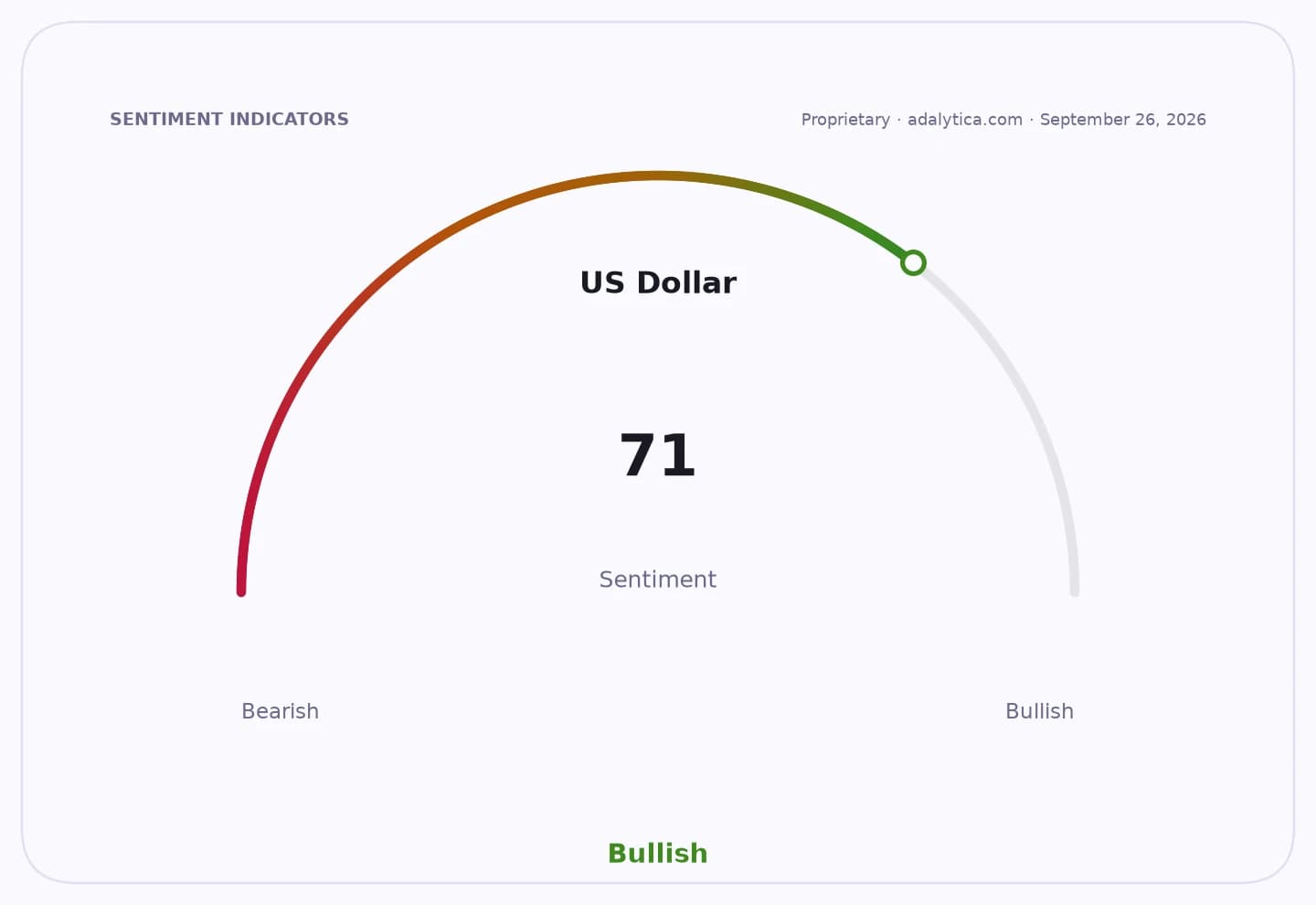
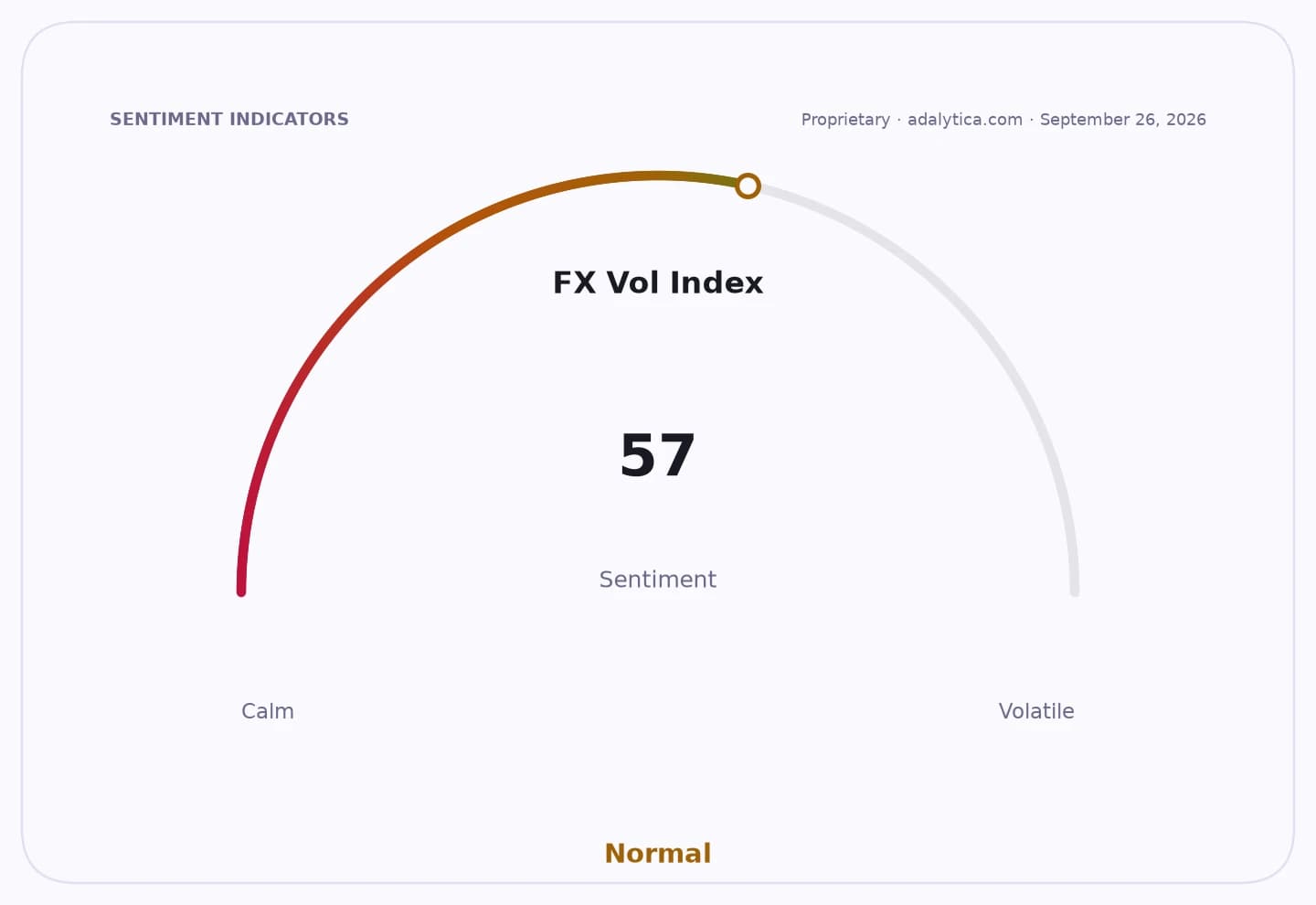
The rupiah is likely to trade on Bank Indonesia’s policy signal rather than broader market noise, with traders betting the central bank’s board meeting will determine whether the currency extends a modest recovery or stays pinned in a tight range.
Rupiah Near 17,850 Ahead of Bank Indonesia Meeting

The Indonesian currency was quoted around 17,836 to 17,860 per dollar on Wednesday morning, firmer than Tuesday’s close of 17,884 and back toward the 17,800 area that analysts say could hold if Bank Indonesia’s stance reassures markets. Doo Financial’s Lukman Leong expects the rupiah to consolidate between 17,800 and 17,950, arguing that anticipated central bank intervention may already be supporting the market.
Sentiment IndicatorsⓘProprietary · adalytica.com · September 27, 2026
This is a snapshot — live sentiment, awareness and momentum for 130+ markets update continuously in the dashboard.Open AlphaPulse
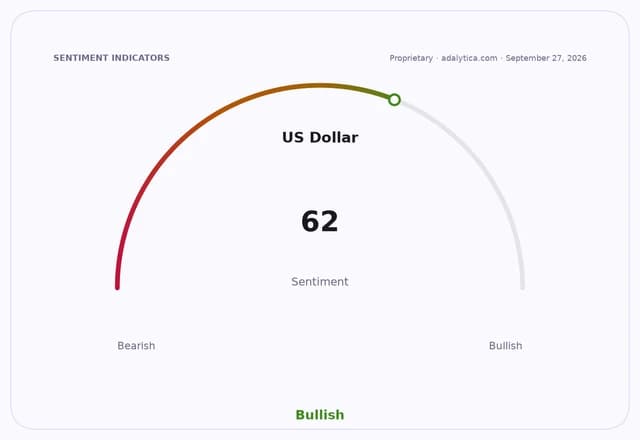
That makes the Bank Indonesia meeting economically important because the rupiah remains close to recent weak levels and imported inflation risks are still sensitive to exchange-rate moves. A steadier currency helps curb the local-currency cost of fuel, food and other imports, while also reducing pressure on corporates and banks with foreign-currency liabilities. For policymakers, the challenge is balancing growth support with the need to defend financial stability.
The broader backdrop remains one of persistent currency fragility rather than outright stress. Recent technical readings on the dollar-rupiah pair show the exchange rate still trading above its 50-day and 200-day moving averages, even after a short-term bounce, suggesting the rupiah has yet to establish a durable trend reversal. That leaves the market highly dependent on policy guidance, intervention signals and the tone of any rate decision.
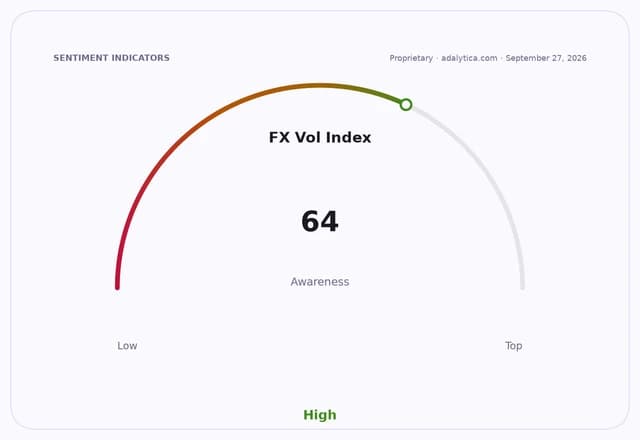
For investors, the meeting matters because it can reshape near-term positioning across Indonesian assets. A firmer rupiah would ease pressure on domestic bonds and stocks exposed to imported costs, while a softer-than-expected outcome could weigh on foreign inflows and revive hedging demand. The stakes are also regional: when Bank Indonesia is seen as credible in defending the currency, it can help stabilise broader sentiment toward emerging Asian FX.
The story is not just about one day’s move. It is about whether Bank Indonesia can convince markets that it has room to support the rupiah without choking growth, and whether that balance is enough to attract capital back into Indonesian assets after a period of currency weakness.
| Entity | Gains | Losses |
|---|---|---|
| Bank Indonesia | ▲Policy credibility | ▼Room for dovish surprise |
| Rupiah | ▲Intervention support | ▼Import-cost pressure |
| Indonesian importers | ▲Lower FX costs | ▼Weaker local currency |
| Foreign-currency borrowers | ▲Reduced repayment strain | ▼Higher hedging costs |