The rupiah weakened to Rp17,876 per dollar in spot trading as investors focused on the prospect of another Bank Indonesia rate increase and on regulatory changes that could reshape the country’s commodity market infrastructure.
Rupiah Weakens as BI Rate Hike Bets Rise
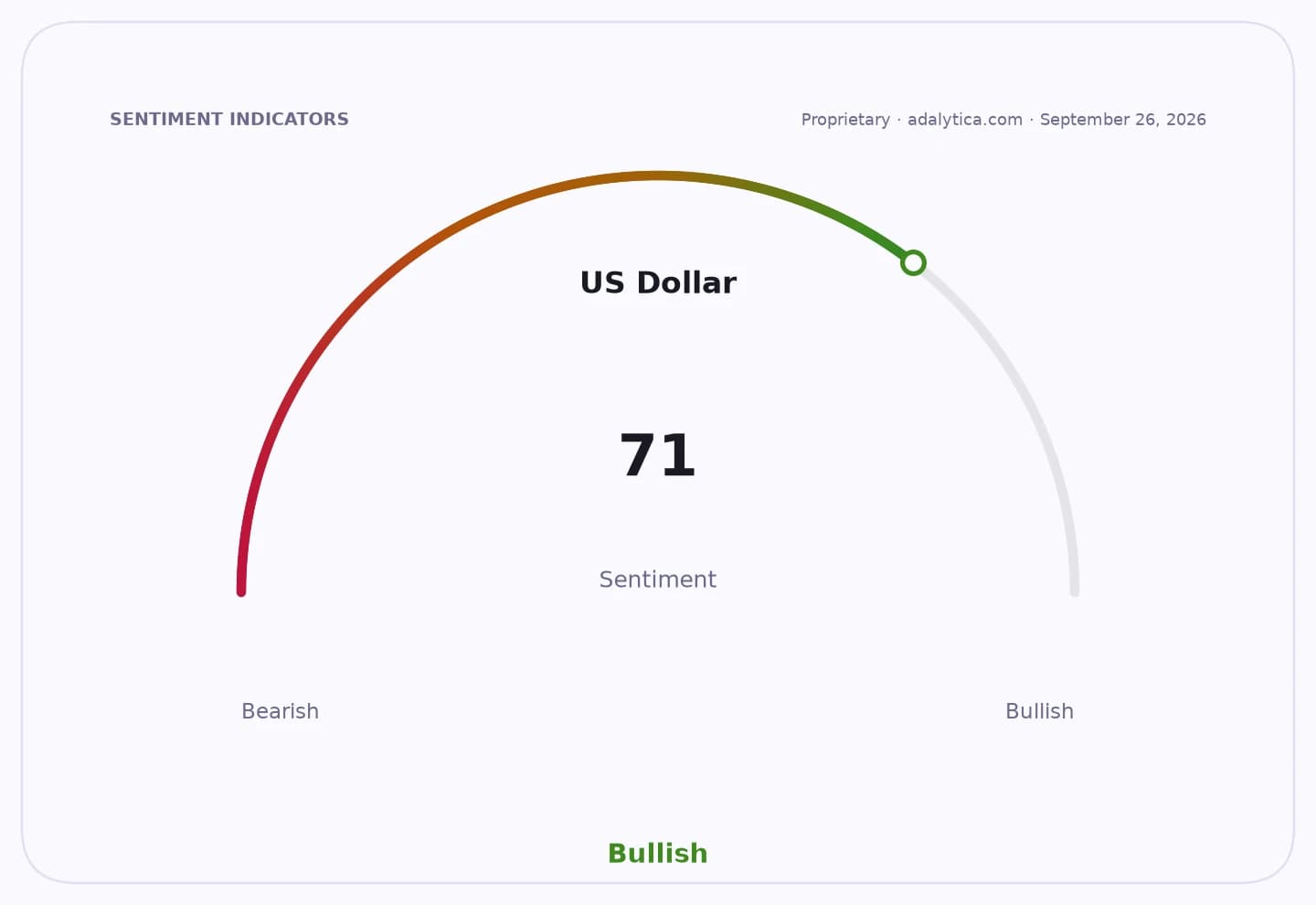
The move matters because it shows the currency remains vulnerable even as officials try to anchor confidence through tighter policy and institutional reform. A weaker rupiah raises the cost of imports, adds pressure to inflation and can force policymakers to lean harder on interest rates to defend stability. For investors, that combination tends to hit risk assets first: banks face funding costs, importers see margin pressure and local bonds can struggle if the market starts to anticipate a more hawkish BI.
Sentiment IndicatorsⓘProprietary · adalytica.com · September 26, 2026
This is a snapshot — live sentiment, awareness and momentum for 130+ markets update continuously in the dashboard.Open AlphaPulse
Spot trading had already shown the currency under strain at Rp17,876, after the Jisdor reference rate was fixed at Rp17,813 the previous day, down from Rp17,745. The latest move extends a pattern of volatility that has repeatedly taken the rupiah toward the 18,000 level, a threshold that has become a psychological marker for markets watching Indonesia’s external balances and policy credibility.
The immediate catalyst is a market view that BI may raise its benchmark by 25 basis points at its next board meeting. That would align Indonesia with other central banks that are still prioritising exchange-rate defence over growth, especially when global inflation remains sticky and the dollar retains support. The case for a hike is straightforward: higher rates can slow capital outflows, narrow the yield gap against the U.S. and give the rupiah a better chance of stabilising. The risk is that tighter policy lands on an economy that is already sensitive to imported prices and weaker consumer purchasing power.
At the same time, traders are also parsing the government’s plan for a new commodity exchange, a policy intended to improve price control and market structure. The Financial Services Authority, or OJK, is set to determine what products are traded and how the exchange will operate, before taking over oversight from the Commodity Futures Trading Regulatory Agency, or Bappebti, on Jan. 1, 2027. In principle, a more formal exchange could improve transparency, deepen local price discovery and reduce reliance on offshore benchmarks. In practice, any transition brings execution risk: investors will want to know whether the infrastructure is ready, whether liquidity can be built and whether the market can preserve integrity without disrupting existing trade flows.
That matters for a resource-rich economy such as Indonesia because commodities sit at the centre of exports, fiscal receipts and domestic price formation. If the exchange reform works, it could strengthen Indonesia’s grip on pricing in strategic goods and support longer-term market development. If it stumbles, it risks adding another layer of uncertainty at a time when foreign exchange markets are already uneasy.
The fiscal backdrop is less immediate but still relevant to sentiment. The 2027 draft budget targets a deficit of 2.40% of GDP, below the legal 3% ceiling, underscoring the government’s desire to preserve discipline. But markets are likely to focus less on the headline ceiling than on whether spending quality and revenue performance can support growth without forcing a future financing squeeze. In an environment where the rupiah is already weak and BI may have to tighten again, any hint of fiscal slippage would compound pressure on local assets.
For investors, the key question is whether Indonesia can restore a credible policy mix: a central bank willing to defend the currency, a fiscal stance that avoids adding pressure and a commodity-market overhaul that improves, rather than complicates, price discovery. Until that becomes clearer, the rupiah is likely to remain sensitive to every shift in global dollar strength, oil prices and BI rhetoric.
| Entity | Gains | Losses |
|---|---|---|
| Bank Indonesia | ▲Higher policy credibility | ▼Growth-sensitive borrowers |
| Rupiah bulls | ▲Tighter monetary support | ▼Importers and dollar buyers |
| Commodity exchange reform | ▲Better price discovery | ▼Existing market incumbents |
| Indonesian bond market | ▲Fiscal discipline signal | ▼If rate hikes deepen selloffs |