Russia’s fast-growing consumer push into China is running into a credibility problem, with more than 3,500 businesses now registered around Russian-linked trade even as shoppers and regulators grow wary of fake “Russian” goods sold by Chinese operators.
Russia consumer goods face fake-label backlash in China
That matters because the brief boom turned Russian branding into a sales engine in China, but the backlash threatens to squeeze legitimate exporters just as Moscow is looking to Beijing to help offset Western sanctions and weaker access to developed markets. What was once a lucrative niche for food, confectionery and vodka is now being dragged down by counterfeit and misleading labels that undermine trust in the entire category.
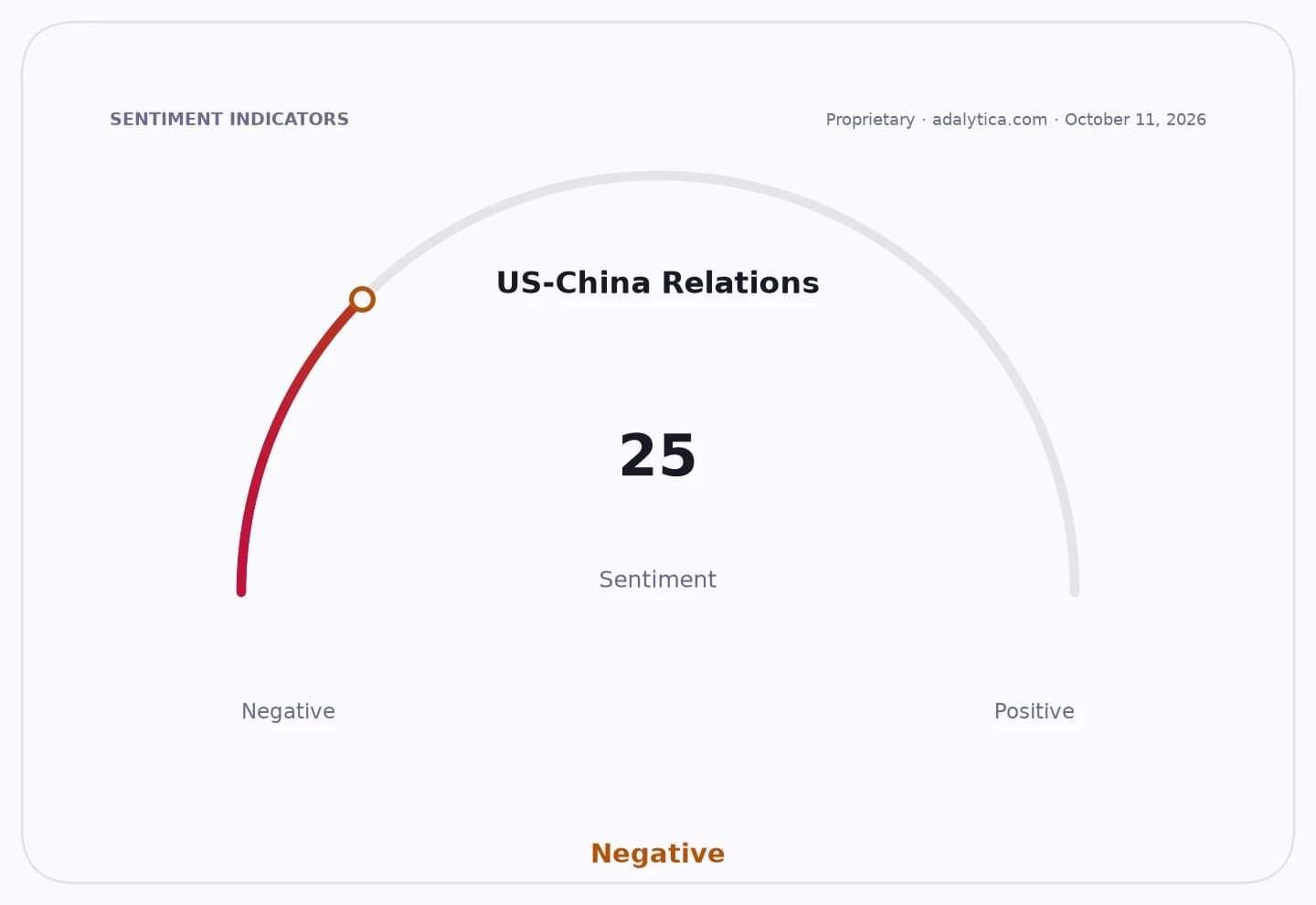
Sentiment IndicatorsⓘProprietary · adalytica.com · October 5, 2026
This is a snapshot — live sentiment, awareness and momentum for 130+ markets update continuously in the dashboard.Open AlphaPulse
The shift is a sharp reversal from 2024, when demand for Russian consumer goods surged on Chinese shopping streets, in malls and on Douyin livestreams. Blue-and-white “Russian pavilion” stores multiplied, pushing chocolate, sausages, bread, honey and vodka as authentic imports.
Bilateral trade hit a record $244.8 billion in 2024, and the number of companies registered with Russia-related activities rose more than 20% to 841 by year-end, according to Qichacha. By early 2025, more than 3,500 related businesses had been registered across China, though that total includes firms across the supply chain, not just storefronts.
But the boom also created an opening for businesses to borrow Russian imagery while selling products made in China or in third countries, according to investigations and regulator checks starting late last year. That has left consumers more skeptical of the category overall, hitting legitimate brands that say they are being forced to prove where their products come from.
“We are not fake Russian sellers. But we are the ones paying the price,” said Vera Nikitina of Belyov Pastila Manufacture, which began entering China in 2019 and expanded rapidly after 2022.
The company’s experience shows how quickly the market turned. It built regular exports and a local office in 2022-2023, then saw sales jump in 2024 as Russian goods became fashionable. Now it is using Chinese social media to reintroduce the brand and prove provenance.
Russian export officials are also trying to tighten the market, working with verified importers and sellers, expanding official “Made in Russia” channels and building tools for consumers to check origin. But the message from the market is clear: the Russian label alone is no longer enough.
That is a problem for sellers, but also for investors watching China-Russia trade as a sanctions-era theme. The trade relationship remains strategically important and politically close, but the consumer side is now less about easy demand and more about brand control, traceability and regulatory scrutiny.
For companies exposed to the theme, the next test is whether verified Russian brands can rebuild trust before the counterfeit hangover fully chokes off the category’s growth.
| Entity | Gains | Losses |
|---|---|---|
| Verified Russian exporters | ▲Stronger official channels | ▼Short-term skepticism |
| Chinese imitators | ▲Cheap brand arbitrage | ▼Regulatory pressure |
| Chinese consumers | ▲Better product traceability | ▼Fewer low-cost “Russian” options |
| Russia’s trade push | ▲Deeper market access | ▼Damaged brand credibility |