Online sales have climbed to more than a fifth of Russia’s retail turnover, a milestone that underscores how sanctions, logistics constraints and changing shopping habits are pushing more consumer spending onto digital platforms.
Russia online sales top one-fifth of retail turnover
The shift matters because retail is one of the clearest gauges of household demand in a slowing, war-burdened economy. When ecommerce takes a bigger share of turnover, it tends to pull spending toward the largest platforms, squeeze smaller brick-and-mortar chains and accelerate the reallocation of capital into warehouses, delivery fleets and payment infrastructure.
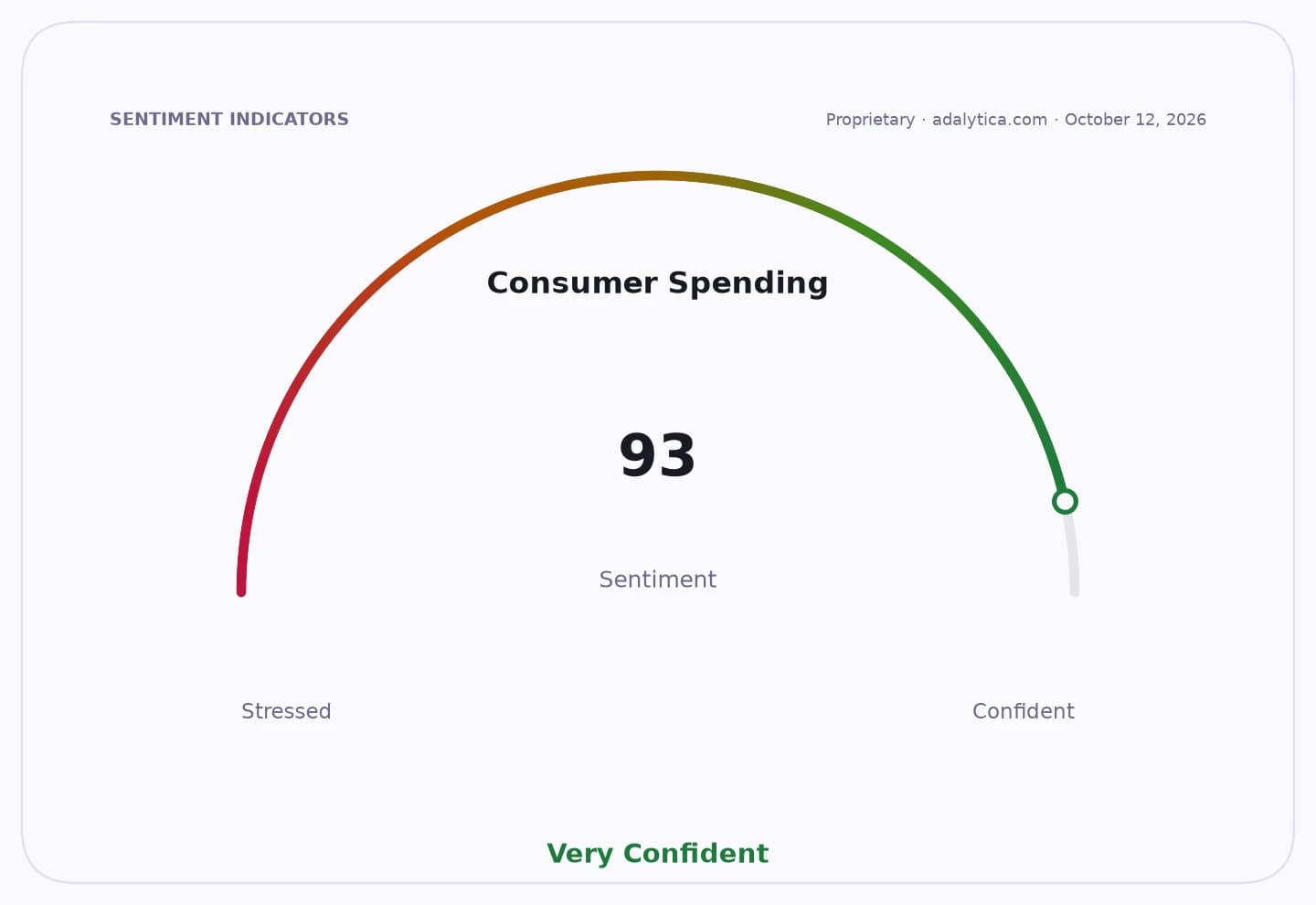
Sentiment IndicatorsⓘProprietary · adalytica.com · October 7, 2026
This is a snapshot — live sentiment, awareness and momentum for 130+ markets update continuously in the dashboard.Open AlphaPulse
For investors, the message is that Russia’s consumer market is becoming more concentrated and more dependent on technology-enabled distribution. That is supportive for dominant marketplaces, logistics operators and payment rails, while making life harder for traditional retailers that rely on foot traffic and dense store networks. It also implies that any growth in nominal retail sales is increasingly being captured online rather than in physical formats.
The development fits a broader pattern seen across emerging markets, where digital commerce gains share fastest when consumers value convenience, selection and price transparency. In Russia, those forces are amplified by the disruption of cross-border supply chains and the need to substitute imported goods with domestically sourced products delivered through online channels.
That creates a mixed investment backdrop. The bull case is that a larger online share can sustain volume growth even if overall consumption is subdued, because marketplace operators benefit from scale, take rates and logistics density. The bear case is that rising digital penetration can also intensify competition, compress margins and expose platforms to heavier regulation and higher fulfillment costs.
The key question now is whether online retail can keep taking share without running into capacity bottlenecks or consumer fatigue. If it does, Russia’s retail landscape will keep tilting toward a few large digital winners and away from the fragmented store-based model that dominated before the war.
| Entity | Gains | Losses |
|---|---|---|
| Major ecommerce platforms | ▲Higher share of retail spending | ▼Traditional store chains |
| Logistics and delivery firms | ▲More parcel volumes | ▼Small local retailers |
| Consumers | ▲Wider selection, easier pricing | ▼Physical-format retailers |
| Payment and warehouse infrastructure | ▲More digital transaction flow | ▼Mall and high-street landlords |